
1-619-810-0010 9AM-5PM (CST) : Mon - Thu 9AM-3PM (CST) : Fri 9AM-5PM (CST) : Sat - Sun
1-619-810-0010 9AM-5PM (CST) : Mon - Thu 9AM-3PM (CST) : Fri 9AM-5PM (CST) : Sat - Sun

Living Spinal
Rollator Walkers: Rollators With Seats, 3 Wheel Walkers & Rolling Walkers
Find the right rollator with seat for daily walks, errands and travel. Real help from a team that lives with mobility equipment every day.
 Shop Rollator Walkers4 wheel, 3 wheel, bariatric & folding rollators

 Call (619) 810-0010
 Chat With a Specialist

✓ Owned by wheelchair users✓ HSA/FSA eligible✓ Expert fitting help
A rollator walker gives you steady support, a built-in seat and hand brakes, so you can walk farther and rest whenever you need to. Our rollators and rolling walkers cover every need, from lightweight models for errands to heavy duty frames, upright walkers and rollator transport chair combos from Drive Medical, Medline, Lumex, Comodita, Protekt and byACRE.
Living Spinal is owned and operated by people living with paralysis who use mobility equipment every day, so we know how much the right walker with seat and wheels matters. Whether you need walkers for seniors, a folding walker rollator for travel, or a rollator walker with seat for long outings, tap any section below, or read our Mobility Resource Guides.
›
Why Choose a Rollator Walker With a Seat?
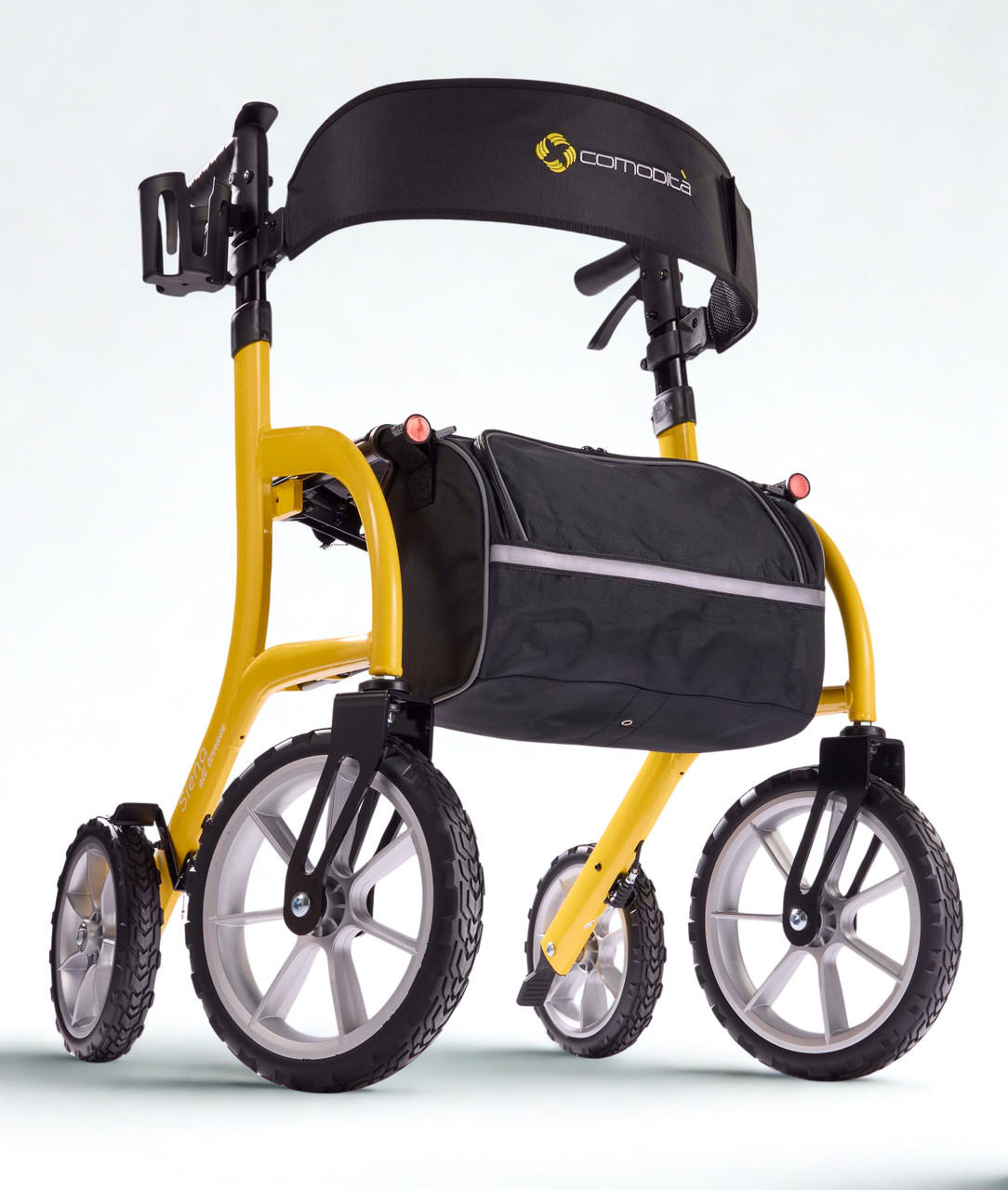
Standard walkers have to be lifted with every step. That gets tiring fast, especially on longer walks. A rollator walker with seat rolls on four or three wheels, so you push instead of lift, and you always have a place to sit when your legs need a break.
- Less fatigue: wheels keep you moving with a natural stride, so you can walk farther with less effort.
- Built-in rest: a padded seat and backrest let you sit in line, at the park or between store aisles.
- Safety brakes: loop hand brakes slow you down and lock the wheels before you sit.
- Carry what you need: baskets and pouches hold groceries, water bottles and medications.
- Indoor and outdoor use: larger 8 to 10 inch wheels roll over grass, curbs and uneven sidewalks.
Real-world advice: Always lock both brakes before you turn and sit. Our team uses this habit daily, and it prevents most rollator tip-overs.
›
How to Choose the Best Rollator Walker for Seniors

The best rollator walker with seat is the one that fits your body, your home and where you walk most. Compare these six features before you buy:
Seat Height
Your feet should rest flat on the floor when seated. Shorter users often need a junior or low seat model.
Handle Height
Handles should line up with your wrist crease when your arms hang at your sides, with a slight bend at the elbow.
Weight Capacity
Most rollators hold 250 to 300 lbs. Bariatric rollators support 400 to 500 lbs with wider seats.
Frame Weight
Aluminum and carbon fiber frames weigh 11 to 16 lbs, easier to lift into a car than steel.
Wheel Size
Six inch wheels suit indoor floors. Eight to ten inch wheels handle sidewalks, gravel and grass.
Fold & Storage
Check folded size for your trunk or closet, and look for a basket or bag for daily errands.
Quick match
- Mostly indoors? A narrow 3 wheel walker or compact rollator turns easily through doorways and hallways.
- Walking outdoors? Choose an all terrain walker with large wheels and a sturdy frame.
- Need extra support? A heavy duty walker or stand up walker keeps you upright and supported.
›
Types of Rollators: 4 Wheel, 3 Wheel, Bariatric & Upright Walkers
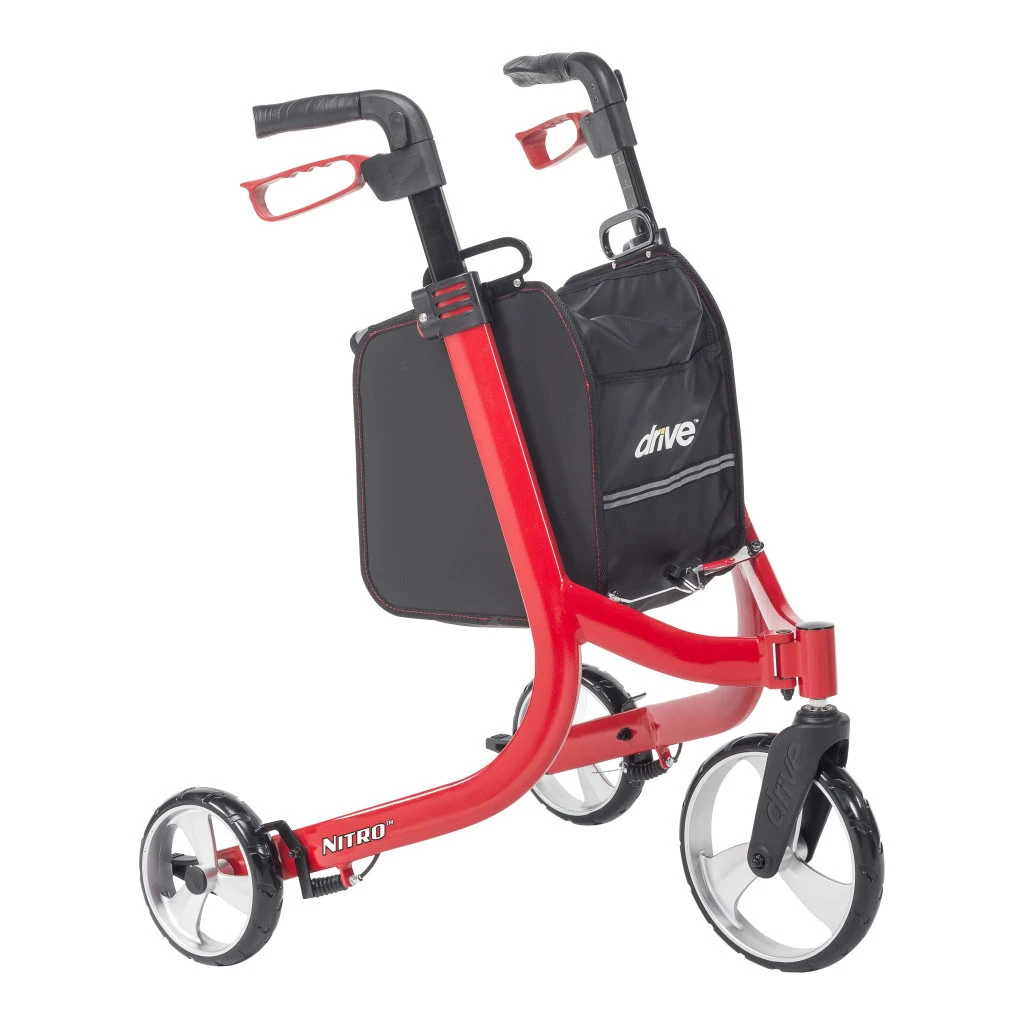
From compact 3 wheel rollators to bariatric rollators that support up to 500 lbs, here is how to pick the right style.
4 wheel rollators with seats
The most popular wheeled walker for everyday use. The Protekt Aluminum Rollator and Lumex Walkabout Imperial Rollator offer padded seats, backrests and storage for daily errands.
3 wheel walkers
Lighter and narrower than four wheel models, with no seat. Try the Nitro Euro Style 3 Wheel Rollator, the Lumex 3-Wheel Cruiser or the 380 Three Wheel Rolling Walker.
Bariatric and heavy duty rollators
Wider seats and reinforced frames make these the go-to walkers with seats heavy duty users trust. Compare the Protekt Bariatric Rollator and the Medline Heavy-Duty Bariatric Rollator.
Upright walkers for seniors and knee rollators
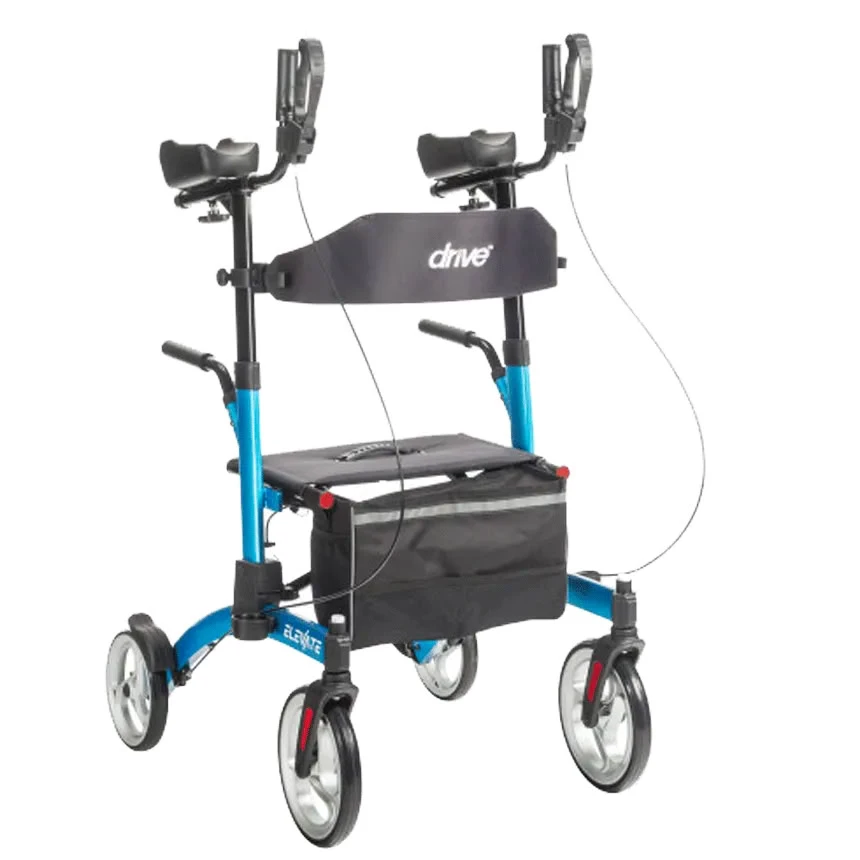
A stand up walker with forearm supports improves posture, like the Elevate Upright Walker or Nitro Neuro Upright Walker. Recovering from foot surgery? See the Roscoe Knee Rollator and our knee walkers and knee scooters.
 Email
›
Lightweight & Folding Rollator Walkers for Travel

A lightweight rollator is perfect if you lift your walker into a car often or travel by plane. Carbon fiber rollators weigh as little as 11 lbs and fold flat in one motion.
What to compare
- Folded size: the byACRE Carbon Ultralight Rollator and AeroCarbon Ultra-Lite Rollator fold slim enough for small trunks.
- Weight vs. sturdiness: the Piuma Ultra Light Rollator balances a light frame with a stable stance, while the Compact Folding Rollator tucks into tight spaces.
- Fold style: side folding walkers stand on their own when folded, which helps in elevators and restaurants.
Browse all lightweight folding walkers, or plan your next trip with our travel mobility equipment.
Pro tip: Ask the airline to gate check your rollator. Most allow mobility aids free of charge, and you can use it right up to the aircraft door.
›
Rollator Wheelchair Combos: Walk Now, Ride Later

A rollator wheelchair, also called a walker and wheelchair combo, works as a walker when you have the energy and flips into a push chair when you get tired. It is a great fit for longer outings, doctor visits and theme parks.
Popular 2-in-1 models
The Fusion Rollator and Transport Chair Combo, Duet Rollator and Transport Chair and Nitro Duet include flip-up footrests for a companion to push.
Side folding walker chair options
The Hugo Navigator Rolling Walker and Transport Chair and Lumex Hybrid LX fold side to side for easy storage.
When a transport chair is the better choice
If walking is not part of the plan, a dedicated transport wheelchair or lightweight wheelchair offers more comfort for full-day use.
›
How to Adjust and Use a Rollator Walker Safely
Using walkers with wheels safely comes down to a good fit and a few daily habits. Here is the checklist our team uses:
1. Set the handle height
Stand tall with arms relaxed. Set handles at wrist level so your elbows bend about 15 to 20 degrees when you hold them.
2. Check the brakes
Squeeze both brake levers before every walk. Push down to lock them. If the rollator still rolls, tighten the brake cable.
3. Walk inside the frame
Stay close to the walker, between the rear wheels. Pushing it too far ahead makes you lean forward and lose balance.
4. Sit the safe way
Lock both brakes, turn around, feel the seat against the back of your legs, then lower yourself slowly using the armrests or handles.
5. Fold and store it
Pull the seat strap up to fold. Store it out of walkways. Our Mobility Resource Guides cover home safety and more.
›
Rollator vs. Walker: Which Mobility Aid Is Right for You?
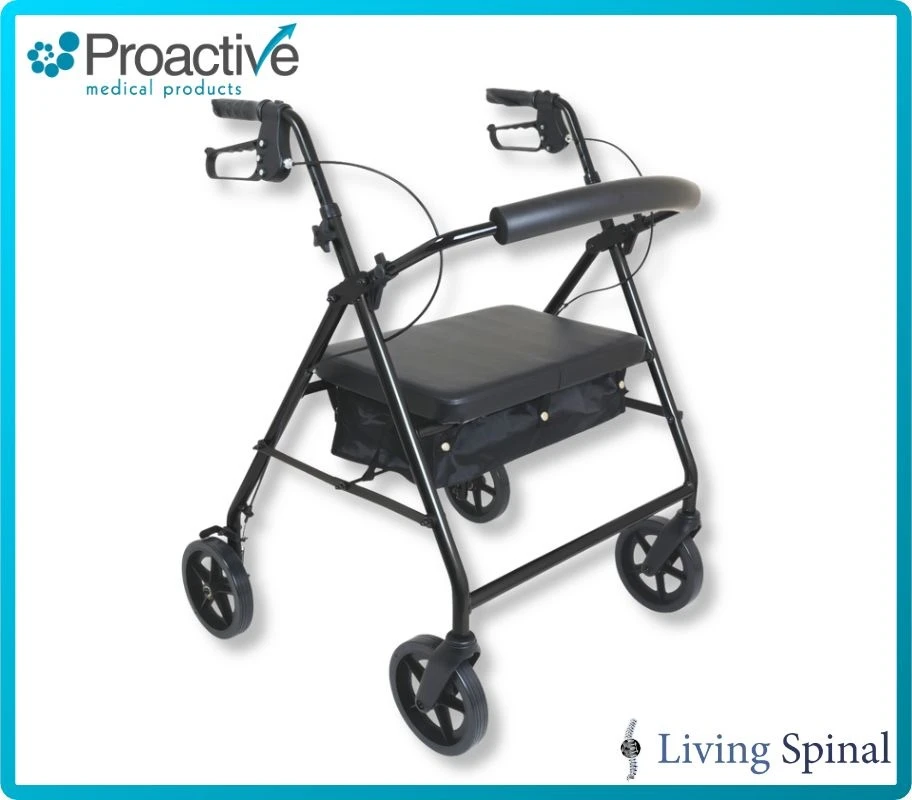
A rollator is best if you can walk steadily and want speed and a seat. A standard walker is better if you need to put weight on it for balance.
What to compare
- Balance needs: walkers without wheels stay put when you lean, while rollators roll and require good grip on the brakes.
- Two wheel options: a front wheel walker from our standard walkers or the Lumex ColorSelect Adult Walker sits between a basic walker and a rollator.
- Endurance: if you tire quickly, an adult walker with wheels and a seat lets you rest anywhere.
Browse more walking aids and mobility aids, or see our mobility scooters for longer distances.
Pro tip: Ask your physical therapist which style they recommend. Many prescriptions specify a walker type, which helps with Medicare and insurance.
›
Rollator Walker FAQs
How much does a rollator walker cost?
Most rollators with seats cost between $100 and $300. Carbon fiber, bariatric and rollator transport chair combos range from $300 to over $1,000, depending on features and frame material.
What is the lightest rollator?
Carbon fiber rollators are the lightest, often 11 to 13 lbs. The byACRE Carbon Ultralight and Nitro Elite Carbon Fiber Rollator are two of the lightest models we carry.
Is a 3 wheel or 4 wheel rollator better?
A 4 wheel rollator is more stable and includes a seat. A 3 wheel walker is lighter and turns more easily in tight spaces but has no seat to rest on.
Can I sit on a rollator while someone pushes me?
No, a standard rollator is not made to be pushed while seated. Choose a rollator transport chair combo with footrests if you want both options.
Can I use HSA/FSA, financing, or coupons?
Yes. We accept HSA/FSA cards, financing is available, and you can check our latest rollator coupons and promo codes before you check out.
Need help choosing a rollator? Let's talk.
Living Spinal is owned and operated by people living with paralysis, and our product specialists use mobility equipment every day. Call, chat or book a free video consult, and we will match you with the right rollator.
Mon–Thu 9AM–5PM · Fri 9AM–3PM · Sat–Sun 9AM–5PM (CST)
 Free Video Consultation
Or leave your info and we'll reach out.
Check out these other categories
Folding Walkers · Standard Walkers · Walking Aids · Knee Walkers · Transport Wheelchairs · Daily Living Aids