
Surviving the Slush: Winter Mobility Hacks and Snow Gear for Active Wheelchair Users | Living Spinal
Posted by Living Spinal on Nov 9th 2026
Surviving the Slush: Winter Mobility Hacks and Snow Gear for Active Wheelchair Users | Living Spinal
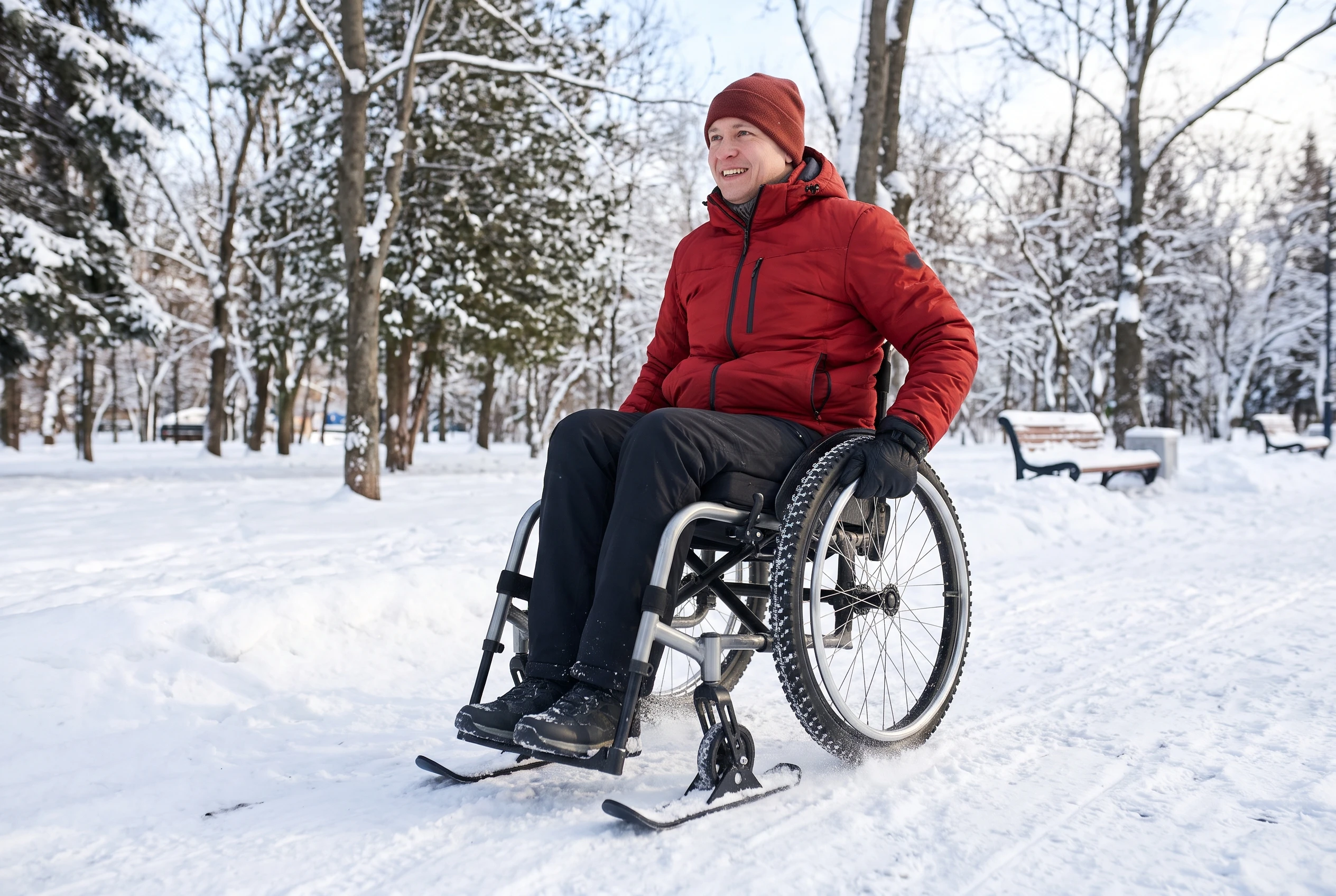
When the first major snowfall arrives, the world transforms into a picturesque winter landscape. For wheelchair users, however, that first storm often marks the arrival of a seasonal gauntlet: snowdrifts blocking curb cuts, freezing slush on sidewalks, and invisible black ice lurking beneath powder. Standard everyday wheelchairs simply aren't built for winter conditions—small front casters dig straight into snowdrifts, metal pushrims become sub-zero ice blocks, and narrow road tires spin out in wet slush.
Winter weather doesn't mean active wheelchair users have to hibernate until spring. With the right combination of cold-weather strategies, equipment adaptations, and winter-ready gear, you can take control of the season and keep rolling outdoors with confidence.
In this ultimate winter guide, we’ll break down practical hacks and specialized gear available at Living Spinal to help you conquer snow, slush, and freezing temperatures.
Tackling Snowdrifts and Slush: Caster and Tire Upgrades
The primary reason manual wheelchairs struggle in snow is the front casters. Small 4- to 6-inch caster wheels act like mini bulldozers, plowing directly into soft snow, stopping dead, and risking a dangerous forward tip. Meanwhile, narrow, smooth rear tires struggle to find purchase in slippery slush.
Strategy: Lift the Casters and Expand Your Tire Footprint. To navigate winter streets, you need gear that floats over soft terrain rather than digging into it, while providing aggressive traction on slick surfaces.
-
Wheel Blades XL Skis for Snow and Sand. -
Key Features: Equipped with dual tracking channels on the underside that compress snow to keep your chair tracking straight as if on rails. They fit caster widths from 3/4" to 2-3/8" (1.8 to 6 cm) and are lightweight and compact enough to toss into a backpack when transitioning indoors.
-
-
FreeWheel Wheelchair Attachment: -
Key Features: Its large, single front wheel easily rolls over frozen ruts, packed snow, and uneven sidewalk expansion joints where small casters would otherwise jam. When paired with high-traction rear wheels, it cuts propulsion effort in half across winter terrain.
-
-
SUMO Bombers for Sand and Snow: -
Key Features: High-volume, wide-profile rubber provides maximum flotation and grip across loose slush, packed snow, and slick mud. Featuring heavy-duty straight-pull stainless steel spokes and durable anodized aluminum handrims, these wheels are built to handle serious winter punishment without bending or failing.
-
Mastering the Grip: Protecting Hands and Handrims
Pushing a manual chair in sub-freezing weather presents a major physiological hurdle. Bare aluminum and titanium handrims conduct cold directly into your hands, rapidly sapping warmth, reducing dexterity, and increasing the risk of frostbite. Add cold moisture and slush, and standard handrims become virtually impossible to grip and brake safely.
Strategy: Insulate Pushrims and Upgrade to All-Weather Push Gloves. Upgrading the interface between your hands and your wheels provides vital thermal insulation and reliable friction in freezing, wet conditions.
-
RibGrips Wheelchair Handrim Covers: -
Key Features: Beyond providing an ergonomic, shock-absorbing push, the silicone acts as a thermal barrier between your hands and freezing aluminum. The ribbed pattern channels away slush and water, ensuring dependable grip and braking traction even when your wheels get wet.
-
-
Ultra-Grip 4 Seasons Full Finger Wheelchair Gloves by RehaDesign. -
Key Features: Constructed with a textured, high-friction palm material that bites into handrims without slipping in wet weather, combined with durable, insulated full-finger coverage to keep wind and freezing slush away from your skin.
-
Winter Survival Hacks: Temperature Regulation and Equipment Care
Navigating snow requires smart equipment maintenance and personal care alongside hardware upgrades. Keep these essential winter hacks in mind before rolling out the door:
-
Protect Power Chair and Power-Assist Batteries: Freezing temperatures temporarily reduce battery capacity by up to 30–40%. Never charge mobility batteries in sub-freezing environments (like an unheated garage), as this can permanently damage battery cells. Always bring power chairs or detachable power-assist motors inside to room temperature before charging.
-
Wash Off Road Salt Immediately: Municipalities use harsh de-icing chemicals and rock salt that aggressively corrode aluminum frames, wheel bearings, and quick-release axle pins. Wipe down your wheelchair frame, spokes, and axles with a warm, damp cloth after every outdoor trip to prevent corrosion and premature wear.
-
Manage Body Heat and Layer Strategically: Individuals with spinal cord injuries often experience impaired autonomic temperature regulation (poikilothermia), making hypothermia a serious concern. Wear wind- and water-resistant outer layers, invest in an insulated wheelchair cozy or waterproof lap blanket, and regularly check your feet and lower extremities for numbness, dampness, or cold-related skin issues.
Ready to Conquer Winter?
Winter presents unique challenges, but it shouldn't sideline your active lifestyle. By swapping in snow-capable front attachments, equipping high-traction tires, and insulating your pushrims against the cold, you can stay mobile, independent, and ready for whatever the winter forecast brings.