
The Ultimate Guide to Beach and Water Accessibility for Wheelchair Users | Living Spina
Posted by Living Spinal on Oct 14th 2026
The Ultimate Guide to Beach and Water Accessibility for Wheelchair Users
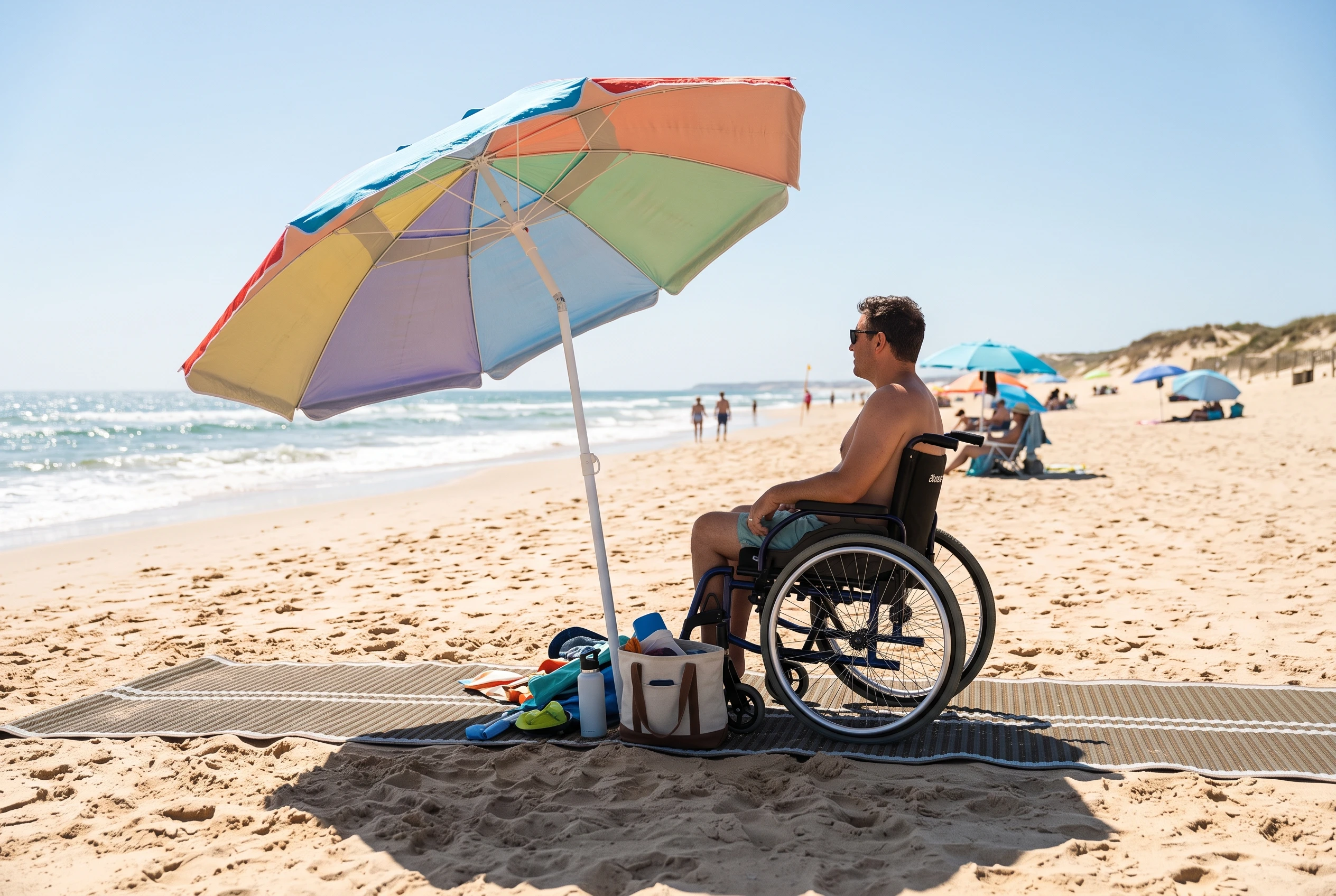
Few environments offer the therapeutic freedom, sensory calm, and full-body weightlessness that water provides. For wheelchair users, swimming and shoreline recreation offer exceptional low-impact cardiovascular exercise, natural muscle relaxation, and unmatched outdoor recreation. Yet, standard manual and power wheelchairs are fundamentally engineered for flat, dry, paved surfaces. Soft beach sand swallows narrow casters, saltwater rapidly corrodes metal bearings, and wet pool decks introduce significant slip and transfer hazards.
True aquatic accessibility requires the right combination of specialized equipment, environmental awareness, and skin-protection protocols. This comprehensive guide covers everything you need to navigate sand, enter pools safely, protect your skin, and preserve your equipment so you can enjoy the water with confidence.
1. Conquering Sand and Shorelines
Standard wheelchair wheels sink into loose, dry sand almost instantly. Pushing a standard manual chair through sand creates extreme strain on the shoulders and rotator cuffs, while motorized chairs risk burnt-out motors and fried electronics from shifting grit and moisture.
All-Terrain Beach Wheelchairs
Purpose-built beach chairs utilize lightweight, non-corrosive frames paired with oversized balloon tires. These balloon wheels distribute weight across a wide surface area, rolling smoothly over soft sand rather than digging in.
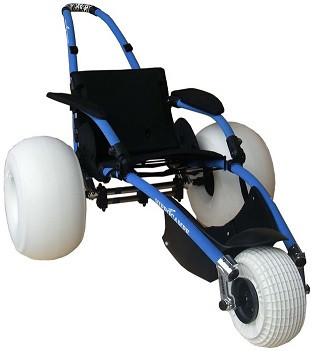
- The gold standard in recreational sand and water mobility. Engineered with an anodized aluminum and stainless-steel frame, the Hippocampe is completely corrosion-resistant and light enough (under 40 lbs) to fold down into a compact transport bag for road trips and flights. Its hydrophobic seating foam repels moisture, and because the chair is inherently buoyant, it actually floats beside you in calm water while you swim.
-
Hippocampe Pair Balloon Wheels With Support For deep, powdery sand where standard all-terrain tires still meet resistance, these ultra-low-pressure polyurethane balloon tires glide effortlessly over dunes, pebble shores, and loose gravel.
Motorized Sand Track Systems
If you want to maintain independence without relying on someone to push a manual beach wheelchair, track conversion systems offer tank-like traction for your everyday chair.
-
Freedom Trax All-Terrain Track Attachment Freedom Trax allows users to mount their own manual wheelchair directly onto a rugged, motorized rubber-track platform. Controlled via an intuitive joystick, it powers through sand, mud, gravel, and packed snow without requiring transfers out of your everyday seating system.
2. Navigating Coastal Infrastructure
Before heading out to the coast, a little reconnaissance ensures your day on the shoreline goes smoothly:
-
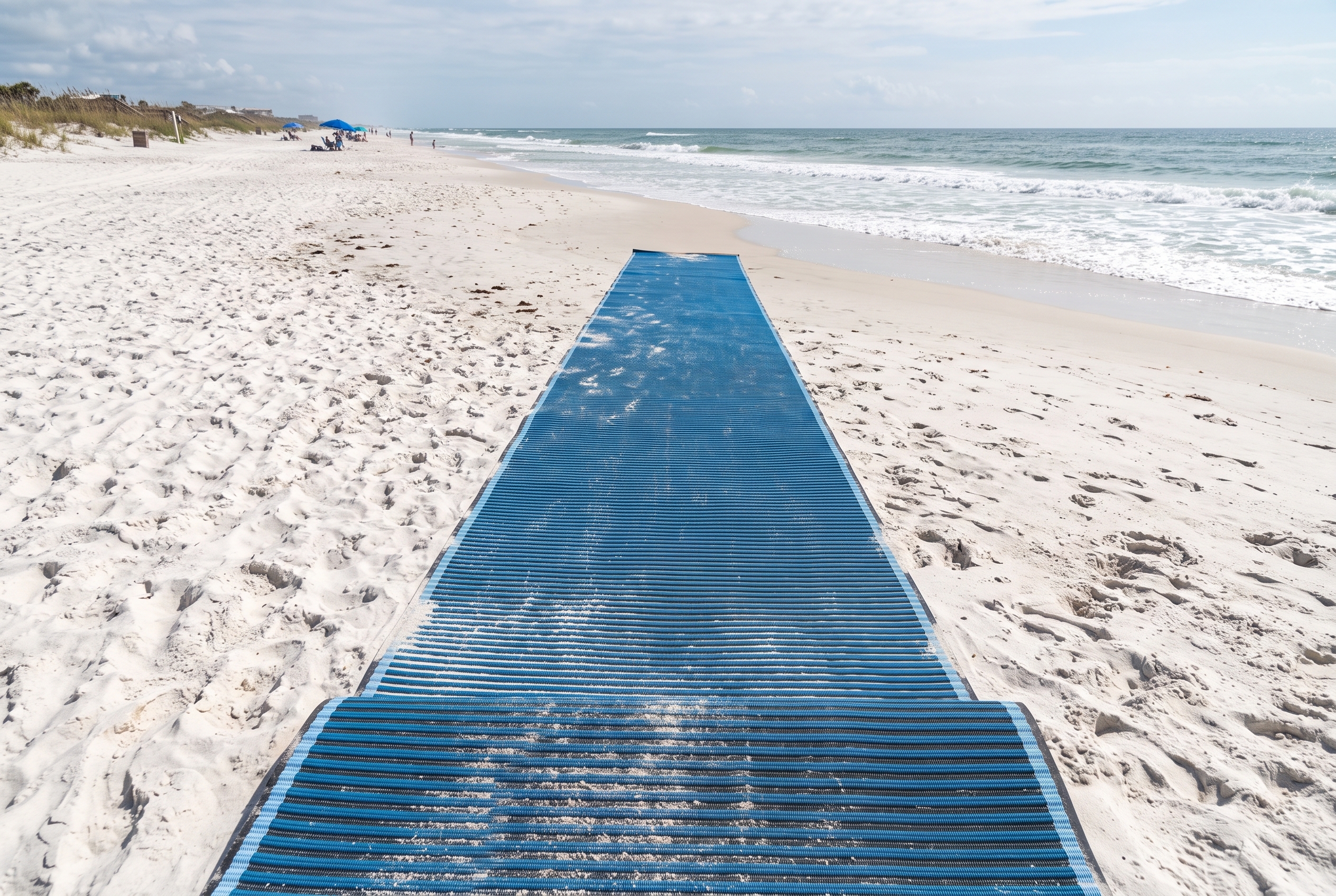
Beach Access Mats (Mobi-Mats): Many municipal and state beaches now install rigid, non-slip polyester roll-out mats extending from the boardwalk across the soft sand toward the high-tide line. Contact local park services or lifeguards in advance to confirm whether seasonal mats are deployed.
-
Municipal Beach Wheelchair Loans: Many coastal cities offer free, first-come-first-served beach wheelchairs at lifeguard headquarters. Keep in mind that these public loaner chairs are often rigid, basic PVC chairs with fixed seating and no specialized pressure relief, making them best suited for short journeys across the sand rather than all-day lounging.
3. Safe Pool Entry and Aquatic Mobility
Public facilities and community centers are required by the ADA to provide accessible pool entry, but having dependable transfer solutions at home or at private swim clubs ensures seamless, dignified access.
Powered Pool Lifts
A battery-powered pool lift eliminates hazardous manual transfers over wet pool coping. These systems provide a stable, controlled descent and ascent for individuals with paraplegia, quadriplegia, or general mobility limitations.
-
Admiral Pool Lift by Aqua Creek An ADA-compliant lift with a 450 lb weight capacity, the Admiral features smooth 360-degree rotation and a durable, powder-coated stainless steel build. Its handset allows users to operate the lift independently, moving from the pool deck into the water with steady, reassuring stability.
-
Neptune Pool Lift by Aqua Creek Products Designed for versatility and compact deck footprints, the Neptune handles up to 400 lbs with a heavy-duty, direct-drive motor that stands up to heavy commercial or residential chlorinated environments.
Wet-Area & Pool Access Wheelchairs
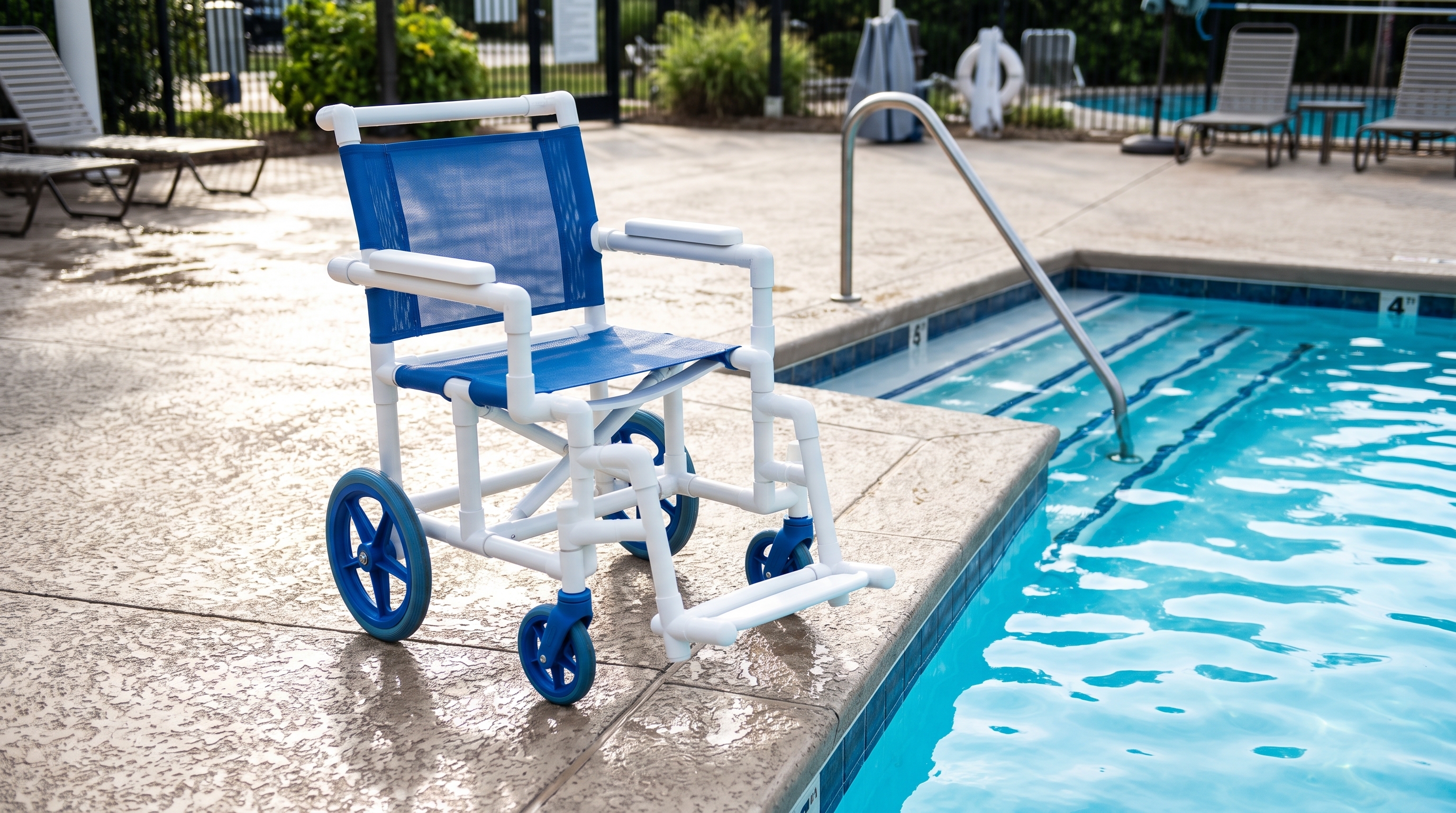
Never take your primary manual chair into a pool ramp, zero-depth entry, or splash zone. Everyday upholstery, sealed bearings, and axle assemblies will degrade when exposed to chlorine and mineral salts.
-
Built from medical-grade, rust-proof PVC with water-resistant mesh sling seating, this chair is purpose-built for zero-depth ramps, pool decks, and locker room showers. It provides a hygienic, durable transitional seat between the locker room and the water.
4. Skin Protection and Pressure Management in Aquatic Settings
Water exposure introduces unique vulnerabilities for individuals with spinal cord injuries or sensation loss. Trapped moisture and abrasive particles significantly elevate the risk of skin breakdown and pressure sores.
-
Manage Moisture and Friction: Prolonged exposure to damp clothing softens the skin (maceration), making tissue far more vulnerable to shear stresses during transfers. Change out of wet swimwear into dry clothing as soon as you finish swimming, and use quick-drying, hydrophobic transfer towels.
-
Eliminate Sand Particles: Even small grains of sand trapped between your skin and your cushion or clothes act like sandpaper against insensitive areas. Carry a soft brush or a spray bottle filled with fresh water to thoroughly clean your skin and transfer board before shifting back into your everyday wheelchair.
-
Use Waterproof Seating Inserts: For aquatic environments, avoid standard open-cell foam cushions, which absorb pool water like a sponge and lose their structural support. Rely on closed-cell foam, neoprene seat pads, or dedicated water-resistant wheelchair cushion covers.
-
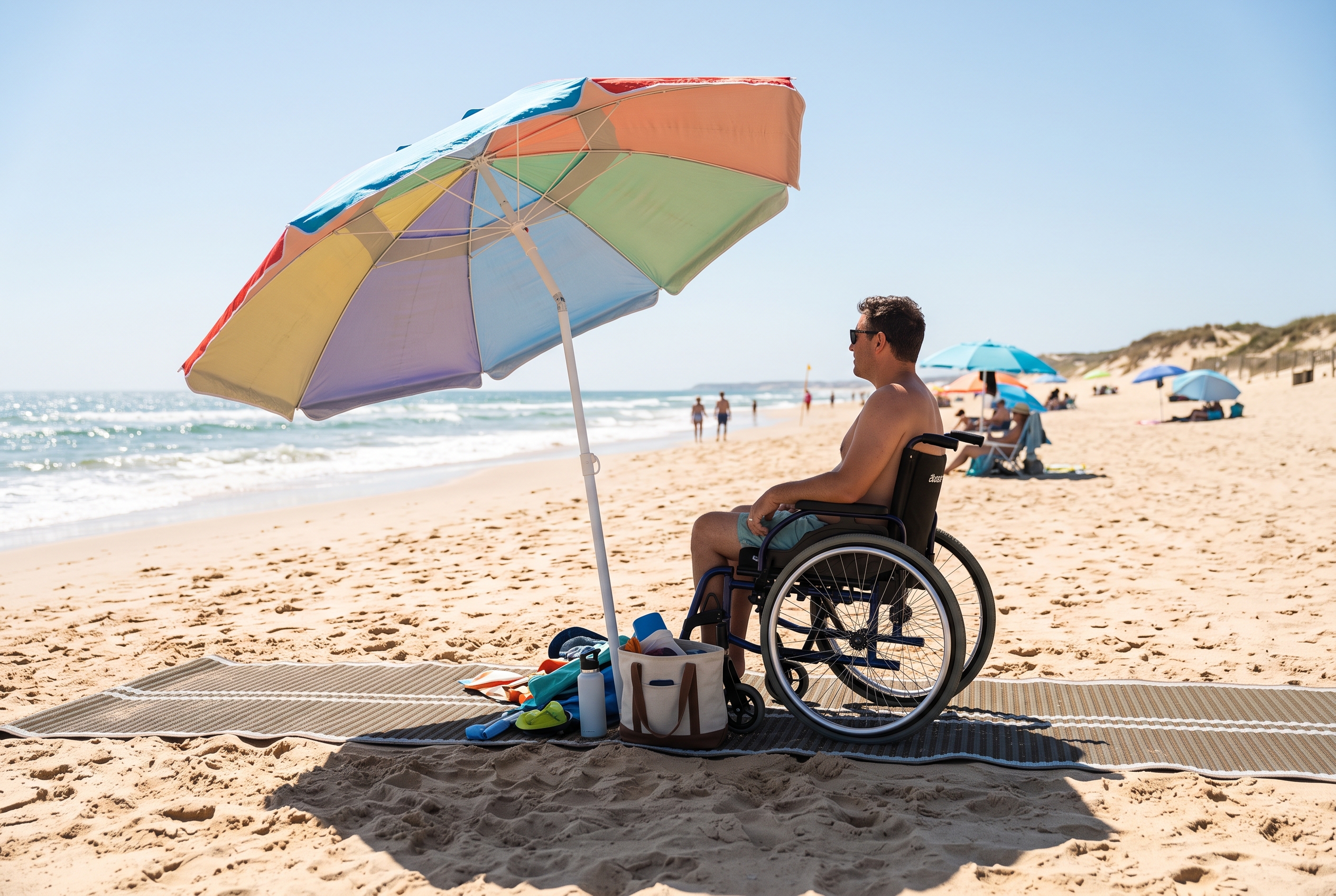
Monitor Temperature Regulation: Individuals with autonomic dysreflexia or impaired thermoregulation cannot sweat effectively below their injury level. Direct sun exposure, combined with reflection off sand and water, accelerates overheating. Always carry shade umbrellas, keep cold water on hand, and apply broad-spectrum mineral sunscreen generously.
5. Post-Water Equipment Maintenance
Proper maintenance after a day at the beach or pool keeps your gear functioning properly and extends its lifespan:
-
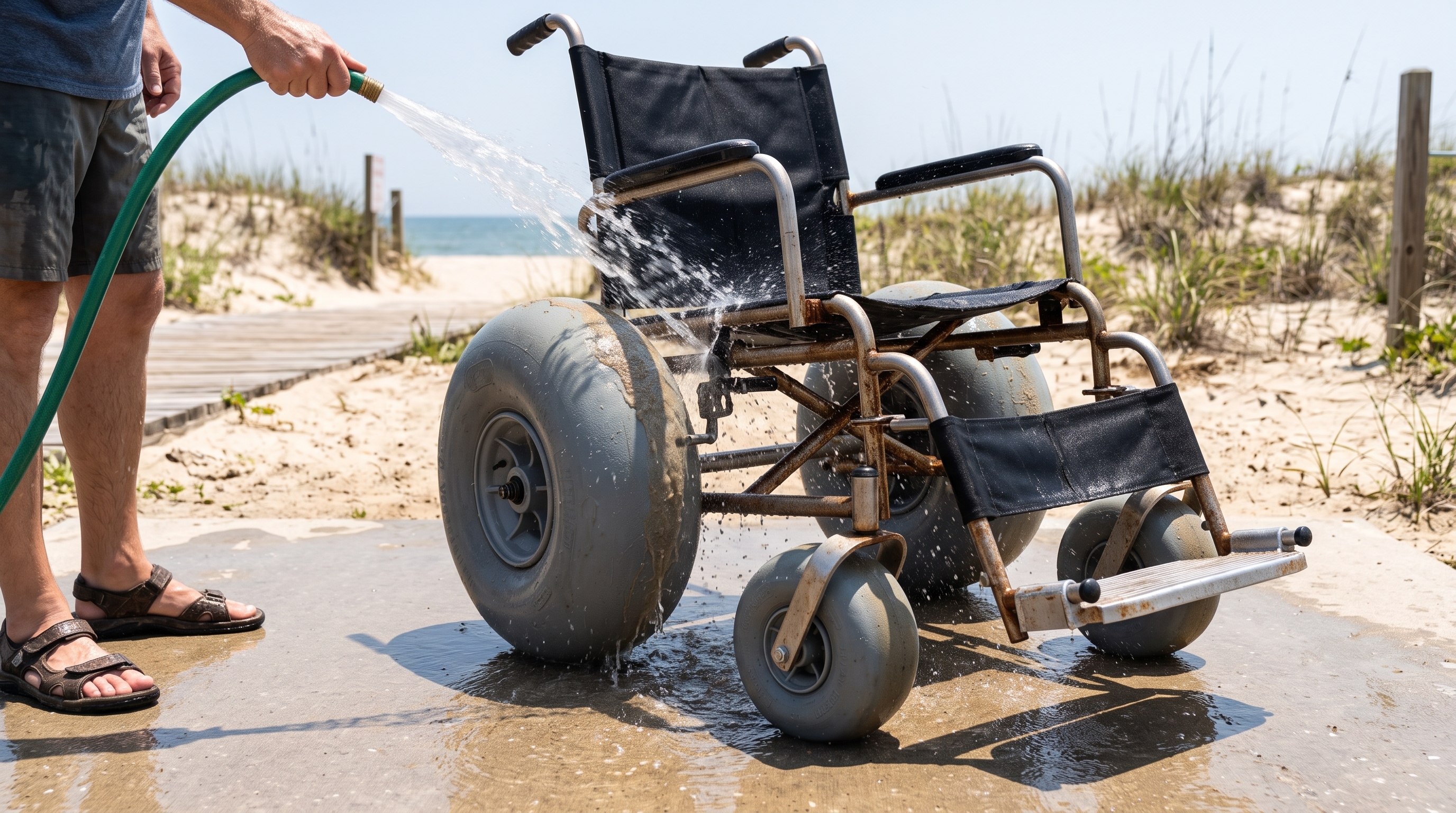
Freshwater Rinse: Saltwater accelerates oxidation, while chlorine can discolor and pit aluminum and stainless steel over time. Rinse your beach wheelchair, pool lift components, and transfer aids thoroughly with clean, running fresh water after every use.
-
Clear Sand from Bearings and Quick-Release Axles: Sand that finds its way into wheel bearings, axle sleeves, and locking pins causes friction and premature wear. Remove quick-release wheels, wipe down the axle pins, and flush the housing with fresh water.
-
Inspect Upholstery and Straps: Check all chest harnesses, foot straps, and backrest fabrics for signs of fraying or accumulated salt crystals, letting them air dry completely out of direct, scorching sunlight to prevent UV degradation.