
Navigating TSA with Medical Supplies: A Wheelchair User’s Guide to Airport Security | Living Spinal
Posted by Living Spinal on Oct 15th 2026
Navigating TSA with Medical Supplies: A Wheelchair User’s Guide to Airport Security
Traveling is an exciting endeavor, but navigating the airport security checkpoint with a wheelchair, medical supplies, and personal items can often feel overwhelming. Dealing with pat-downs, the 3-1-1 liquids rule, and explaining your equipment to TSA agents can add unnecessary stress to your trip. But accessibility and independence shouldn't stop at the security gate.
Whether you're taking a quick domestic flight or embarking on an international vacation, having the right strategies and adaptive travel equipment is essential. In this guide, we’ll explore practical ways to make airport security a seamless experience, highlighting top-tier travel strategies and products available at Living Spinal to get you safely to your gate.
Knowing Your Rights: The TSA Cares Program
One of the biggest hurdles for wheelchair users at the airport is the unpredictability of the screening process. Medical devices, mobility aids, and necessary supplies are subject to different rules than standard luggage.
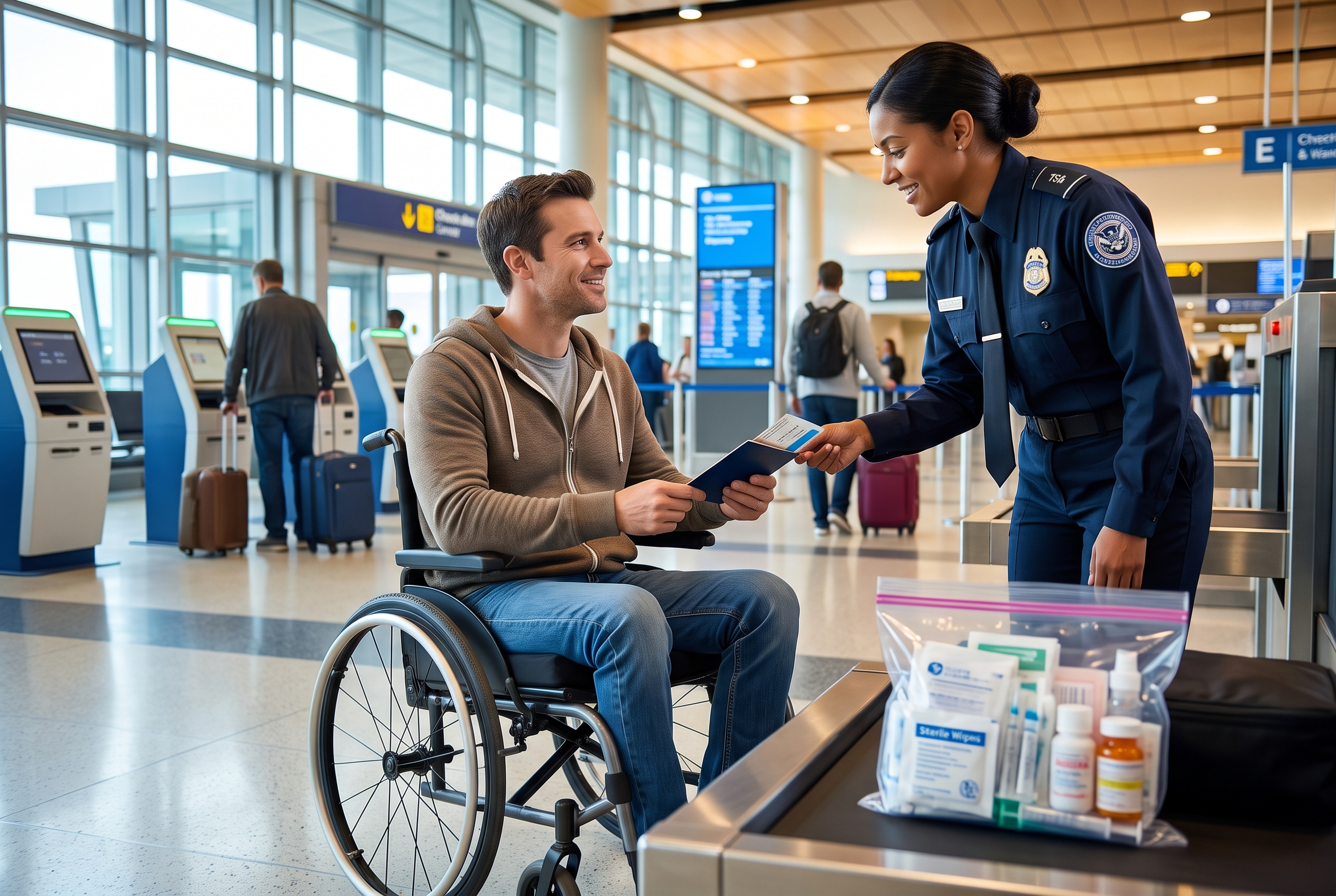
Strategy: Utilize the TSA Cares Helpline To conquer the checkpoint, proactive communication is key. Call the TSA Cares helpline 72 hours before your flight to request a Passenger Support Specialist. This trained agent will meet you at the checkpoint to guide you through the screening process. Additionally, remember that medically necessary liquids—such as sterile water for catheters, liquid medications, and lubricants—are entirely exempt from the standard 3-1-1 liquids rule. Always declare these items to the TSA officer before your screening begins.
Managing Medical Supplies Through Security
Carrying daily necessities like catheters, ostomy supplies, or medications requires smart packing. You want your supplies easily accessible for inspection without having to dig through a tightly packed carry-on suitcase.
Strategy: Use Accessible, Chair-Mounted Luggage and Travel-Friendly Supplies Keeping your travel documents, identification, and immediate medical supplies attached directly to your chair ensures you're always prepared and keeps your lap entirely free.


Protecting Your Seating and Skin on the Flight
Once you make it through TSA, your next hurdle is the aircraft seat. Standard airline seats are notoriously uncomfortable, lack adequate pressure relief, and can pose a serious risk for skin breakdown during long flights.
Strategy: Bring Your Wheelchair Cushion on the Plane You are legally permitted to take your wheelchair seat cushion onto the aircraft to use on the plane seat. Since it is considered a medical device, it does not count toward your airline carry-on allowance!

Essential Security Checkpoint Tips
To make your TSA screening as fast and dignified as possible, keep these best practices in mind:
-
Communicate Clearly: Inform the TSA officer about your specific mobility limitations, any areas of your body sensitive to pressure or pain, and exactly where your medical supplies are located before the physical pat-down begins.
-
Separate Medical Liquids: Pack all liquid medications, catheter lubricants, and sterile water in a separate, clear, easily accessible bag. Hand it directly to the agent for specialized testing to avoid holding up your main luggage on the conveyor belt.
-
Secure Loose Wheelchair Parts: If you are gate-checking your wheelchair or traveling with a power assist device, remove any easily detachable parts (joysticks, side guards, anti-tippers, or specialized headrests) and stow them safely in your carry-on to prevent damage or loss in the cargo hold.
Ready for Takeoff?
Traveling with a disability requires an extra layer of planning, but it shouldn't stop you from exploring the world. By understanding your rights, communicating effectively with TSA, and investing in the right travel-friendly equipment, you can eliminate the anxiety of airport security and focus entirely on the adventure ahead. Safe travels!