

Adaptive Parenting 101: Navigating Life with a Baby or Toddler from a Wheelchair | Living Spinal
Posted by Living Spinal on May 12th 2026
Adaptive Parenting 101: Navigating Life with a Baby or Toddler from a Wheelchair
Parenting a newborn or toddler is physically and emotionally exhausting for anyone. But when you are doing it from a wheelchair, the logistical challenges multiply. Suddenly, you have to figure out how to carry a squirming infant while pushing your wheels, manage a mountain of baby gear, and deal with the inevitable public stares.
Your anxieties are completely valid, but let’s be clear: you absolutely can be a deeply involved, active, and incredible parent from a wheelchair. It just requires a bit of strategic thinking and some smart adaptive gear.
Here is your crash course on navigating those early parenting years on wheels.
1. The Logistics of "Carrying" (Mastering the Gear Drop)
Babies come with an astonishing amount of stuff. Diaper bags, wipes, bottles, and toys all need to travel with you. If you push a manual chair, your hands are already full, making standard shoulder diaper bags a constant tipping or snagging hazard.
-
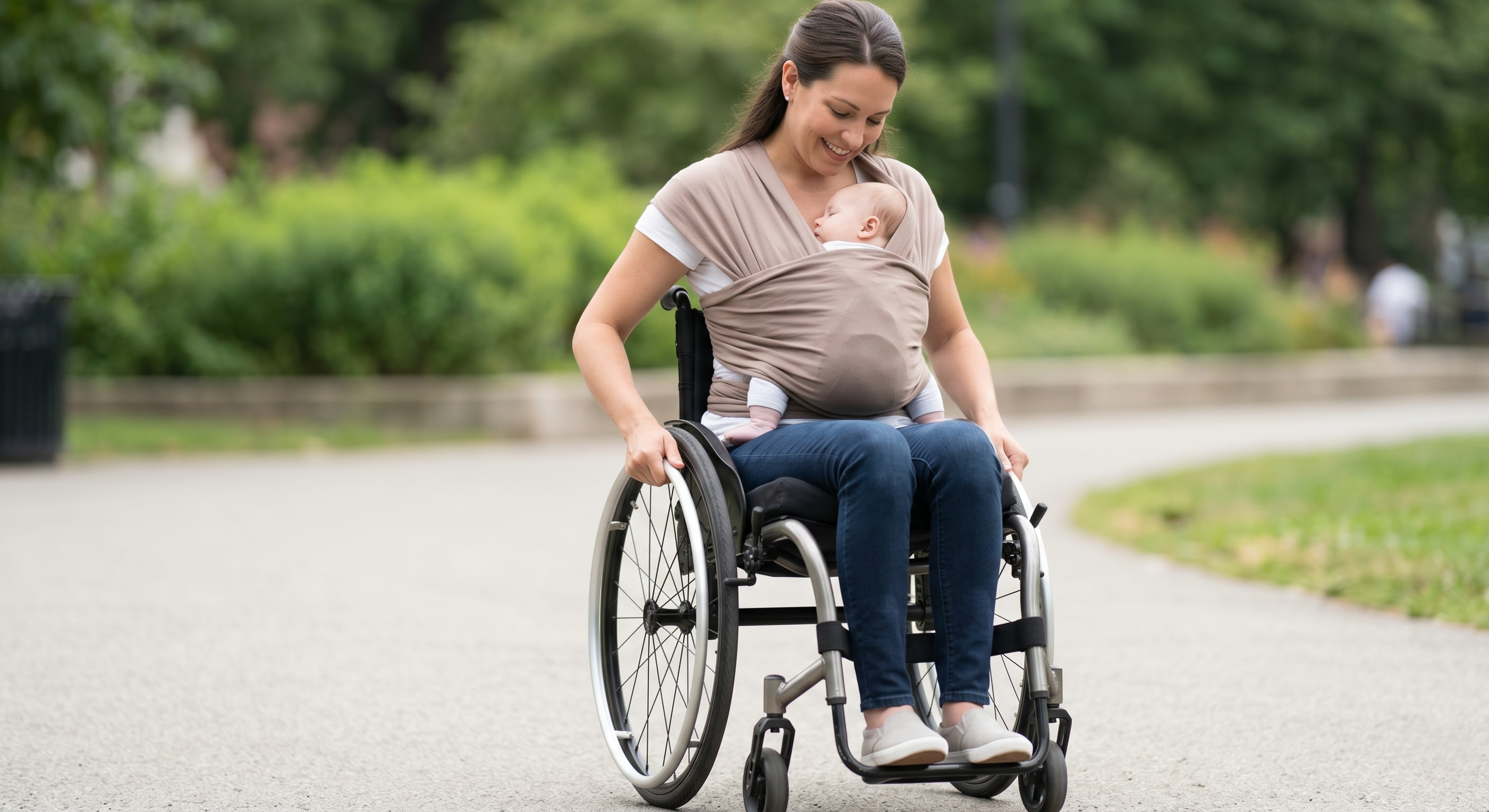
Babywearing is Your Best Friend: For the first 6 to 9 months, an ergonomic soft structured carrier or wrap will be your greatest tool. Babywearing keeps the infant secure against your chest, leaving both of your hands entirely free to propel your chair and navigate your environment safely.
-
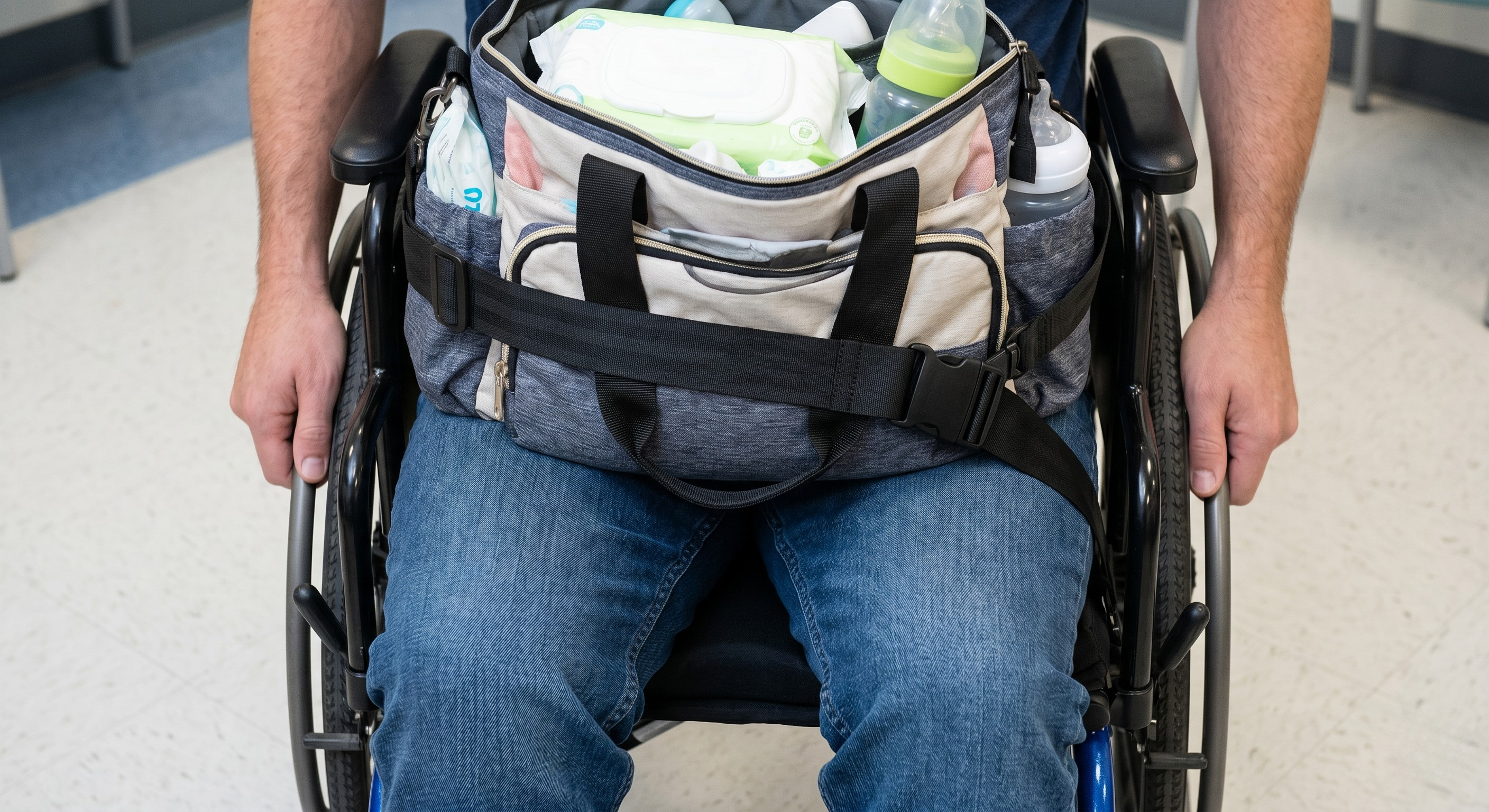
Lock Down Your Diaper Bag: When the baby outgrows the chest carrier, or you simply need to transport the bulky diaper bag, you cannot afford to have it sliding off your lap onto the dirty floor. The
LapStacker Flex by Adaptdefy
-
On-Chair Organization: Don't dig blindly behind your backrest while a toddler is crying. Utilize specialized wheelchair storage.
Wheelchair side bags and under-seat carriers
2. The Great Stroller Dilemma
Pushing a standard stroller while simultaneously pushing a manual wheelchair is incredibly difficult, if not impossible, for long distances.
-
Adaptive Stroller Solutions: Some parents get creative by modifying standard strollers with extended handles so they can be pushed with one hand. Others choose to pull a specialized bike trailer or use adaptive stroller attachments that lock onto the front casters.
-
Call in the Cavalry (Power Assist): Navigating an extra 30+ pounds of toddler and stroller weight will quickly burn out your shoulders. This is the perfect time to invest in a power assist device. The
SmartDrive MX2+ Power Assist System
3. Adapting the Nursery and Home
-
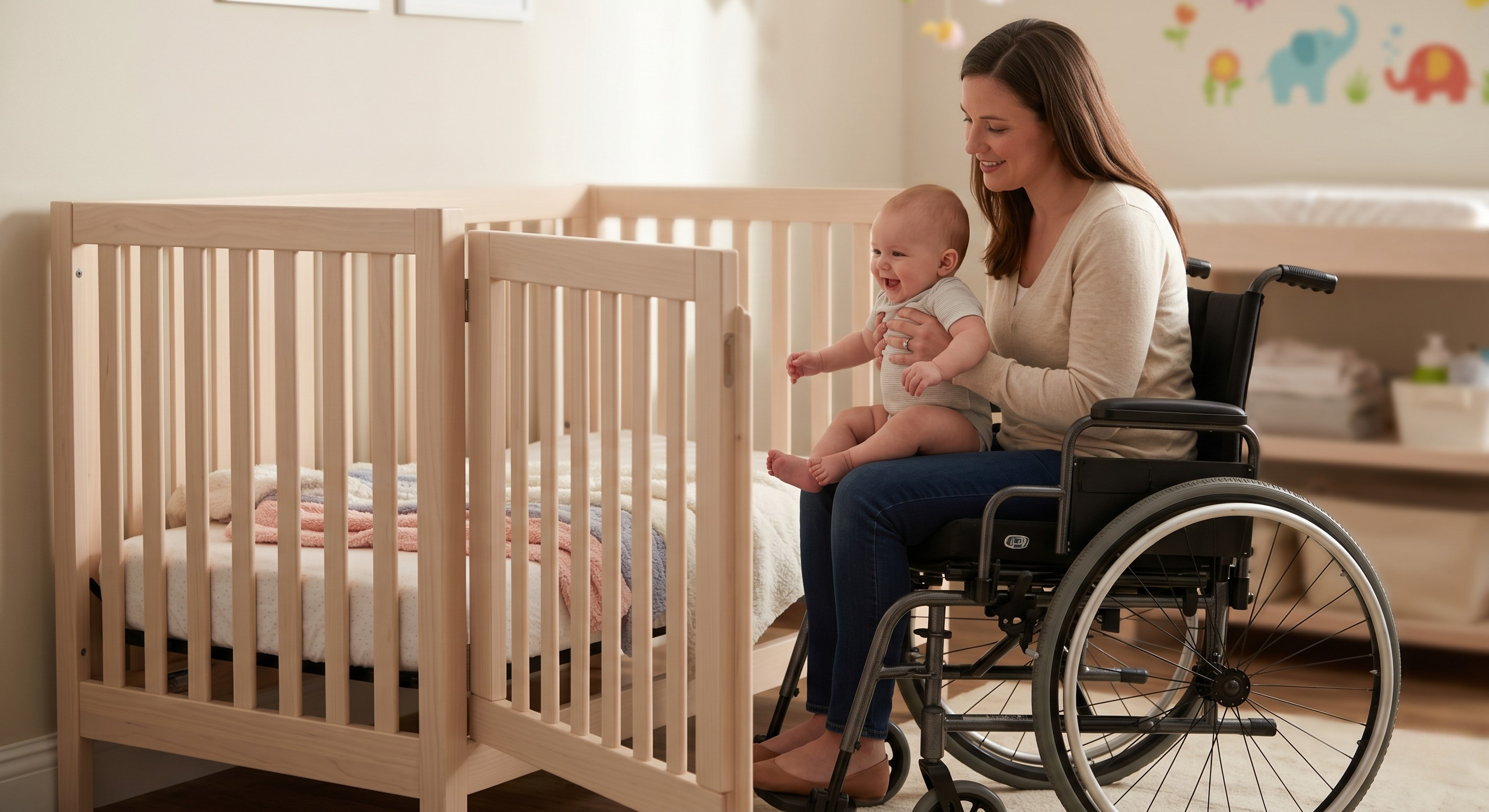
The Crib Transfer: Reaching over the high railing of a standard crib from a seated position is dangerous for your back and the baby. Look for ADA-compliant or adaptive cribs that feature doors that swing open or slide out completely (often called "side-opening" cribs). This allows you to roll right up and slide the baby safely onto your lap.
-
Changing Stations: A standard changing table is often too high or lacks knee clearance. Use a sturdy table where you can roll your chair underneath, or honestly, master the "lap change" or floor change. Many wheelchair-using parents set up comfortable, secure changing stations directly on a padded floor mat.
4. The Toddler Years: Boundaries and Safety
When they start walking, the dynamic changes entirely. You can no longer just carry them to keep them safe from busy streets or crowds.
-
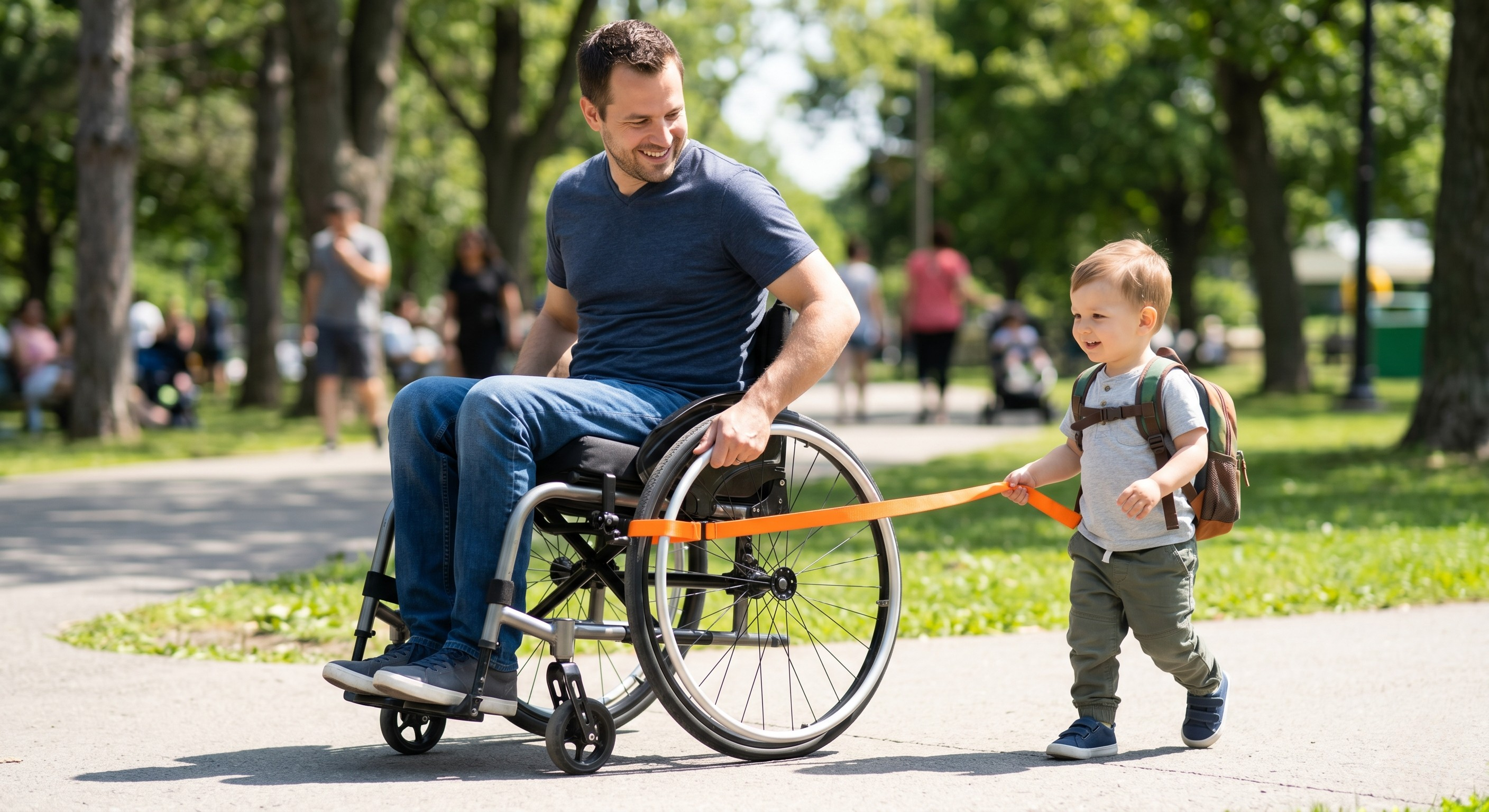
The "Holding On" Rule: Teach your toddler from day one that your wheelchair is a moving vehicle, but also their safe base. Create a strict rule that in parking lots or crowded spaces, they must hold onto a specific part of your chair (like a designated colored strap tied to your frame).
-
Embrace the Lap Ride: Toddlers love riding on laps, and it's often the safest way to transport them quickly. As they grow, make sure you are protecting your own skin and posture. Ensure your wheelchair cushion is properly inflated and supportive enough to handle the extra, squirming weight without "bottoming out."

Final Thoughts
Adaptive parenting isn't about doing things the "standard" way; it's about finding the way that works for your family. It will require trial, error, and a lot of patience. But rolling alongside your child as they discover the world is an unparalleled joy. Equip yourself with the right tools, build your support system, and trust your instincts. You've got this.