Accessible Gardening: Cultivating Your Green Thumb from a Wheelchair | Living Spinal
Posted by Living Spinal on Aug 4th 2026
Accessible Gardening: Cultivating Your Green Thumb from a Wheelchair
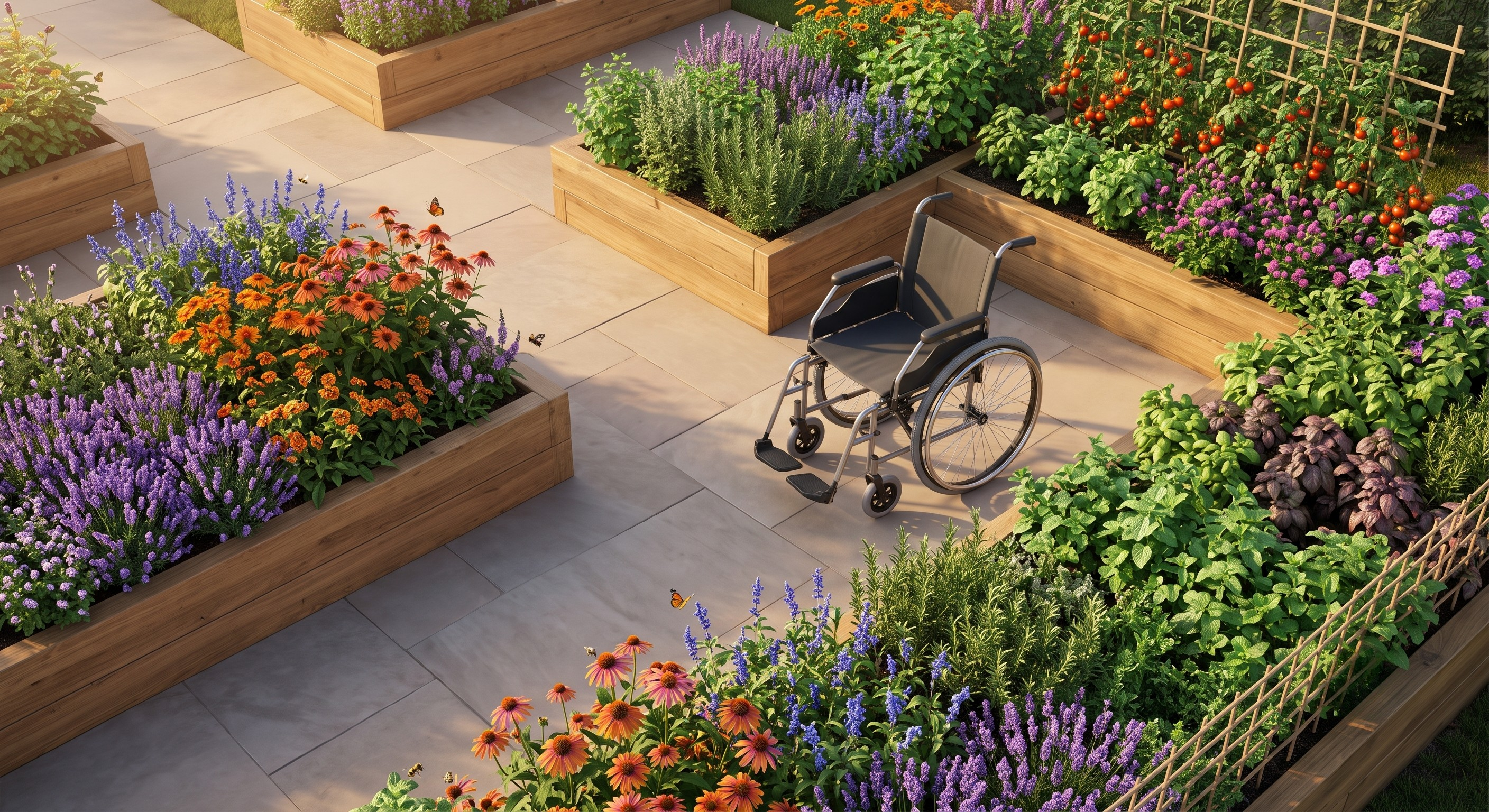
Gardening is one of the most therapeutic and rewarding hobbies you can pick up, but the traditional setup—kneeling in the dirt, dragging heavy hoses, and using short-handled tools—simply isn't designed for wheelchair users. The good news is that in 2026, creating an accessible outdoor oasis is easier than ever. With a few strategic environmental modifications and the right adaptive gear, you can build a lush, beautiful garden without sacrificing your comfort or safety.
Here is your comprehensive guide to setting up your outdoor space and equipping your wheelchair for a season of pain-free planting.
1. Conquer the Terrain: Upgrading Your Wheels
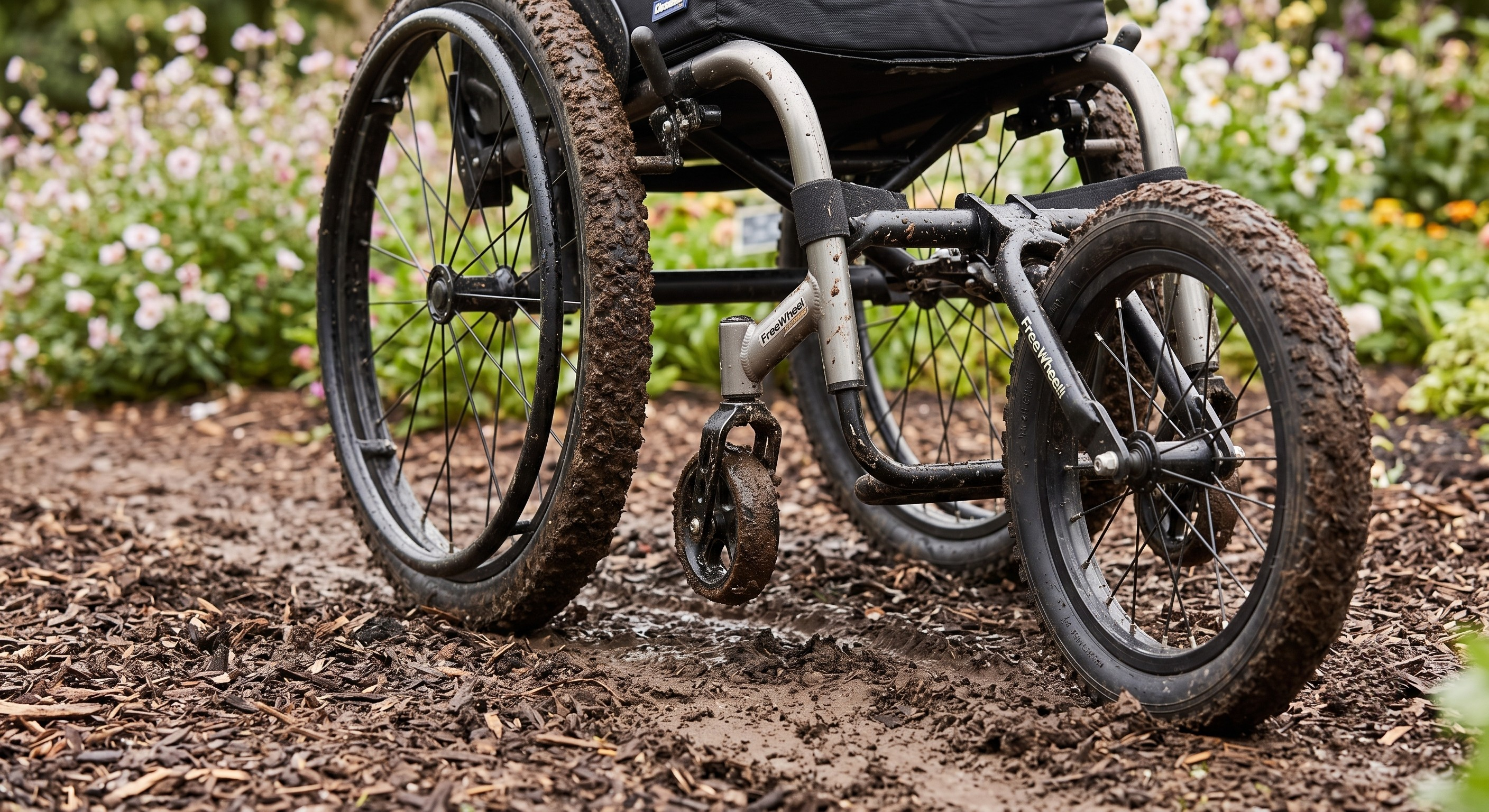
The biggest barrier to gardening is often just getting across the yard. Standard wheelchair casters sink immediately into grass, mud, and gravel, leaving you stuck and frustrated before you even reach your plants.
-
Lift the Casters: The
FreeWheel Wheelchair Attachment -
Swap to All-Terrain Tires: For maximum traction in the dirt, consider upgrading your rear wheels to an off-road tread. Having a spare set of rugged outdoor tires from the
Wheels, Tires, Handrims & Brakes
2. Setting Up an Accessible Workspace
You need to bring the soil to your level. Bending down to ground level from a wheelchair puts dangerous strain on your lower back, compromises your posture, and drastically increases the risk of tipping forward.
-
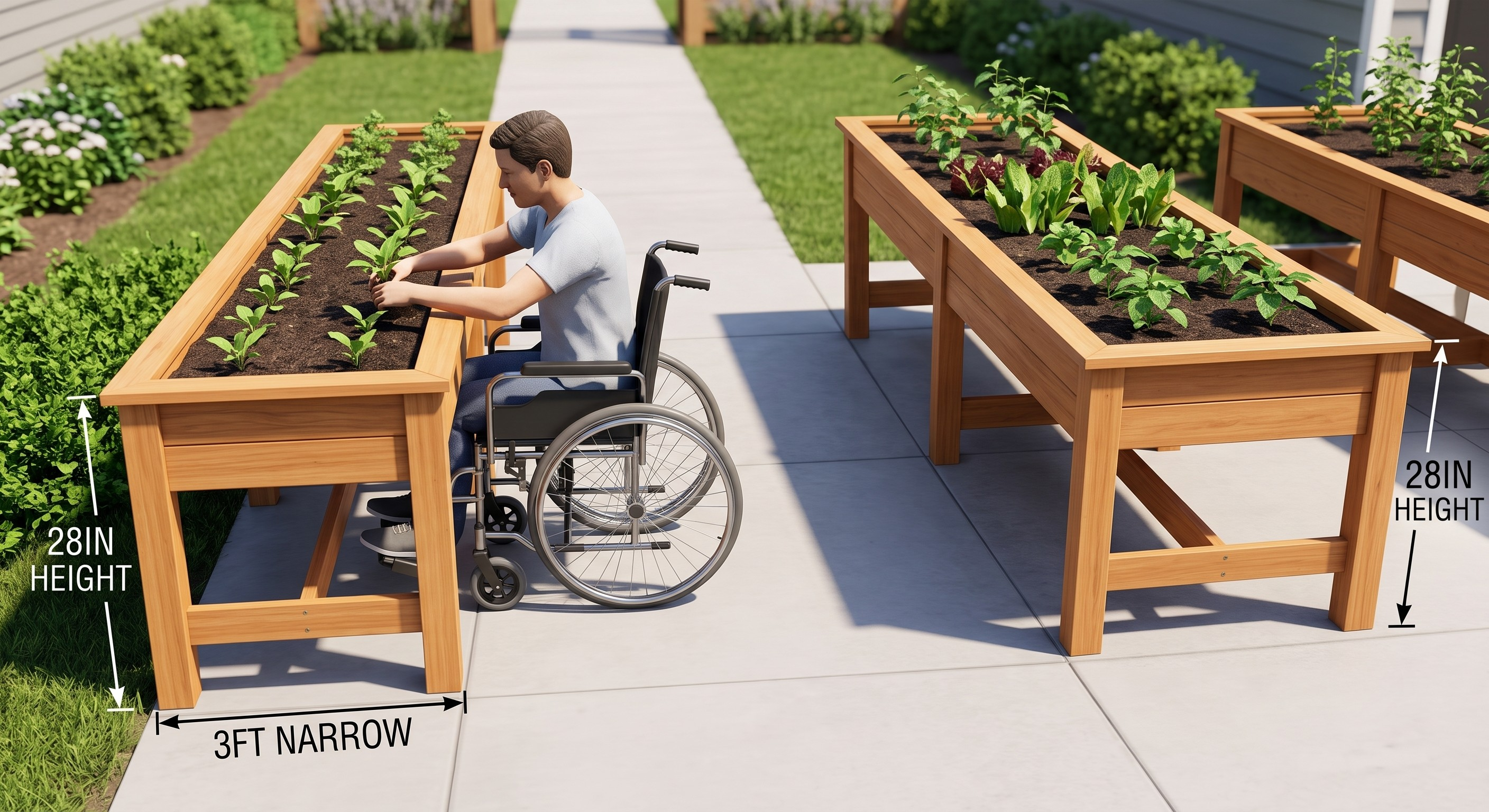
Optimal Raised Planter Beds: Build or buy raised beds that sit at roughly 24 to 30 inches high. This is the "sweet spot" for a comfortable lap height for most wheelchair users.
-
Roll-Under Access: Whenever possible, design table-style planters with complete knee clearance underneath. This allows you to roll directly under the soil bed (just like an accessible desk), letting you reach forward comfortably without twisting your spine.
-
Keep it Narrow: Ensure your planter beds are no wider than 3 feet if you can only access them from one side, or 4 feet if you can reach them from both sides. This guarantees you can reach the center to weed and harvest without overextending your shoulders.
3. The Right Tools for the Job
Standard gardening tools can be heavy, awkward, and difficult to grasp—especially if you deal with limited hand function, arthritis, or quadriplegia.
-
Extend Your Reach: You will inevitably drop a seed packet, lose a trowel, or need to prune a stray branch just out of arm's length. A high-quality reaching aid, like those found in the
Reachers & Grabbers section -
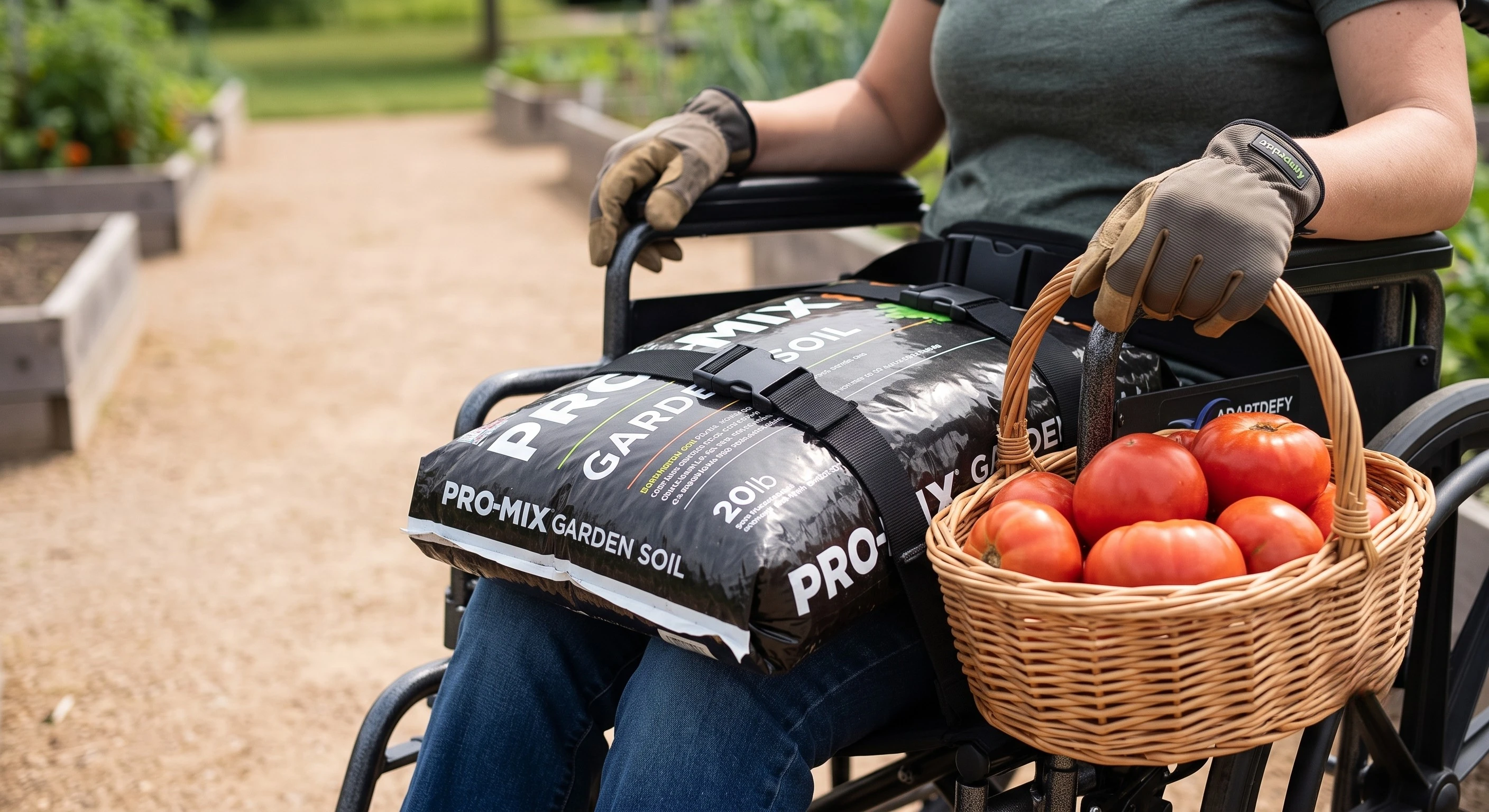
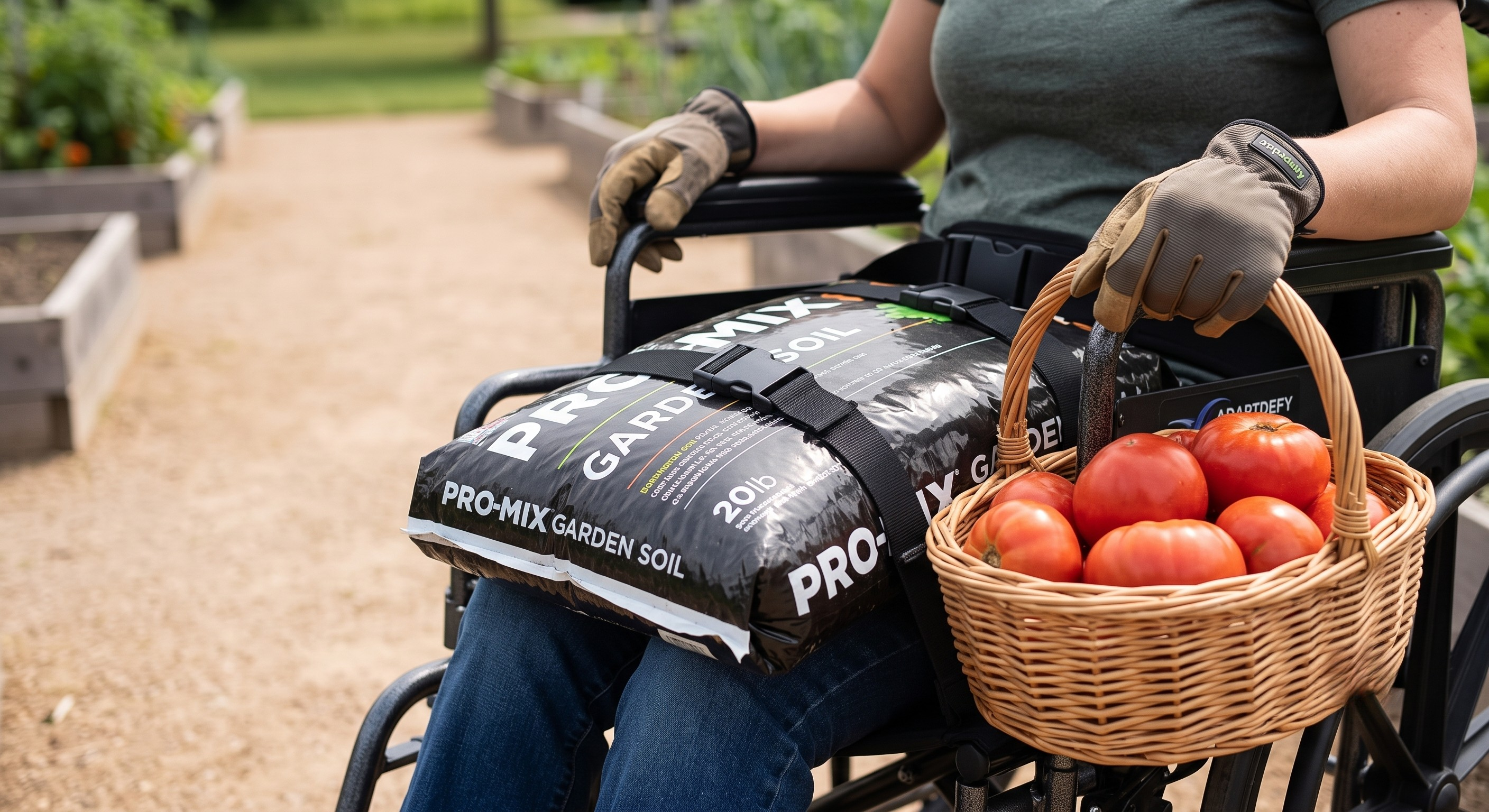
Transporting Soil and Harvests: Trying to push a manual wheelchair while balancing a bag of potting soil, sharp tools, or a basket of fresh tomatoes on your lap is incredibly frustrating and unsafe. The
LapStacker XD by Adaptdefy
4. Low-Maintenance Watering Systems
Dragging a heavy, kinked rubber garden hose across the yard is an exhausting chore that easily gets caught in your spokes, brakes, and casters.
-
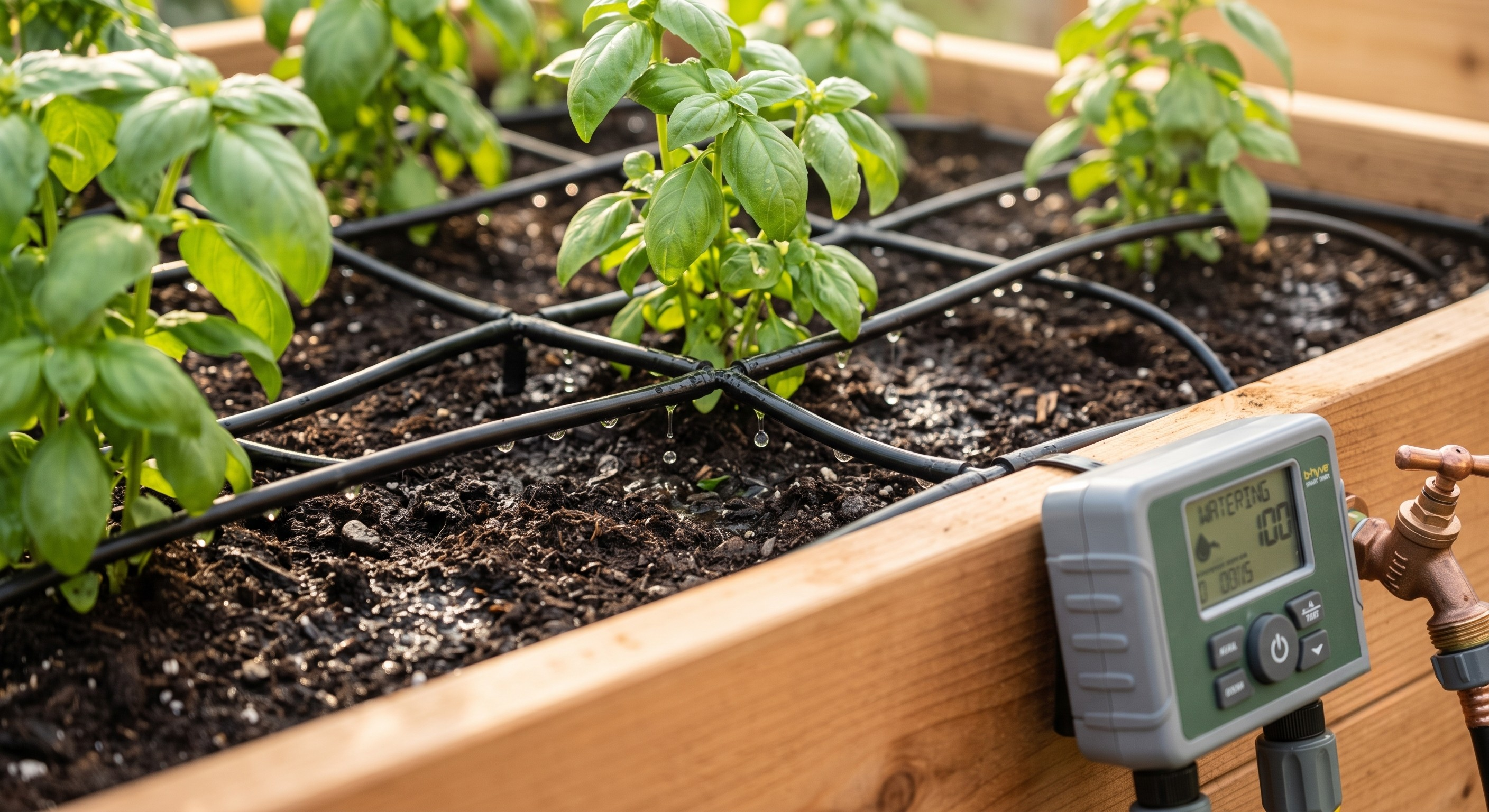
Drip Irrigation Systems: Invest in a simple drip irrigation system or snake soaker hoses through your raised beds, connected to a programmable smart timer at the spigot. This waters the roots directly, conserves water, and entirely saves you the physical labor of daily manual watering.
-
Lightweight Expandable Hoses: If you prefer the meditative act of hand-watering, ditch the traditional heavy rubber hose immediately. Opt for an expandable, lightweight fabric hose and pair it with a long, angled watering wand attachment. This allows you to comfortably reach the back corners of your planter beds from a relaxed, seated position.
Ready to Get Planting?
Gardening from a wheelchair doesn't mean you have to scale back your ambitions or settle for a few indoor potted plants. It simply means designing your space to work with your body instead of against it. By upgrading your chair's outdoor capabilities with tools like the FreeWheel and utilizing accessible garden layouts, you can cultivate your green thumb and enjoy the incredible therapeutic benefits of the outdoors all season long.