
1-619-810-0010 9AM-5PM (CST) : Mon - Thu 9AM-3PM (CST) : Fri 9AM-5PM (CST) : Sat - Sun
1-619-810-0010 9AM-5PM (CST) : Mon - Thu 9AM-3PM (CST) : Fri 9AM-5PM (CST) : Sat - Sun
Living Spinal
Shop Adaptive Utensils for Independent Eating
Adaptive silverware for weak grip, limited wrist motion and tremors
 Shop Adaptive SilverwareDining with Dignity, Sure Grip, cuffs and more below

 Call (619) 810-0010
 Chat With a Specialist

✓ Owned by wheelchair users✓ Help for quad hands✓ HSA/FSA accepted
Adaptive utensils help you feed yourself when grip, wrist motion or finger strength is limited. The right fork or spoon turns mealtime back into something you do on your own.
Living Spinal is owned and operated by people living with paralysis, including quadriplegics who use adaptive silverware at every meal. We stock what works for real hands.
›
Why Adaptive Utensils Make Mealtime Easier
Standard silverware assumes a strong pinch and a flexible wrist. Adaptive eating utensils are shaped, weighted or strapped so your hand does less work.
- Independence: eat at your own pace without waiting for help.
- Less fatigue: bigger or shaped handles need less squeeze.
- Fewer spills: angled heads reach your mouth without twisting your wrist.
- Dignity at the table: many designs look like regular adaptive dining utensils, not hospital gear.
Real-world advice: Try one fork or spoon before buying a full set. Hands change, and the right shape is very personal.
›
How to Choose Adaptive Silverware for Adults
Good adaptive silverware for adults matches your hand, not your diagnosis. Start with these four questions:
Grip strength
Weak grip? Built-up handles or a cuff hold the utensil for you.
Wrist motion
Limited rotation? Curved or bendable utensils reach your mouth without turning the wrist.
Finger function
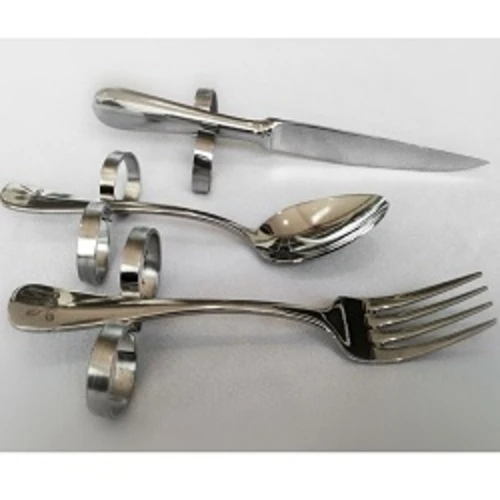
Little finger control? Ring and thumb-rest designs like Dining with Dignity sit in the hand.
Where you eat
In bed or in your chair? Add a lap tray so the plate sits close.
Quick match
- Weak grip, good wrist? Sure Grip utensils.
- Limited wrist rotation? Sure Grip bendable utensils.
- Quad hands or little finger control? Dining with Dignity utensils.
- Almost no grip? A utensil holder or MagnaCuff.
- Eating in your wheelchair? The GoTray foldable lap tray.
›
Types of Adaptive Eating Equipment
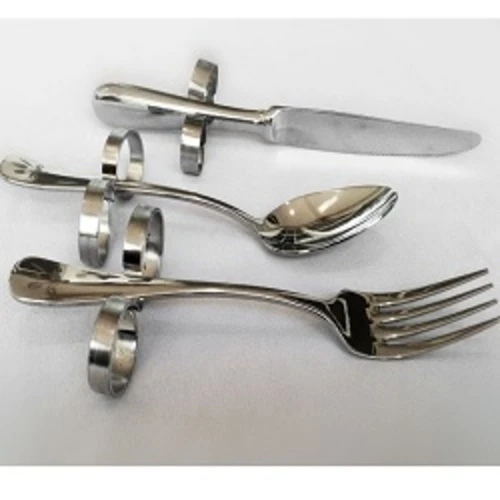
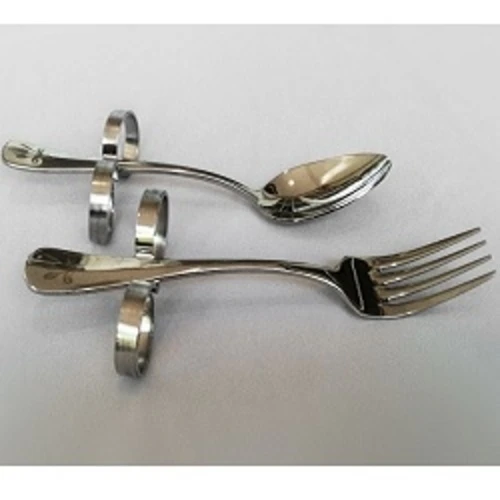
Dining with Dignity utensils
Stainless steel utensils with an adjustable ring that holds them between your thumb and index finger, so they work with little grip. Shop the full line of Dining with Dignity utensils, from the fork and spoon set to the fork, spoon and knife set.
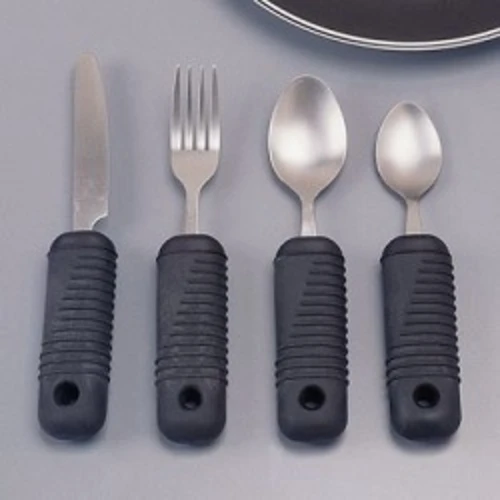
Built-up handle utensils
Thick, soft handles are easier to hold. The Sure Grip utensils set of 4 suits weak grip and arthritis.
Bendable utensils
The Sure Grip bendable utensils bend to the angle you need, so the spoon reaches your mouth without twisting.
Utensil holders and cuffs
When grip is minimal, let a cuff hold the utensil. Compare the universal utensil holder and the MagnaCuff.
Lap trays
Keep the plate close. The GoTray foldable lap tray fits across a wheelchair.
 Email
›
Adaptive Spoons and Smaller Sizes
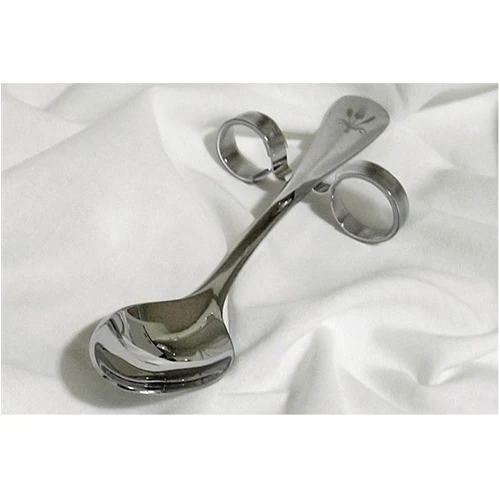
Adaptive spoons are often the first utensil people try, because soups, cereal and yogurt are the hardest foods to manage.
- Smaller hands, teens and utensils for elderly users often fit the smaller sized fork and smaller sized spoon.
- A full set like the fork, spoon and steak knife set covers every meal.
- Dining with Dignity utensils are 10/18 stainless steel and dishwasher safe. Check the care notes on other utensils.
Fit check: Hold the utensil at the table for a full meal. If your hand cramps or the food tips, try a different shape or size.
›
From Our Team: Eating With Quad Hands
Several of us live with limited hand function, so utensils for disabled hands are part of our daily routine. What we learned:
- Mix and match. Many people use a different utensil for each food.
- A non-slip mat and a plate with a rim matter as much as the fork.
- Weight helps some hands and tires others. Test before you commit.
- Occupational therapists can fine-tune the angle and grip with you.
›
Adaptive Utensils FAQs
What are adaptive utensils?
Adaptive utensils are forks, spoons and knives designed for people with weak grip, limited wrist motion, tremors or paralysis. They use built-up handles, curved shapes, cuffs or bendable necks so you can eat independently with less effort and fewer spills.
Which adaptive silverware is best for quadriplegics?
Many quadriplegics do well with Dining with Dignity utensils or a utensil holder cuff, because both work with very little finger control. The best choice depends on your wrist motion and grip, so try one piece before buying a full set.
Is there silverware for disabled adults that looks like regular silverware?
Yes. Dining with Dignity utensils are stainless steel and look close to regular silverware, so they feel natural at a restaurant or family dinner. Built-up handle utensils are easier to grip but look more medical.
Can I use my HSA or FSA for adaptive eating utensils?
Adaptive eating equipment often qualifies as an eligible expense. Check with your plan administrator, then see our guide to using your HSA or FSA at Living Spinal.
Can I use HSA/FSA, financing, or coupons?
Yes. We accept HSA/FSA cards, financing is available, and you can check our latest coupons and promo codes before you check out.
Need help choosing adaptive utensils? Let us talk.
Living Spinal is owned and operated by people living with paralysis. Our specialists will help you find adaptive silverware that fits your hands.
Mon–Thu 9AM–5PM · Fri 9AM–3PM · Sat–Sun 9AM–5PM (CST)
 Free Video Consultation
Or leave your info and we'll reach out.
Check out these other categories
Dining with Dignity Utensils · Gripping Aids · Wheelchair Push Gloves · Transfer Boards · Daily Living Aids & Assists · Overbed Tables