

What to Do When an Airline Damages Your Wheelchair: A Step-by-Step Action Plan |Living Spinal
Posted by Living Spinal on Jul 14th 2026
What to Do When an Airline Damages Your Wheelchair: A Step-by-Step Action Plan
It is the nightmare scenario for any wheelchair user: you finally arrive at your destination, wait at the gate or baggage claim, and your wheelchair is returned to you bent, broken, or missing pieces. Your anxiety in this moment is completely valid. A damaged wheelchair isn't just broken luggage; it is a profound loss of independence.
However, when you are armed with the right knowledge and an action plan, you can transform that panic into empowerment. Under the Air Carrier Access Act (ACAA) in the United States, airlines are legally responsible for repairing or replacing your mobility equipment, and there is no maximum liability limit for domestic flights.
If you find yourself staring at a damaged chair, take a deep breath and follow this step-by-step action plan.
Step 1: The Pre-Flight Prerequisite (Document Everything)
Winning a damage claim starts before you even board the plane. Airlines will often try to claim that the damage was "pre-existing." You need proof that it wasn't.
-
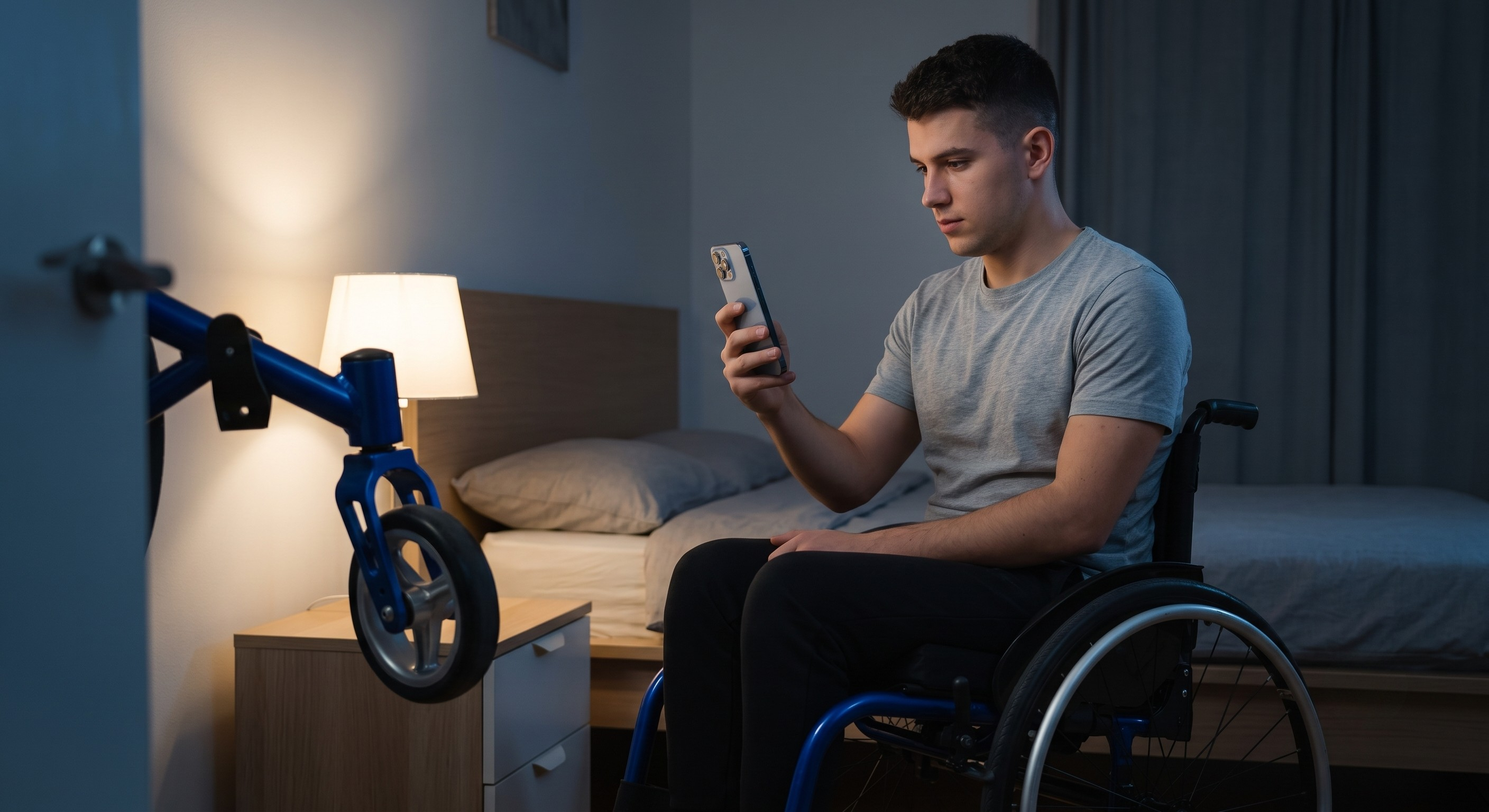
Take a 360-degree video: The night before or the morning of your flight, take a slow, clear video of your wheelchair from every angle, showing it in perfect working condition.
-
Photograph the vulnerable spots: Take close-up photos of your joystick, casters, backrest, and wheels.
-
Keep your parts close: Always remove easily detachable parts (cushions, side guards, joysticks, headrests) and take them into the cabin with you. Do not let them go into the cargo hold.
Step 2: Inspect Immediately Upon Landing
Do not let the excitement of arriving at your destination distract you from your equipment.
-
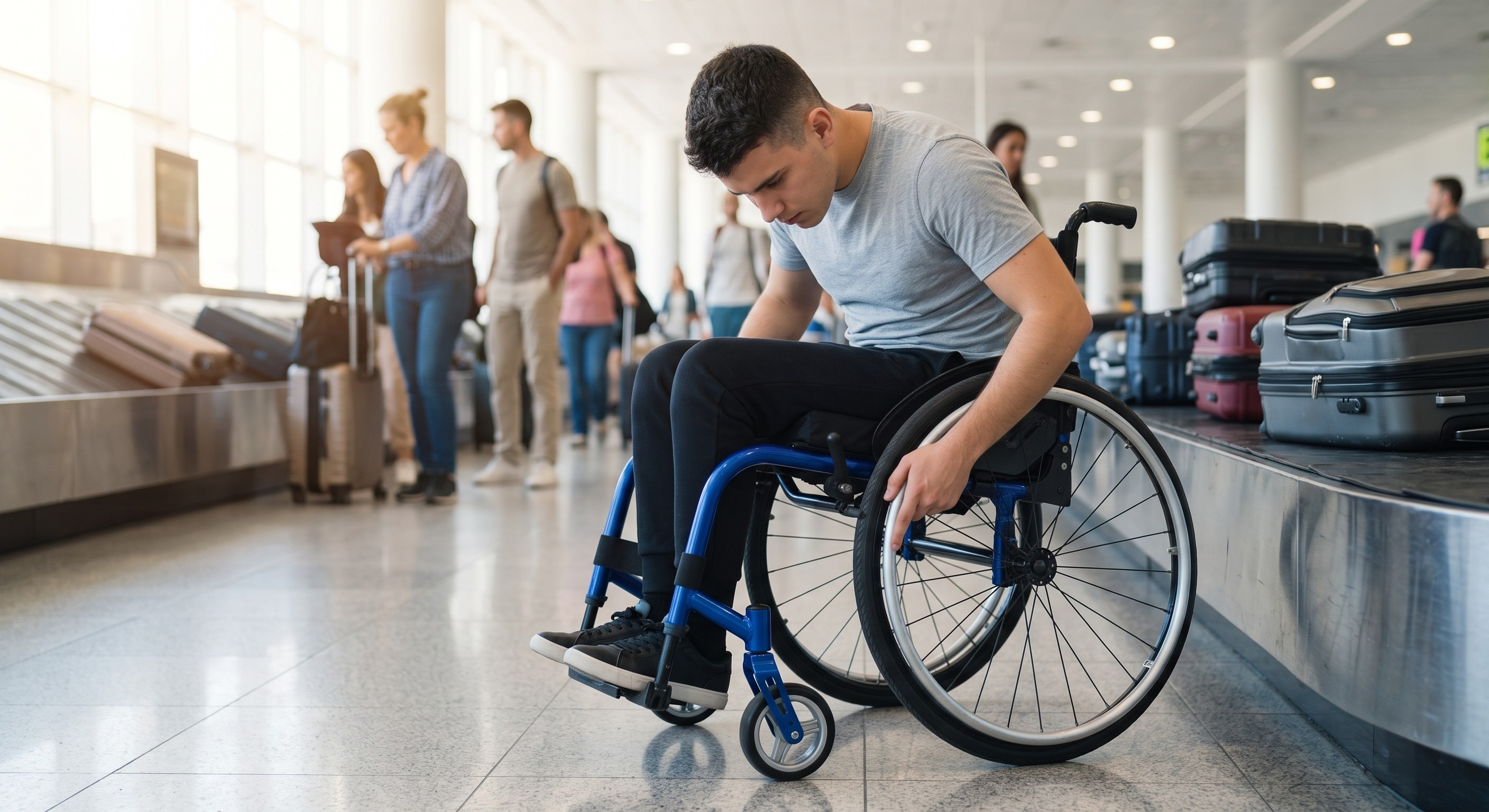
Check the frame: Look for bends, dents, or deep scratches that weren't there before.
-
Test the moving parts: Roll the chair forward and backward. Check if the wheels are out of alignment, if the casters flutter, or if the brakes fail to lock securely.
-
Turn it on: If it is a power chair or has a power assist device, turn it on immediately to ensure the electronics haven't been damaged by rough handling or exposure to the elements.
Step 3: Do Not Leave the Airport
This is the most critical step. Once you leave the airport, the airline can argue that the damage occurred in the taxi or at your hotel.
-
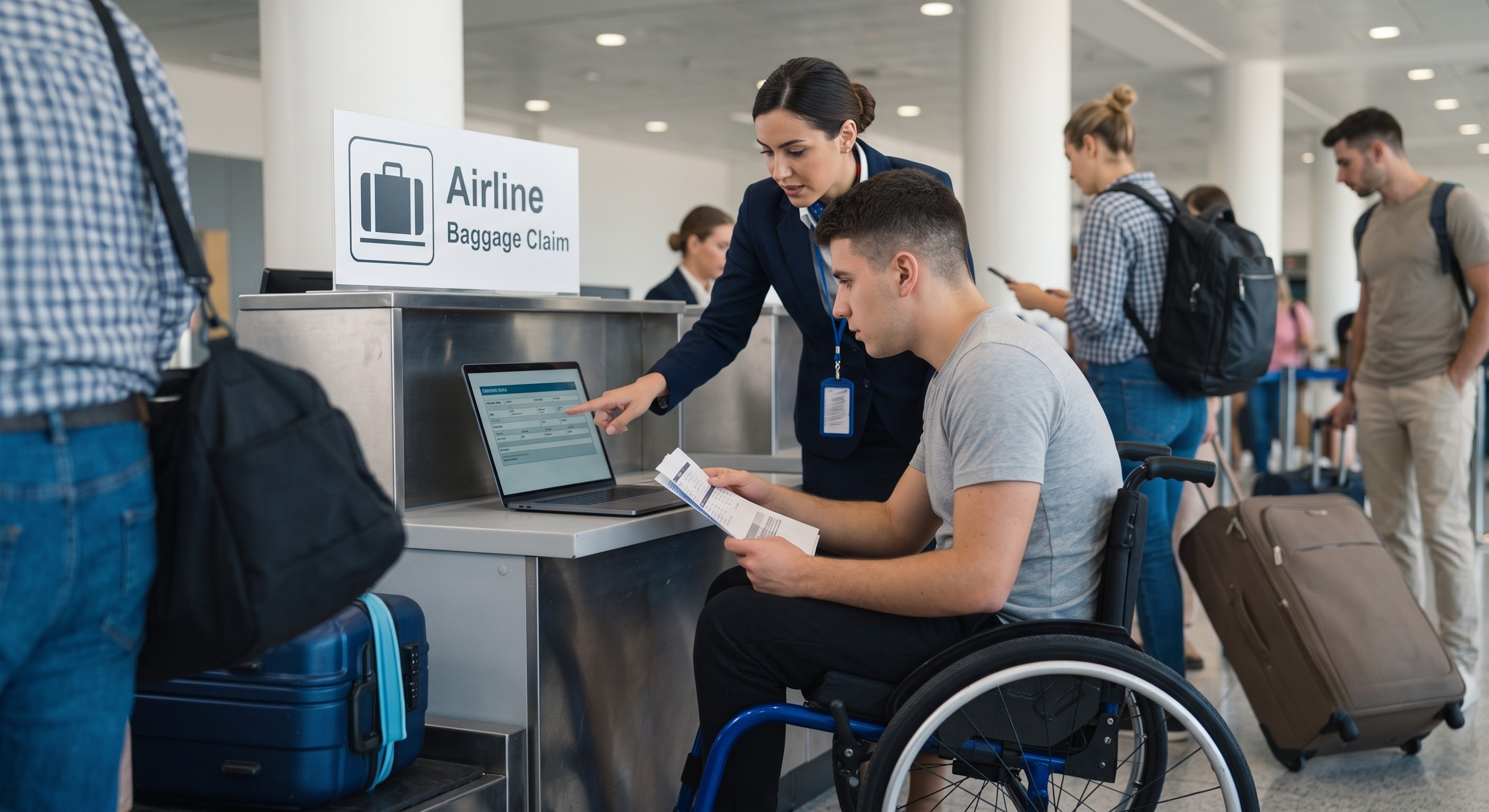
File the claim on the spot: Go directly to the airline's baggage claim office. Tell them you need to file a damage report for your mobility device.
-
Refuse standard luggage forms if possible: Wheelchairs are not standard luggage. Ensure the paperwork specifically details mobility equipment damage.
-
Get physical copies: Do not leave the office without a printed copy of your damage report, a claim number, and the direct phone number and email of the baggage office manager.
Step 4: Demand a CRO (Complaint Resolution Official)
If the baggage staff is unhelpful, dismissive, or unfamiliar with the laws regarding mobility devices, you need to escalate the situation immediately.
-
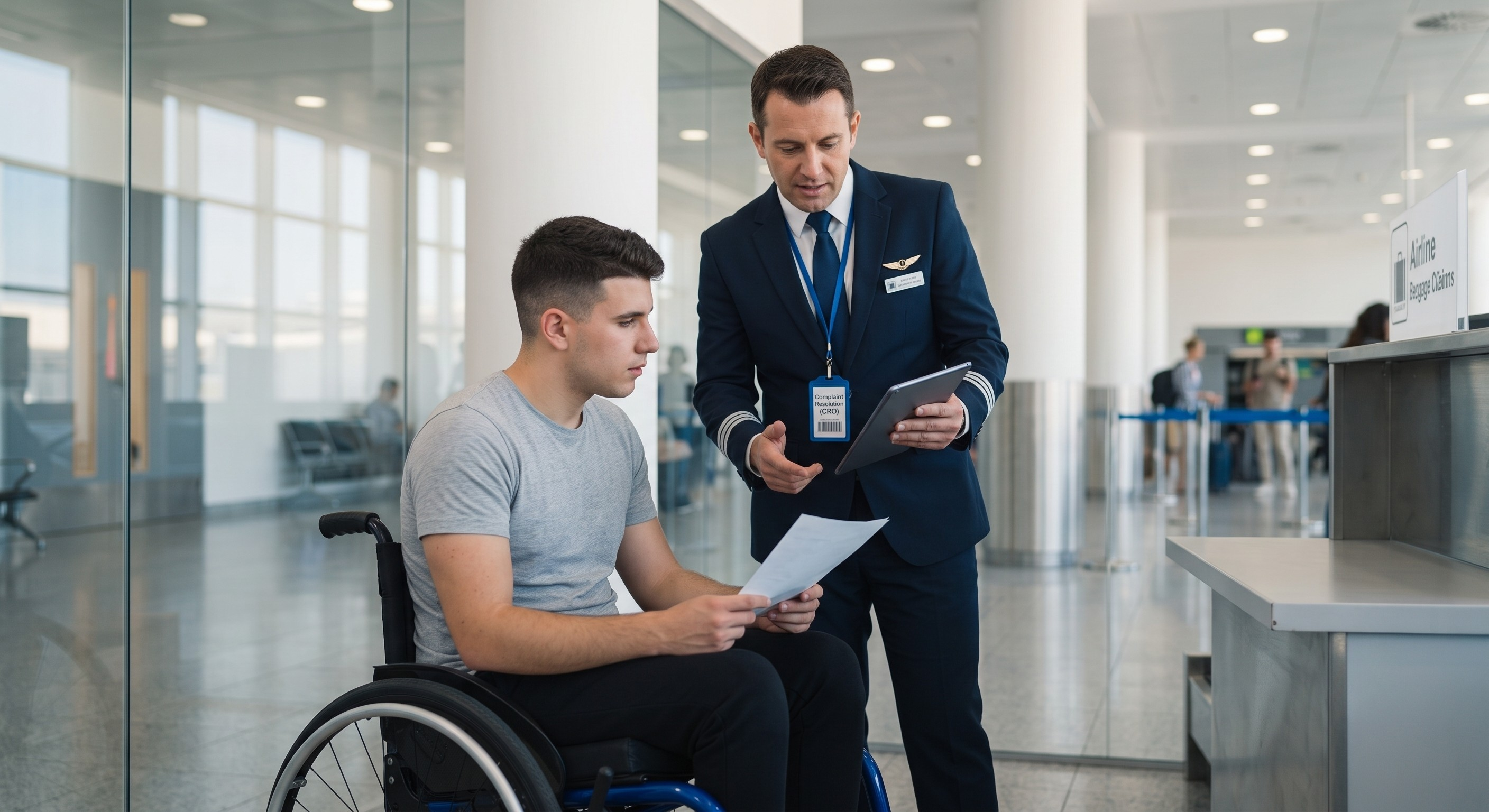
Ask for the CRO: Every airline operating in the U.S. is mandated by law to have a Complaint Resolution Official available (either in person or via phone) during all operating hours.
-
State your rights: The CRO is specifically trained in the Air Carrier Access Act. They have the authority to resolve disability-related complaints on the spot and overrule gate agents or baggage staff.
Step 5: Secure a Suitable Loaner Chair
You cannot put your life on hold while the airline takes weeks to process a repair.
-
Demand immediate mobility: The airline is responsible for providing you with a functional loaner chair while yours is out of commission.
-
Be specific about your needs: Do not accept a standard hospital transport chair if you require a customized rigid manual chair or a complex power chair. Demand a loaner that actually meets your medical and mobility requirements.

Step 6: Source Quotes and Relentlessly Follow Up
Airlines use third-party vendors to fix chairs, and these vendors are notoriously slow. You have the right to source your own repair quotes to speed up the process.
-
Contact your original provider: Reach out to the ATP (Assistive Technology Professional) or company that built your chair and ask for a repair quote to submit to the airline.
-
Source replacement parts: If specific parts are broken, you can often find the exact replacements online and submit the cost to the airline's claims department. You can use the
Living Spinal Replacement Parts Form -
File a DOT Complaint: If the airline drags their feet or denies your valid claim, file a formal complaint with the Department of Transportation (DOT). Airlines are heavily fined for violating the ACAA, and a DOT complaint often forces their legal team to resolve your issue quickly.
Final Thoughts
Dealing with airline damage is undeniably awful, but you are not powerless. By documenting your equipment, knowing your rights under the ACAA, and demanding immediate action from a CRO, you can hold airlines accountable and get your wheels back in working order.