
What Makes Some Wheelchairs Better for Outdoor Use | Living Spinal
Posted by Living Spinal on Mar 26th 2026
What Makes Some Wheelchairs Better for Outdoor Use
Outdoor environments create challenges that many wheelchair users encounter every day. Sidewalk cracks, gravel paths, grass, dirt trails, and uneven pavement can slow movement and require additional effort to navigate. Some wheelchairs move through these conditions far more effectively than others because of specific design features.
Several key components influence outdoor wheelchair performance. Frame structure, tire type, caster size, and specialized wheelchair accessories all play an important role in how smoothly a wheelchair moves across rough terrain. These features determine traction, stability, and how efficiently energy transfers from the user to the wheels.

Understanding these design elements helps explain why some wheelchairs are better suited for outdoor mobility.
Outdoor Wheelchair Mobility and Terrain Challenges
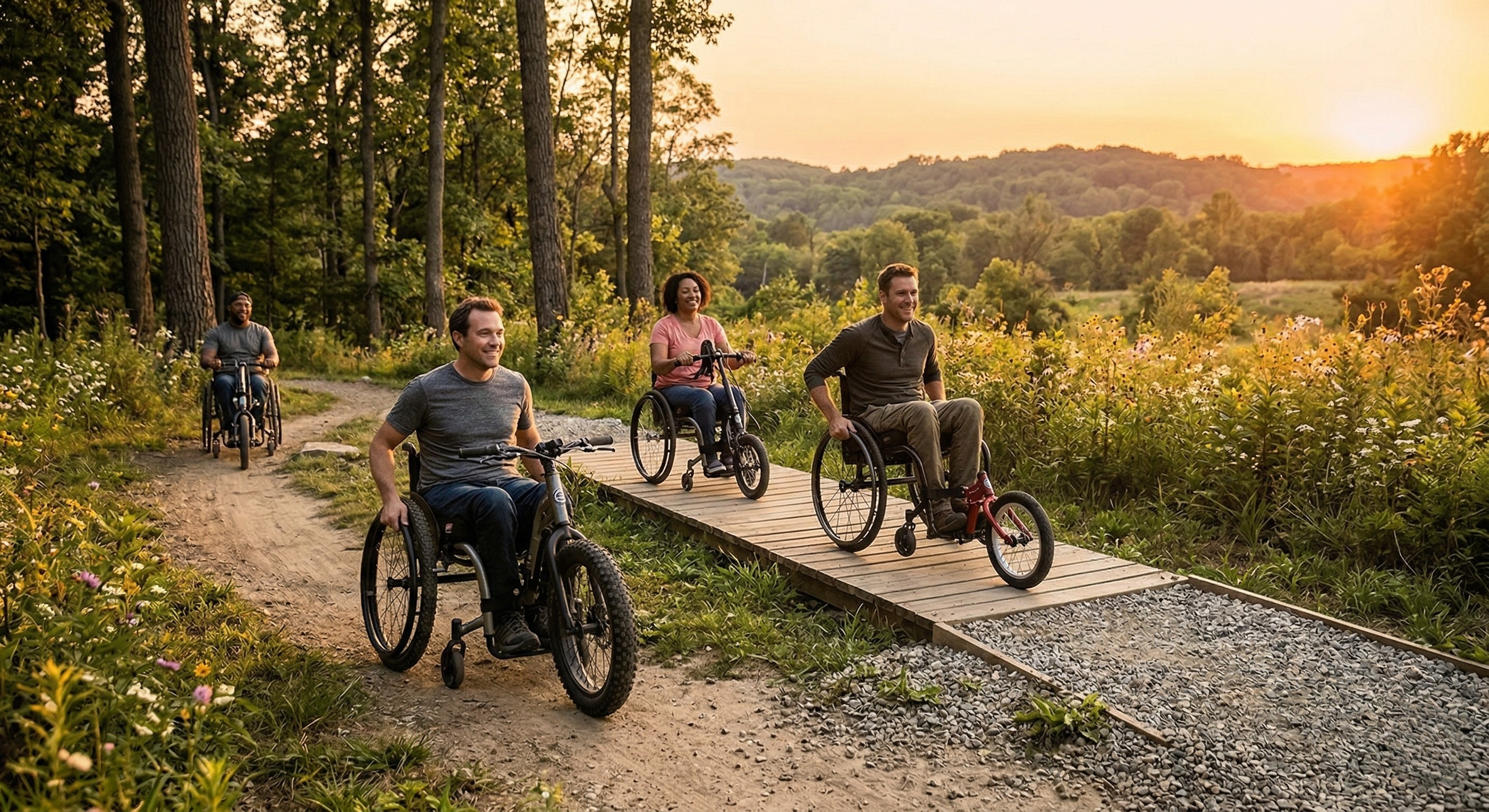
Outdoor wheelchair mobility often involves navigating surfaces that were not designed with wheelchairs in mind. Grass fields, gravel paths, and cracked sidewalks create resistance that can slow a wheelchair or cause the front casters to stop suddenly.
These challenges often appear in places such as:
- public parks
• walking trails
• outdoor markets
• sporting events
• residential sidewalks
A wheelchair that performs well outdoors usually includes features that improve stability and allow the wheels to roll more easily over irregular surfaces. The goal is to maintain momentum and reduce the physical effort required to travel longer distances.
Rigid Frame Wheelchairs and Outdoor Performance
Rigid frame wheelchairs are commonly associated with higher efficiency and stronger structural stability. Unlike folding models, a rigid frame wheelchair has a fixed frame that does not collapse in the center.
This design reduces energy loss during propulsion. When a user pushes the rims, more of that energy converts directly into forward movement.
Rigid frames also tend to be lighter than folding wheelchairs. Lower weight helps when maneuvering over bumps or pushing across soft surfaces such as grass or dirt. Many active wheelchair users prefer rigid frame wheelchairs for outdoor mobility because the chair responds quickly and maintains momentum more easily.
Folding Wheelchairs and Outdoor Terrain Considerations
Folding wheelchairs remain popular because of their portability and ease of transport. The frame can collapse inward, making storage in vehicles or small spaces more convenient.
However, the folding mechanism introduces additional moving parts into the wheelchair structure. When traveling across uneven terrain, this structure may flex slightly under load.
That flex can absorb some of the propulsion energy generated by the user. Outdoor movement may require slightly more effort compared to a rigid frame design. Despite this difference, folding wheelchairs can still perform well outdoors when equipped with suitable tires and larger caster wheels.
Wheelchair Tires for Outdoor Traction and Durability
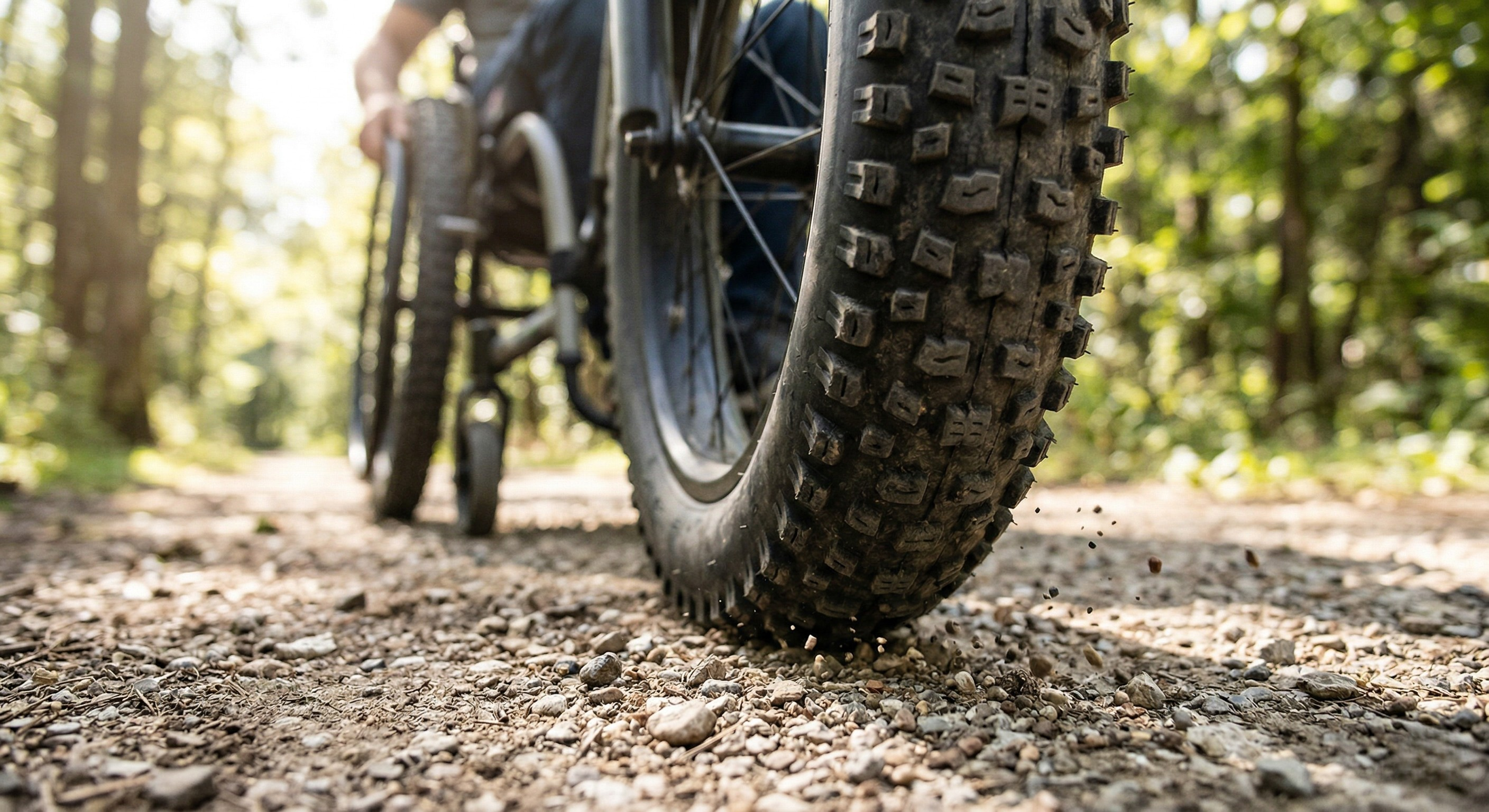
Wheelchair tires play a major role in determining how a chair performs on different surfaces. Tires designed primarily for indoor use typically have smooth tread patterns that allow efficient rolling on flat floors.
Outdoor wheelchair tires often provide additional traction and durability.
Some characteristics commonly associated with outdoor wheelchair tires include:
- pneumatic tires filled with air for shock absorption
- wider tire profiles that distribute weight across a larger surface area
- deeper tread patterns that grip loose terrain
These features help maintain traction on surfaces such as gravel or packed dirt. Pneumatic tires also absorb vibrations created by uneven terrain, which can improve comfort during longer outdoor travel.
Wheelchair Caster Size and Stability on Rough Ground
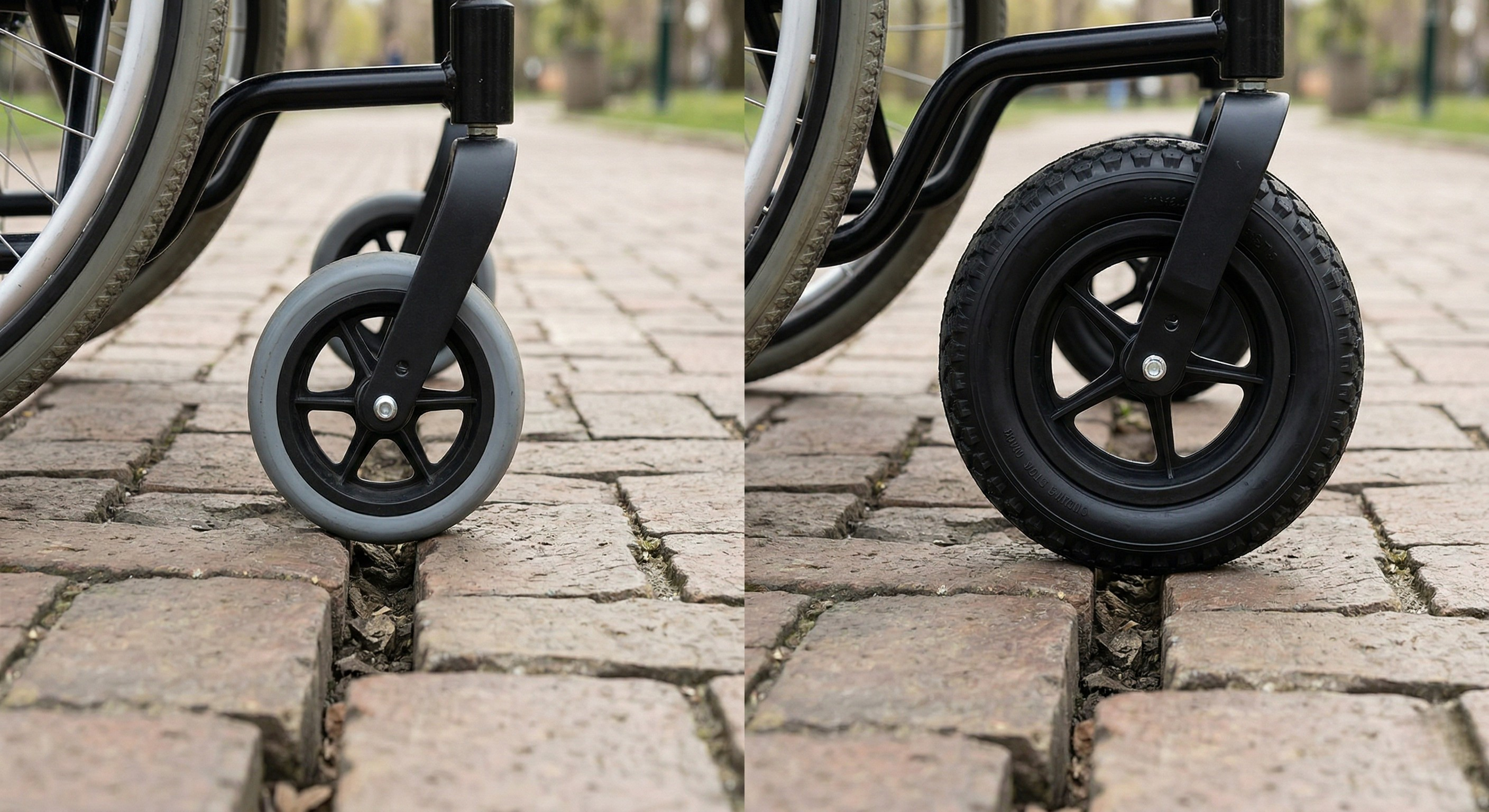
The front casters of a wheelchair are often the first point of contact with obstacles on the ground. Small casters allow tight turning and precise indoor maneuvering. Outdoor terrain presents different demands.
When a small caster encounters gravel, grass, or a crack in pavement, it can stop suddenly or sink into the surface. This interruption can disrupt forward movement and require the user to reposition the wheelchair.
Larger wheelchair casters improve outdoor stability because they roll over obstacles more easily. A greater wheel diameter allows the caster to climb small bumps instead of stopping against them. Many wheelchairs designed for active use include caster sizes that balance maneuverability with improved terrain capability.
Rear Wheel Size and Wheelchair Rolling Efficiency
Rear wheel size directly influences how efficiently a wheelchair moves across outdoor terrain. Most manual wheelchairs use large rear wheels because they allow effective propulsion through push rims.
Larger wheels offer several mechanical advantages.
- reduced rolling resistance
• improved ability to roll over obstacles
• smoother motion across uneven surfaces
When traveling across gravel or cracked pavement, larger wheels maintain forward momentum more effectively. This allows the wheelchair to move through outdoor environments with fewer interruptions.
Proper tire pressure and wheel alignment also contribute to efficient rolling performance.
Wheelchair Attachments That Improve Outdoor Mobility
Many wheelchair users add specialized equipment that improves mobility outside. Wheelchair attachments can modify how the chair interacts with the ground and help reduce the impact of rough terrain.
Some attachments commonly used for outdoor mobility include:
- front wheel lifting devices
• off road wheelchair wheels
• adaptive handcycles
• suspension components
These accessories can help reduce the limitations created by small front casters and improve stability on surfaces that normally slow a wheelchair.
FreeWheel Wheelchair Attachment for Outdoor Terrain Mobility
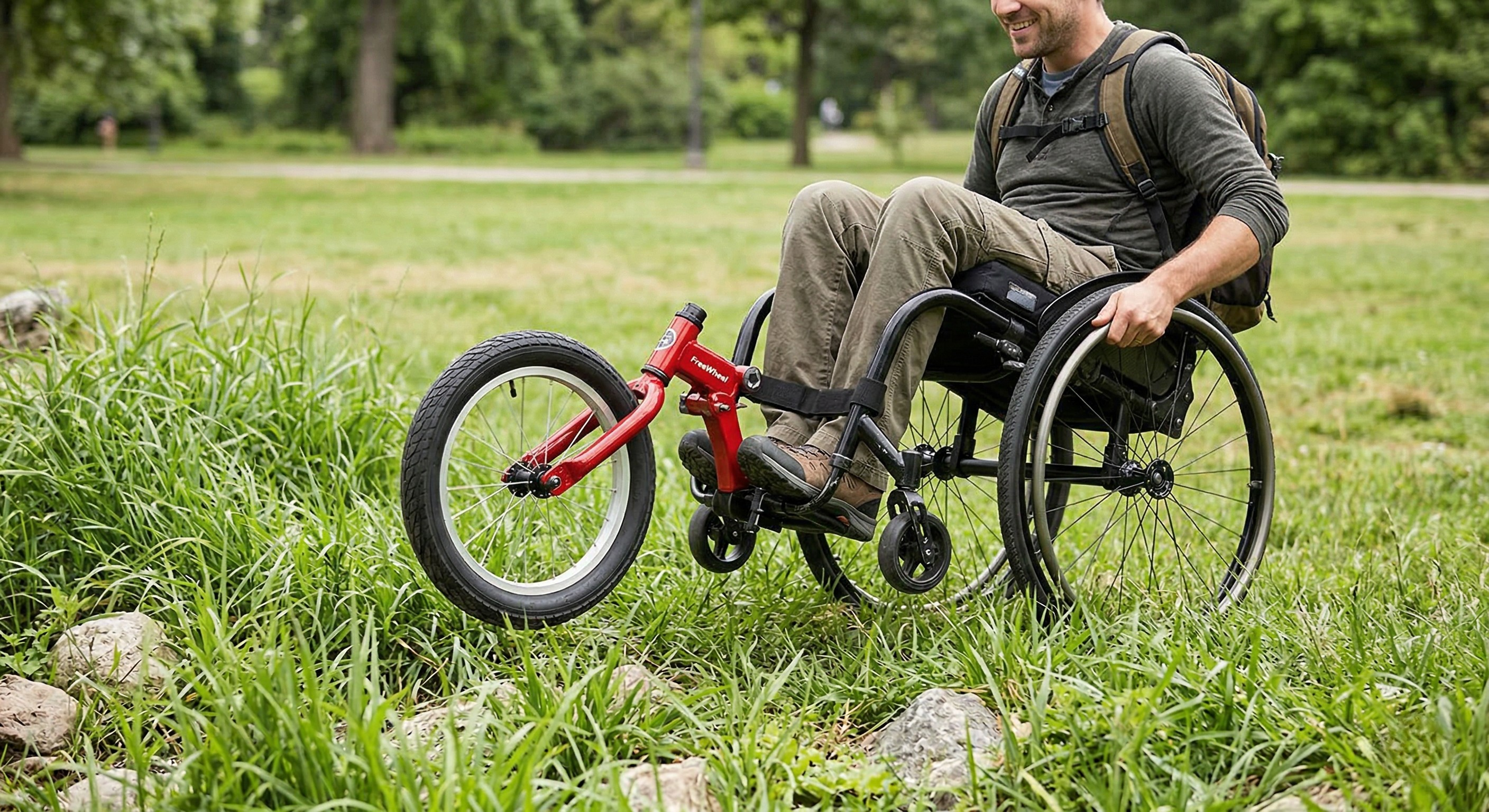
One example of an accessory designed for outdoor mobility is the FreeWheel wheelchair attachment. This device connects to the front of a manual wheelchair and lifts the small front casters off the ground. By raising the casters, the wheelchair rolls on a larger single wheel positioned in front of the chair.
The larger wheel is able to roll across grass, gravel, dirt trails, and uneven pavement more smoothly than small casters. Many wheelchair users use this type of attachment when traveling on nature paths, attending outdoor events, or navigating surfaces where standard wheelchair casters tend to catch or stop.
Wheelchair Weight Distribution and Outdoor Stability
Weight distribution affects how stable a wheelchair feels on uneven terrain. If too much weight rests on the front casters, the chair may become more likely to catch on obstacles.
Many active wheelchairs are designed with adjustable axle positions. This allows users to shift the center of gravity to improve propulsion efficiency and stability.
Balanced weight distribution can:
- improve pushing efficiency
• reduce strain on the arms and shoulders
• allow smoother movement across uneven ground
Wheelchair Design and Outdoor Independence
The combination of frame structure, tire type, wheel size, caster configuration, and accessories determines how well a wheelchair performs outside. When these elements work together effectively, the wheelchair can move smoothly across terrain that would normally create resistance.
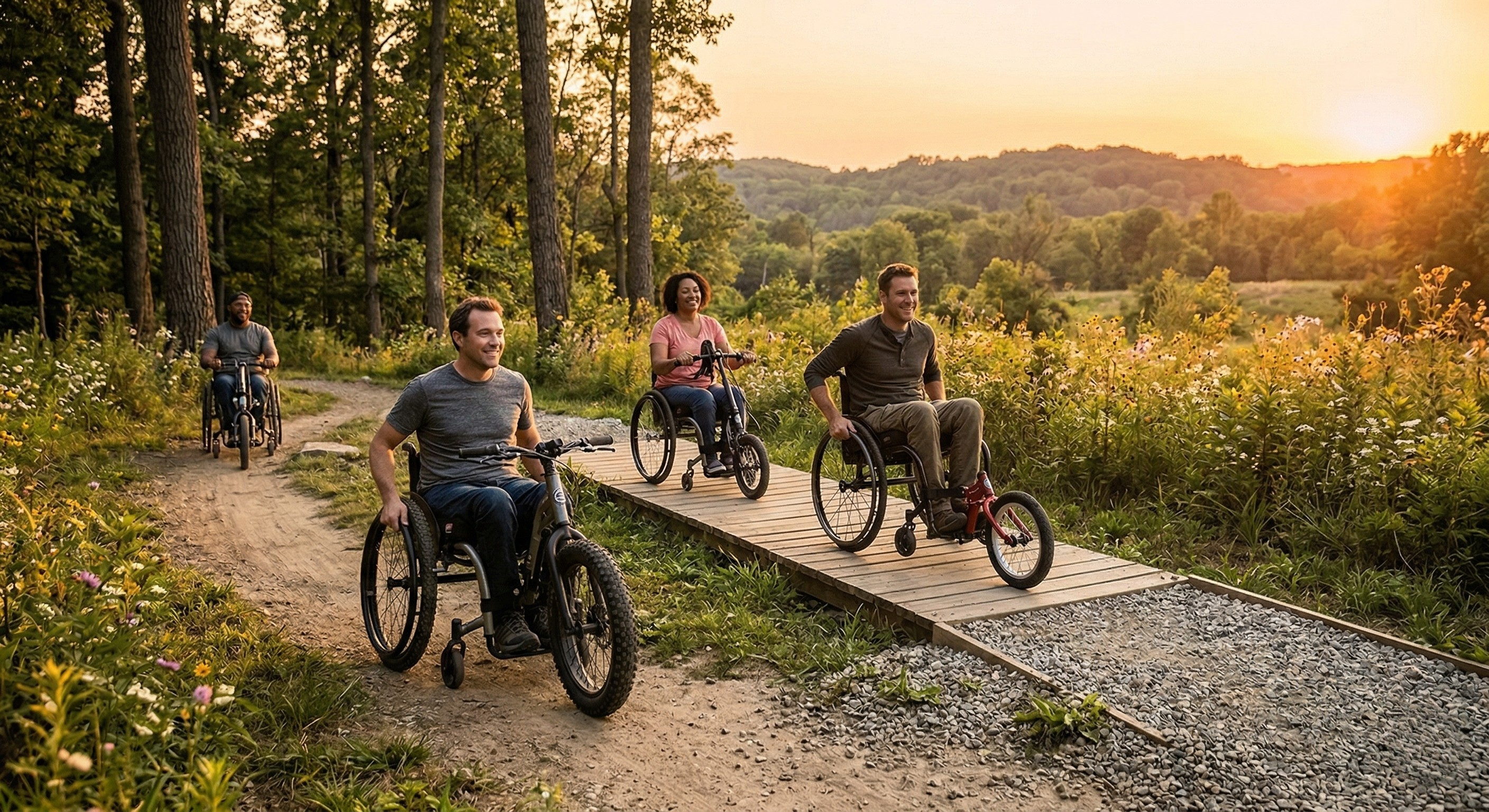
Outdoor mobility is an important part of daily life for many wheelchair users. Parks, sidewalks, trails, and public spaces are all environments where reliable wheelchair performance supports independence and access.
Choosing equipment designed with these conditions in mind can significantly improve how easily a wheelchair moves through outdoor spaces.