
Rolling with Rover: Tips, Tricks, and Gear for Dog Walking from a Wheelchair | Living Spinal
Posted by Living Spinal on Apr 20th 2026
Rolling with Rover: Tips, Tricks, and Gear for Dog Walking from a Wheelchair
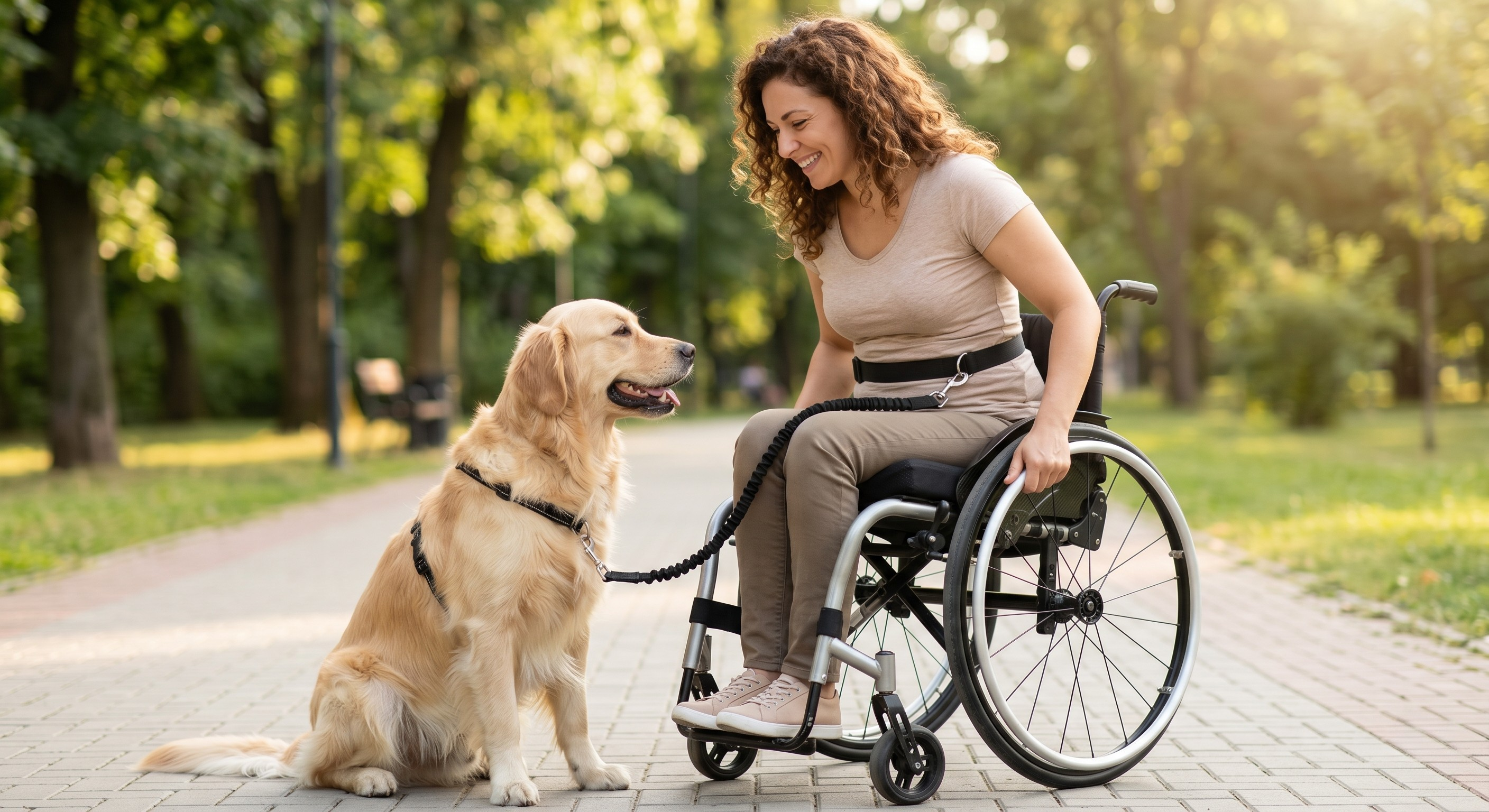
There is nothing quite like the bond between a person and their dog. But if you are a wheelchair user, you know that taking your furry best friend for a walk can sometimes feel like an extreme sport. Between the leash tangling in your front casters, sudden lunges after squirrels, and the uneven terrain of the local dog park, "rolling with Rover" requires a bit of strategy and the right gear.
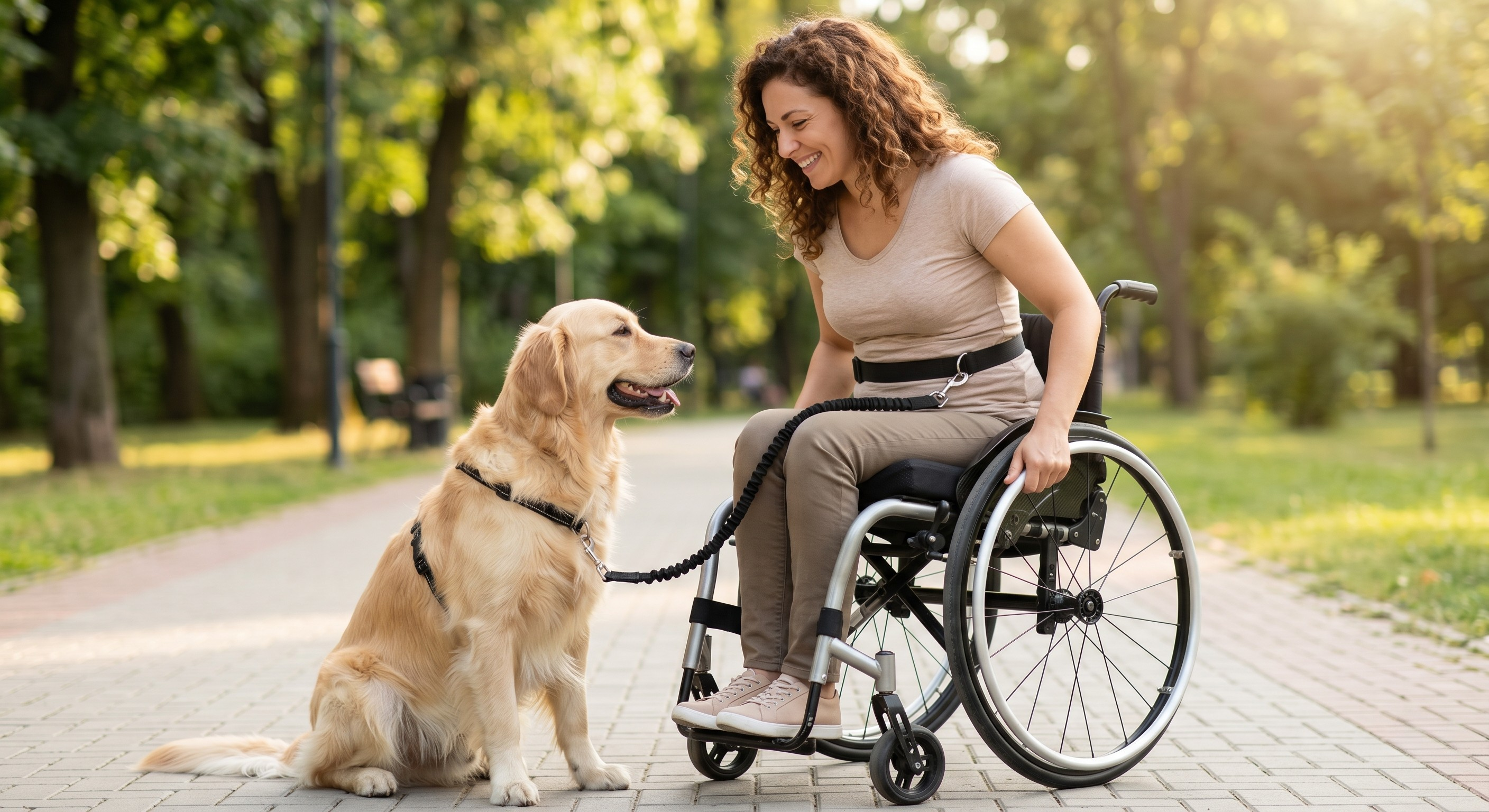
Whether you have a laid-back senior dog or a high-energy puppy, here are the best tips, tricks, and adaptive equipment from Living Spinal to make dog walking safe, fun, and stress-free.
1. Master the Leash Situation
The number one challenge of walking a dog from a manual wheelchair is leash management. Holding a standard leash in one hand while trying to propel your chair with both hands is a recipe for shoulder strain and going in circles.
-
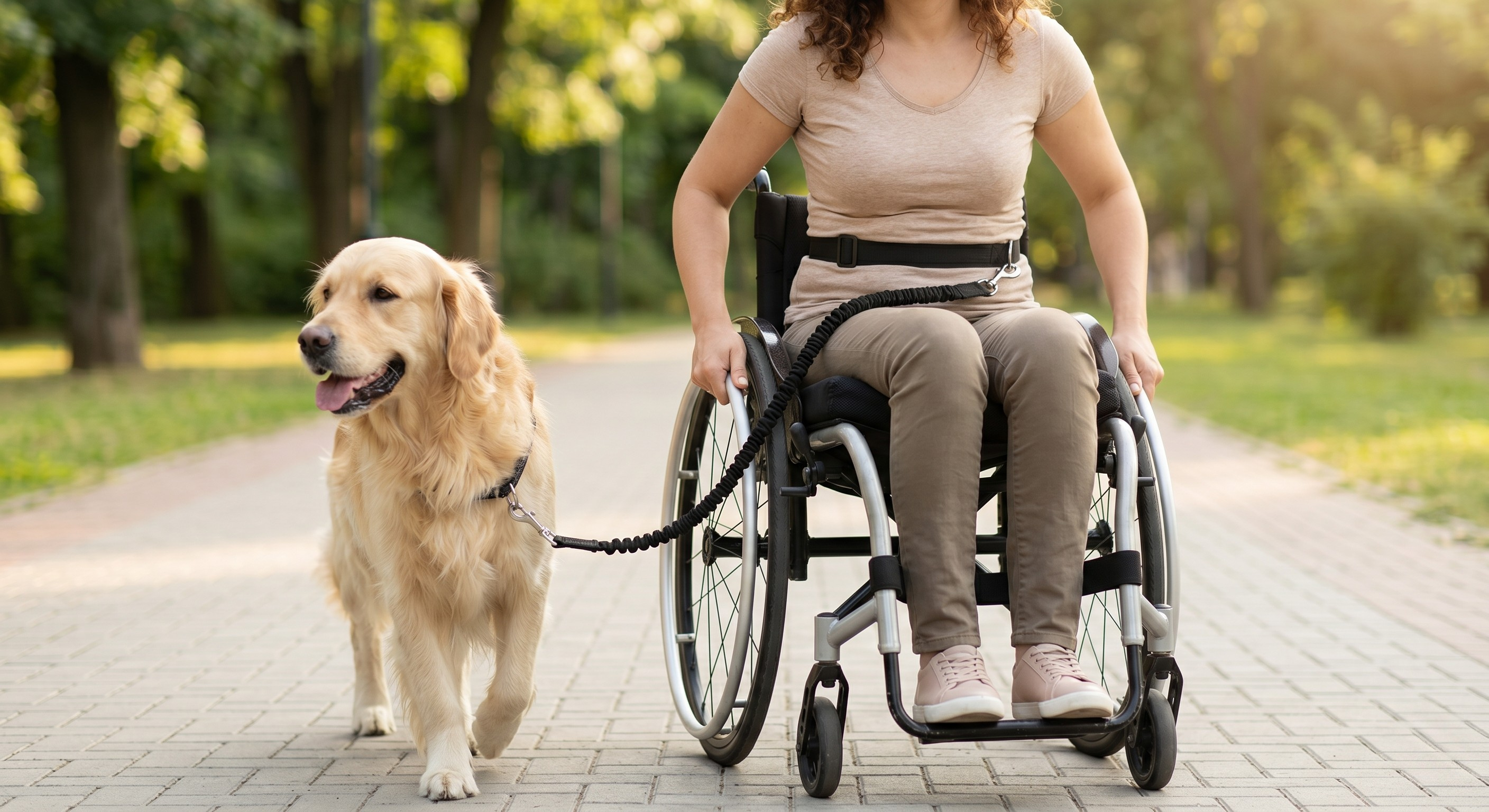
Hands-Free is the Way to Be: Invest in a hands-free bungee leash that clips around your waist. This keeps your hands completely free to push and steer. The bungee absorbs the shock if your dog suddenly pulls, protecting your core balance.
-
The "Never Tie to the Chair" Rule: It can be tempting to carabiner the leash directly to your wheelchair frame. Do not do this. If a large dog spots a squirrel and bolts, they can easily pull a manual wheelchair over. Attaching the leash to your waist allows you to use your body weight for leverage or release the belt in an absolute emergency.
-
Training for the Casters: The biggest training hurdle is teaching your dog not to cross in front of your chair. Use high-value treats to teach a strict "heel" on one specific side, rewarding them only when they stay clear of your wheels.
2. Conquer the Dog Park Terrain
Dog parks are fantastic, but they are rarely paved. Pushing through thick grass, wood chips, or gravel to pick up after your dog or throw a ball can be exhausting.
-
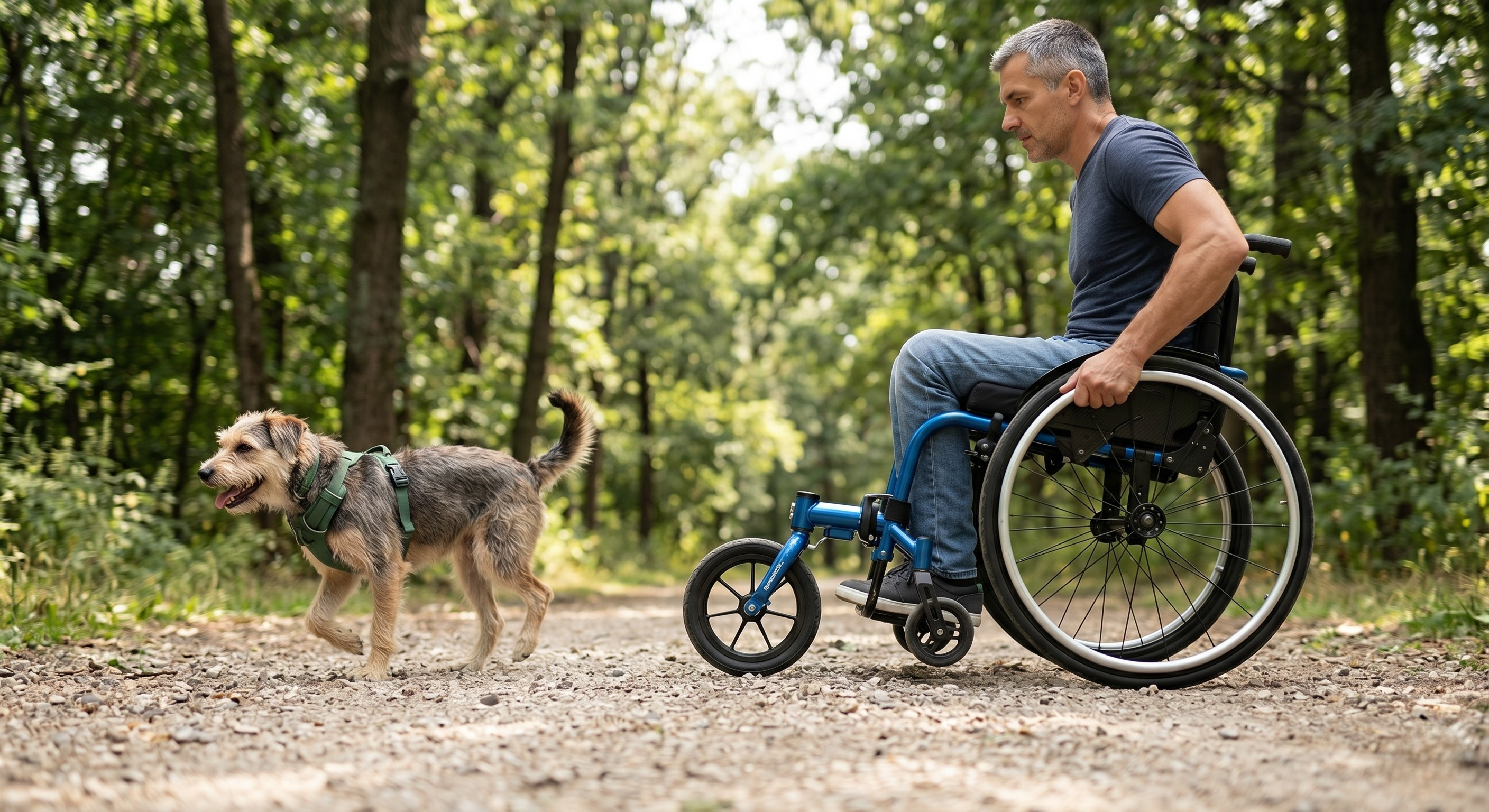
Lift Your Front Casters: The small front casters of a wheelchair are notorious for sinking into soft ground.
To conquer the dog park, the FreeWheel Wheelchair Attachment You can easily push over grass and dirt trails right alongside your dog.
3. Keep Up with the "Zoomies."
If you have a high-energy breed like a Husky, Lab, or Shepherd, they need to run. Keeping up with a fast dog manually can quickly lead to shoulder burnout.
-
Discreet Power Boosts: If you want to stroll the neighborhood without exhausting your arms, a rear-mounted power assist like the
SmartDrive MX2+ Power Assist System -
Turn Walks into Bike Rides: If your dog loves to run for miles, turn your wheelchair into an electric trike! Front-mounted power handcycles like the
Firefly 2.5 "BK Edition" by Rio Mobility
4. Carry the Essentials Securely
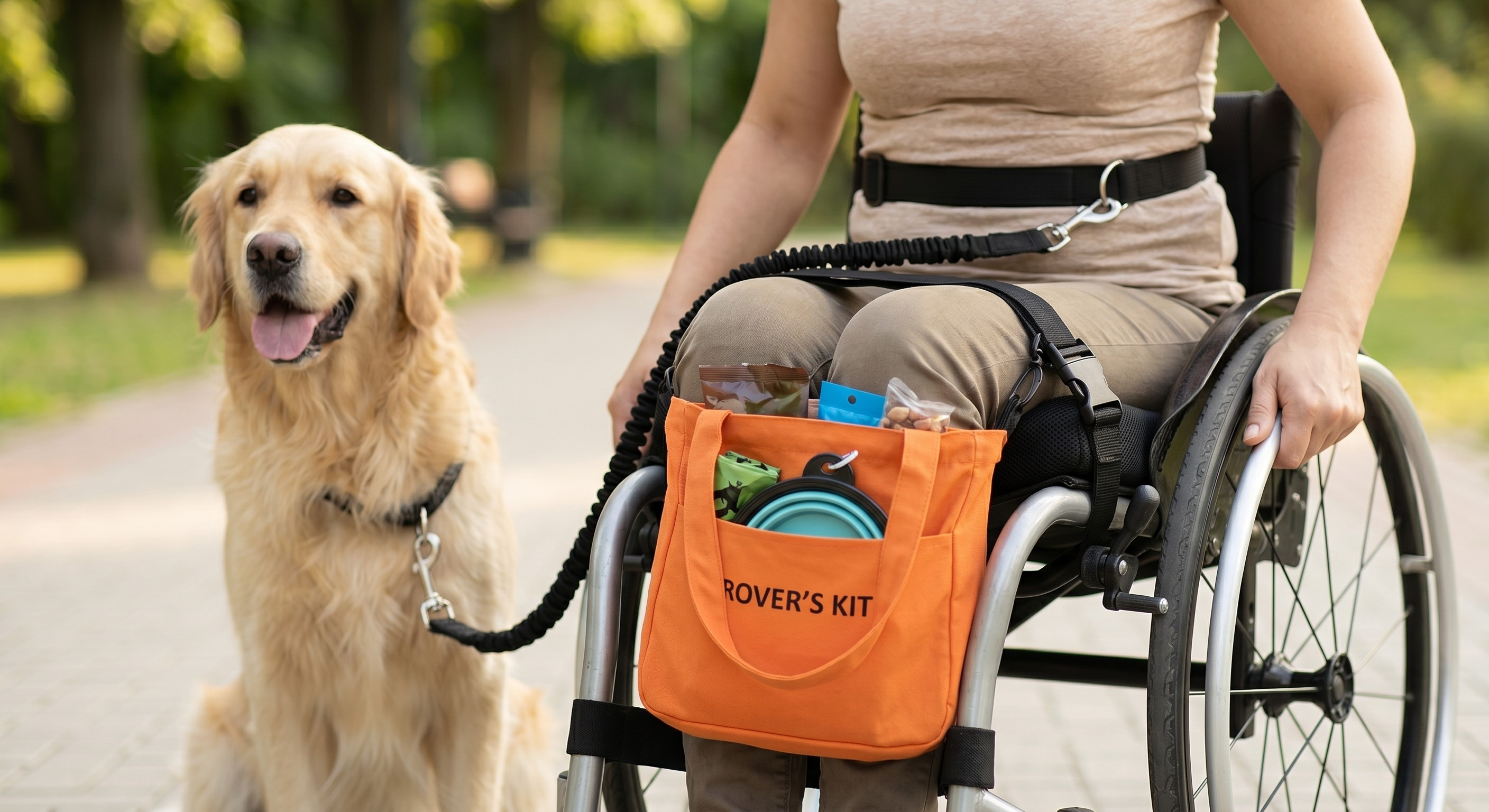
Dog walking requires cargo: poop bags, treats, a water bowl, and maybe a favorite tennis ball. Juggling these items on your lap while pushing is incredibly frustrating.
-
Lock Down Your Gear: Instead of watching your bag of treats slide off your lap and into a puddle, secure it. The
LapStacker Flex by Adaptdefy
5. Prioritize Visibility
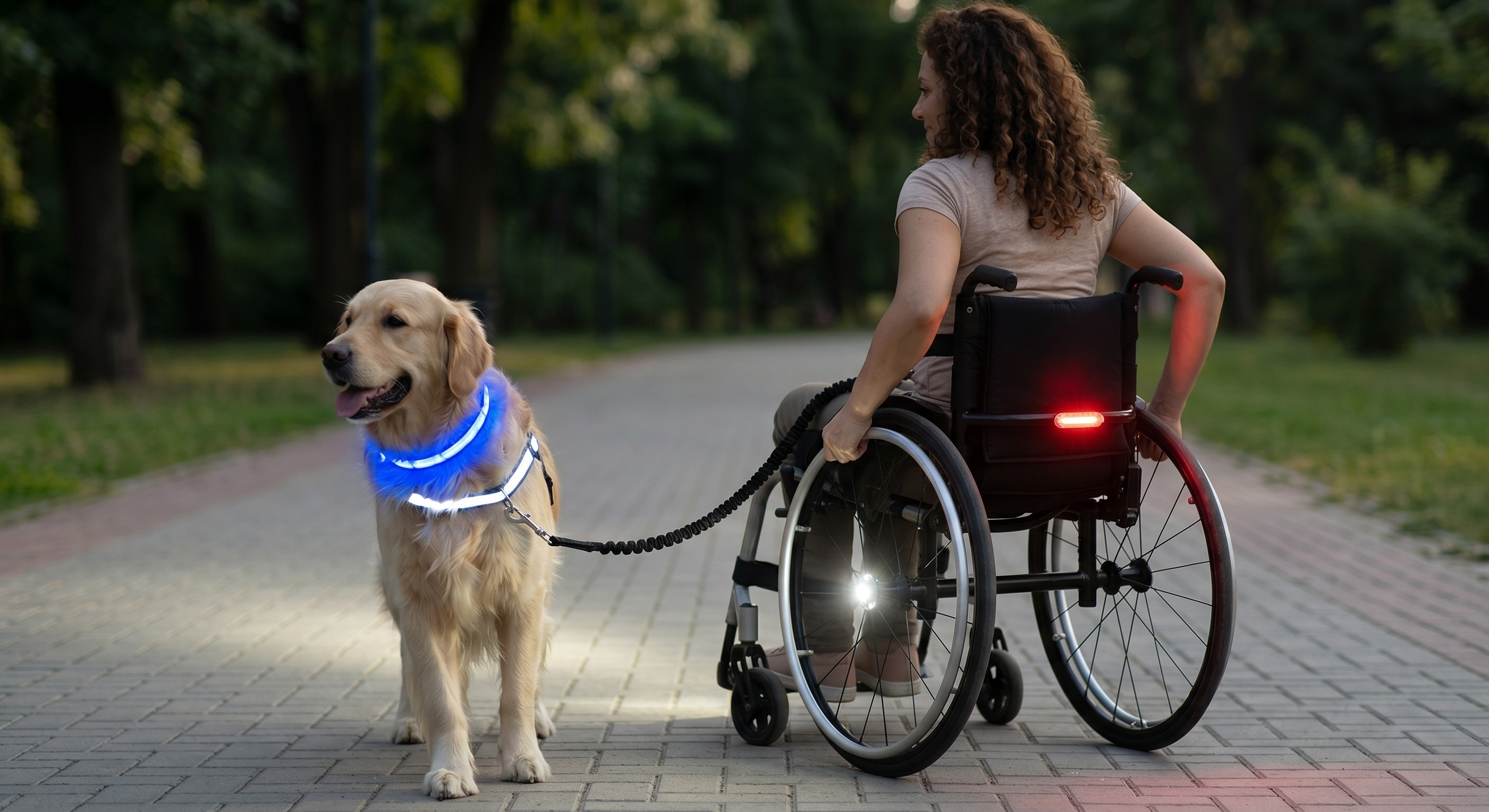
Because you are lower to the ground, cars and cyclists may have a harder time spotting you and your dog, especially during early morning or evening walks.
-
Light It Up: Always equip your chair with high-visibility LED lights (both front headlights and red rear markers). Combine this with a light-up LED collar or reflective harness for your dog so that you are both easily seen as a single unit.
Enjoy the Journey
Walking your dog should be the highlight of your day, not a chore that leaves you exhausted. By training your dog to respect your wheels and equipping your chair with terrain-busting gear like the FreeWheel or the SmartDrive, you can hit the trails with confidence.