

How to Make a Manual Wheelchair Easy to Push | Living Spinal
Posted by Living Spinal on Nov 11th 2025
How to Make a Manual Wheelchair Easy to Push
Pushing a manual wheelchair should feel smooth, efficient, and comfortable for both the user and anyone assisting. Yet over time, many wheelchair users notice that pushing becomes more tiring or difficult. This can happen for many reasons, worn tires, poor posture, heavy frames, or uncomfortable handrims. Fortunately, there are practical ways to make a manual wheelchair easy to push, improving both independence and comfort.
Keep Tires in Top Shape for Maximum Pushing Ease
Wheelchair tires directly affect how easily the chair rolls. If the tires are worn or underinflated, they create drag and resistance that require more energy to move.
To make the wheelchair easier to push, check tire pressure regularly and keep pneumatic tires inflated to the recommended PSI. High-pressure tires roll more smoothly on hard floors, while lower-pressure or solid tires can handle rough outdoor terrain better.
Tips for smoother performance:
- Inflate tires weekly to the correct pressure.
- Replace worn treads as soon as they show signs of flattening.
- Clean tires frequently to prevent debris buildup.
- Consider switching to lightweight, low-resistance tires for daily use.
Upgrade Handrims with RibGrips for Better Control
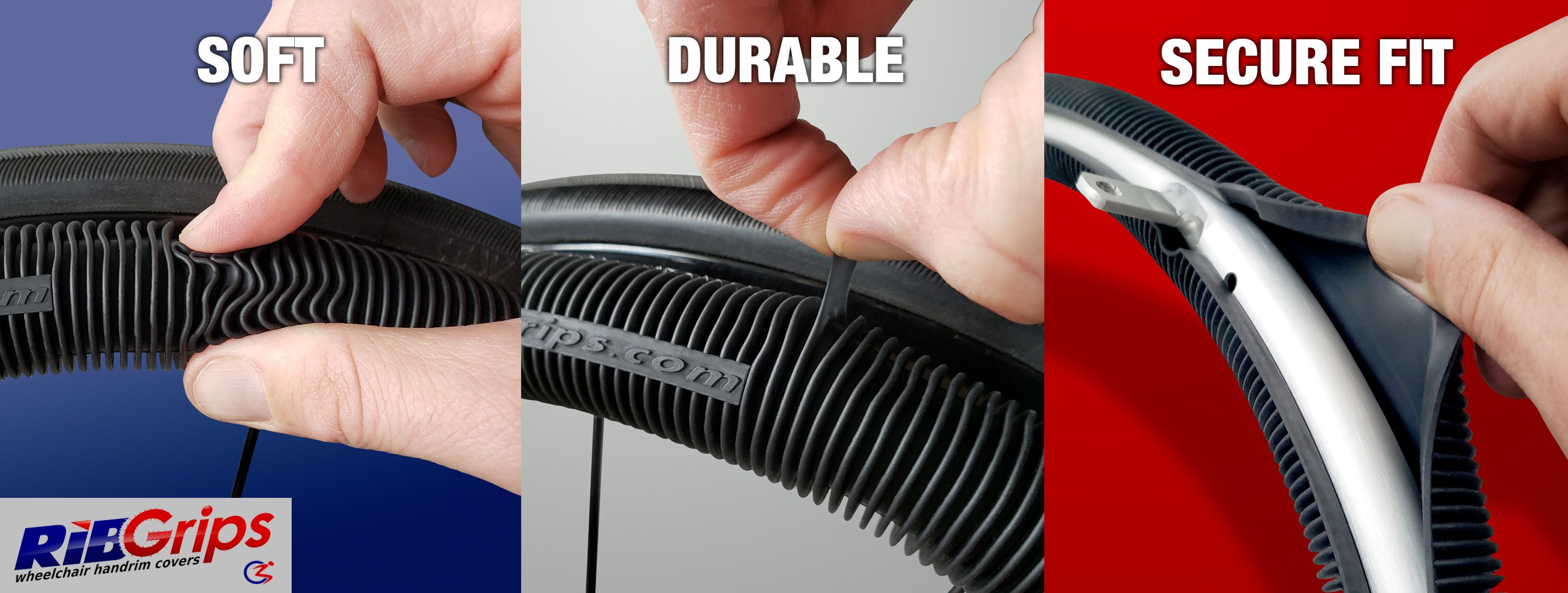
Traditional metal handrims can make pushing painful or inefficient, especially for long-term users. That’s where ergonomic options like RibGrips handrim covers can transform the experience.
RibGrips feature a soft, ribbed silicone coating that enhances traction and comfort. The textured grip allows users to push more efficiently without overstraining their wrists or fingers. The material also maintains grip in wet or humid conditions, making outdoor use safer and easier.
Key benefits of RibGrips handrims include:
- Reduced hand fatigue and pressure points.
- Improved propulsion with less effort.
- Enhanced traction and control in all weather.
- Durable, easy-to-clean silicone surface.
For anyone wondering how to make a manual wheelchair easy to push without complex adjustments, RibGrips offer an immediate, high-impact solution.
Help a Wheelchair Easily Push by Maintaining the Wheelchair Regularly
Even the most advanced wheelchair will feel sluggish if not properly maintained. Dirt, rust, and worn components can slow the wheels and increase resistance. A consistent maintenance routine ensures the wheelchair remains light, balanced, and smooth.
Perform monthly checks to:
- Clean debris from caster wheels and axles.
- Lubricate wheel bearings for free rotation.
- Tighten loose bolts and inspect frame alignment.
- Replace damaged or squeaky parts promptly.
Adjust the Axle for Optimal Balance
The position of the rear axle affects how easily the wheelchair moves. When the axle sits too far back, the user must apply extra force to push. Adjusting it slightly forward brings the large wheels closer to the center of gravity, improving leverage and reducing the strain on the arms.
A certified wheelchair technician or therapist can help fine-tune this setup for individual comfort. This single adjustment can completely change how responsive and efficient the wheelchair feels.
Opt for a Lightweight Wheelchair Frame to Improve Mobility
Heavier frames create more resistance. If the goal is to make a manual wheelchair easy to push, switching to a lightweight frame can be one of the most effective upgrades.
Modern wheelchairs are built from materials like aluminum, titanium, and carbon fiber, offering strength without bulk. Lightweight wheelchair models are easier to propel, especially on ramps or uneven ground.
Although titanium and carbon fiber chairs can be more expensive, the benefits, improved performance, reduced fatigue, and longer mobility, often justify the cost. For many users, investing in a lightweight frame means moving farther and faster with less effort.
Learn Efficient Push Techniques
Technique plays a huge role in propulsion efficiency. Even with the best equipment, poor mechanics can waste energy and lead to fatigue or injury.
To push efficiently:
- Maintain upright posture and engage the core muscles.
- Use smooth, long strokes instead of short, jerky pushes.
- Keep elbows slightly bent for better leverage.
- Avoid gripping the handrim too tightly.
Users who learn proper technique often find their wheelchair suddenly feels lighter and more responsive. Caregivers should also use body mechanics wisely, pushing with the whole body rather than just the arms. This reduces strain and keeps motion steady and controlled.
Upgrade Wheel Bearings for Effortless Rolling
If your wheelchair feels harder to move than before, the wheelchair wheel bearings might be the problem. Bearings allow the wheels to rotate freely; when they get dirty or worn, the friction increases dramatically.
Upgrading to precision or ceramic bearings can make the wheelchair roll almost effortlessly. They require minimal maintenance and resist corrosion. Cleaning and lubricating them regularly prevents drag and extends their life.
This small change often delivers a big improvement in how easily a manual wheelchair moves, especially on smooth indoor surfaces.
Explore Power-Assist Systems to Help Move Wheelchairs
Technology has made it possible to add a boost without switching to a fully powered wheelchair. Power-assist devices attach to manual wheelchairs and provide electric assistance that amplifies each push.
Some power-assist systems detect the user’s hand motion and provide controlled momentum, while others connect to the front or rear for motorized propulsion. They’re ideal for users who need help navigating hills or long distances but want to keep the feel of a manual chair.
Although this option represents a higher investment, it can dramatically reduce fatigue and increase independence for active users.
Improved Seating and Posture Requires Less Effort to Push a Wheelchair
Even the smallest seating adjustments can make pushing easier. If a user sits too low or too far back, they must use more force to reach the wheels effectively. Adjusting seat height, backrest angle, and cushion thickness ensures the best body alignment and center of gravity.
An ergonomic cushion also promotes better posture and stability, turning each push into forward motion rather than wasted effort. For those spending long hours in their chair, a professional seating assessment can identify subtle changes that yield big improvements in comfort and propulsion efficiency.