
Adaptive Photography & Content Creation: Building a Wheelchair Camera Rig | Living Spinal
Posted by Living Spinal on Oct 15th 2026
Adaptive Photography & Content Creation: Building a Wheelchair Camera Rig
Photography, vlogging, and content creation are powerful mediums for storytelling, but standard camera equipment isn't always designed with wheelchair users in mind. Holding heavy DSLR cameras or stabilizing a smartphone while simultaneously propelling a manual chair or operating a joystick can make capturing that perfect shot frustrating.
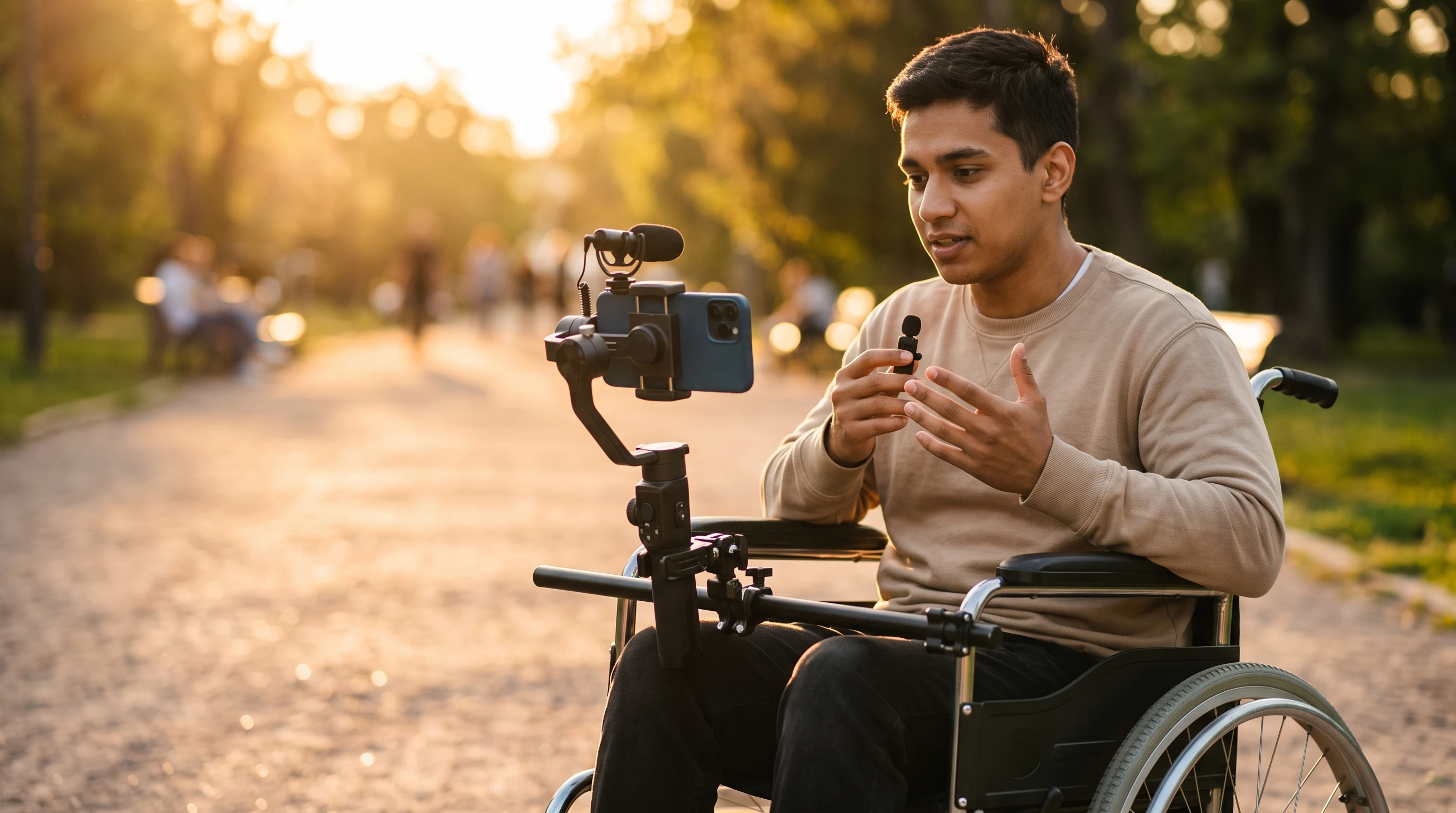
But with the right adaptive gear, your wheelchair can double as the ultimate mobile tripod and production studio. In this guide, we’ll dive into how to build an accessible camera rig directly onto your chair, highlighting the best strategies and adaptive products to keep you shooting smoothly and safely.
Stabilizing Your Shot: Hands-Free Mounting
The foundation of any good wheelchair camera rig is stability. Relying on your lap to hold a camera can result in shaky footage and makes it impossible to safely move while recording. You need a setup that allows you to lock your device in place at the perfect angle.
Strategy: Use a Clamp-On Device Mount Instead of balancing gear, use secure tension mounts that clamp directly onto the tubular framing of your wheelchair. This allows you to position your lens securely without interfering with your wheels or your line of sight.
-
Wheelchair Cell Phone Holder

Gear Management: Transporting Your Equipment
Cameras require accessories—lenses, external microphones, battery packs, and lighting. Carrying a bulky camera bag on your lap can throw off your center of gravity, while hanging a standard backpack off your push handles can increase your risk of tipping backward.
Strategy: Center-Mounted Hooks for Heavy Bags Reposition your payload to maintain balance. Using specialized hooks designed for mobility devices allows you to carry your heavy camera bag securely behind your backrest, centered on the frame, preventing lateral slides or tipping hazards.
-
Easy Hang by Make Life Easy

Pro Tips for Adaptive Content Creators
Building your rig is just the first step. Here are a few ways to optimize your workflow when shooting from a wheelchair:
-
Embrace the Low Angle: Don't fight your seated height—use it to your advantage! Wheelchair users naturally shoot from a lower, more dynamic angle that adds cinematic drama to landscapes, street photography, and architectural shots.
-
Invest in a Gimbal: Even with a great mount, navigating bumpy sidewalks or gravel can cause camera shake. Attaching a lightweight 3-axis smartphone or camera gimbal to your wheelchair mount will absorb the vibrations, giving you buttery-smooth, professional-looking tracking shots as you roll.
-
Wireless Shutter Remotes: Reaching for the camera to hit "record" or snap a photo can sometimes bump the rig and ruin your framing. Keep a Bluetooth shutter remote in your pocket or strapped to your wrist for seamless, hands-free shooting.
Share Your Perspective With the World
The world needs more stories and visual art from the disabled community. By outfitting your wheelchair with adaptive mounts and smart storage solutions, you eliminate the physical barriers of traditional photography. Your chair is no longer just a mobility device—it’s a dynamic, moving camera dolly ready to capture your unique point of view.
Get out there, set up your rig, and start creating!