

How To Get a Wheelchair Up Steps Safely | Living Spinal
Posted by Living Spinal on Nov 24th 2025
How To Get a Wheelchair Up Steps Safely
Navigating a single step or a small flight of stairs is one of the most common challenges wheelchair users face in environments that haven't been fully adapted. While ramps and elevators are the ideal solutions, knowing how to safely maneuver a wheelchair up steps with assistance is a critical skill for quick, temporary access.
Crucial Warning: Attempting to ascend or descend steps in a wheelchair should only be done with a strong, capable assistant, using proper technique, and on manual wheelchairs with sturdy footrests. Never attempt to lift a person in an electric or heavy power wheelchair, and never attempt this without assistance.
Safety and Communication First
Before you attempt to move up or down any steps, prioritize safety:
-
Communicate Clearly: The person in the wheelchair and the assistant must agree on the plan, the timing, and any warnings (e.g., "Ready," "Lift," "Step down").
-
Assess the Assistant: The steps technique requires significant physical strength. The assistant must be capable of lifting the combined weight of the user and the chair.
-
Assess the Chair: The chair must be durable, and the footrests must be secure and unable to collapse.
-
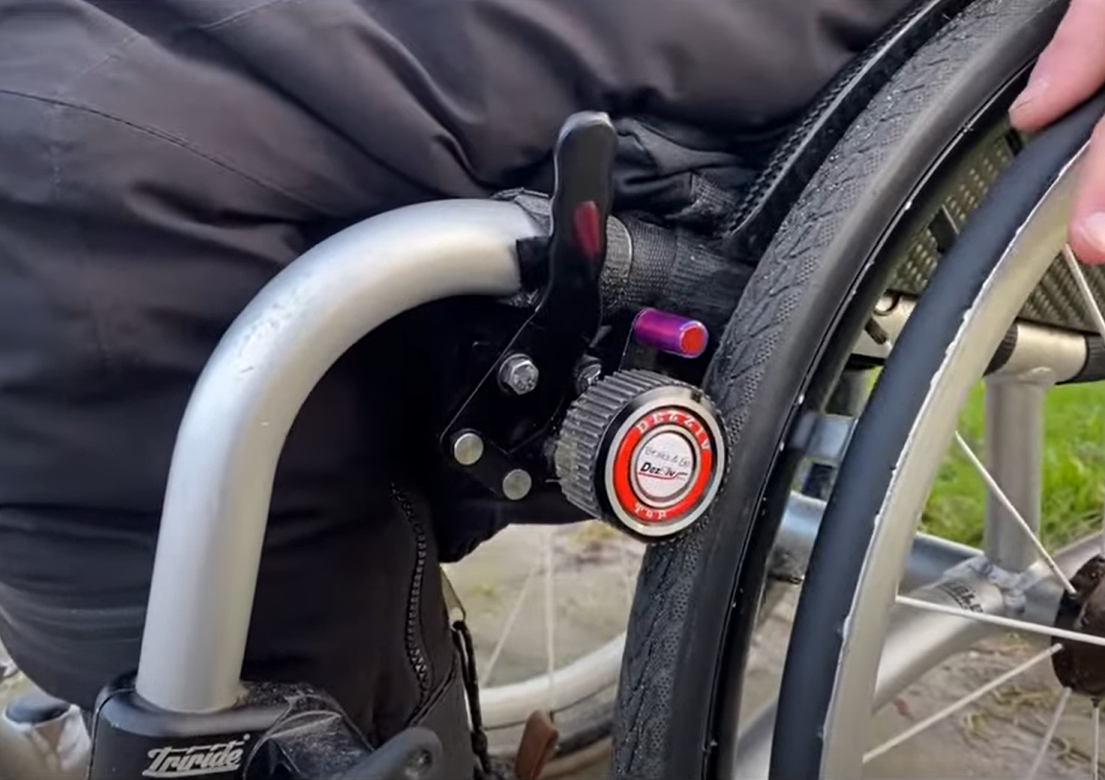
Secure the Brakes: The assistant must always ensure the chair is stable. A quality set of
reliable wheelchair brake locks
Going Up Steps: The Two-Person Lift Technique
The safest and recommended way to ascend a step is with one person managing the front of the chair and one managing the back.

1. Preparation and Positioning
-
Remove Footrests: If possible and safe, remove the footrests entirely. If they cannot be removed, ensure they are securely folded up or locked to prevent them from catching on the step edge.
-
User Posture: The wheelchair user should lean slightly forward and keep their head stable against the backrest.
-
Assistant at the Back: The assistant (Person B) stands behind the chair, gripping the push handles firmly.
2. Lifting the Front
-
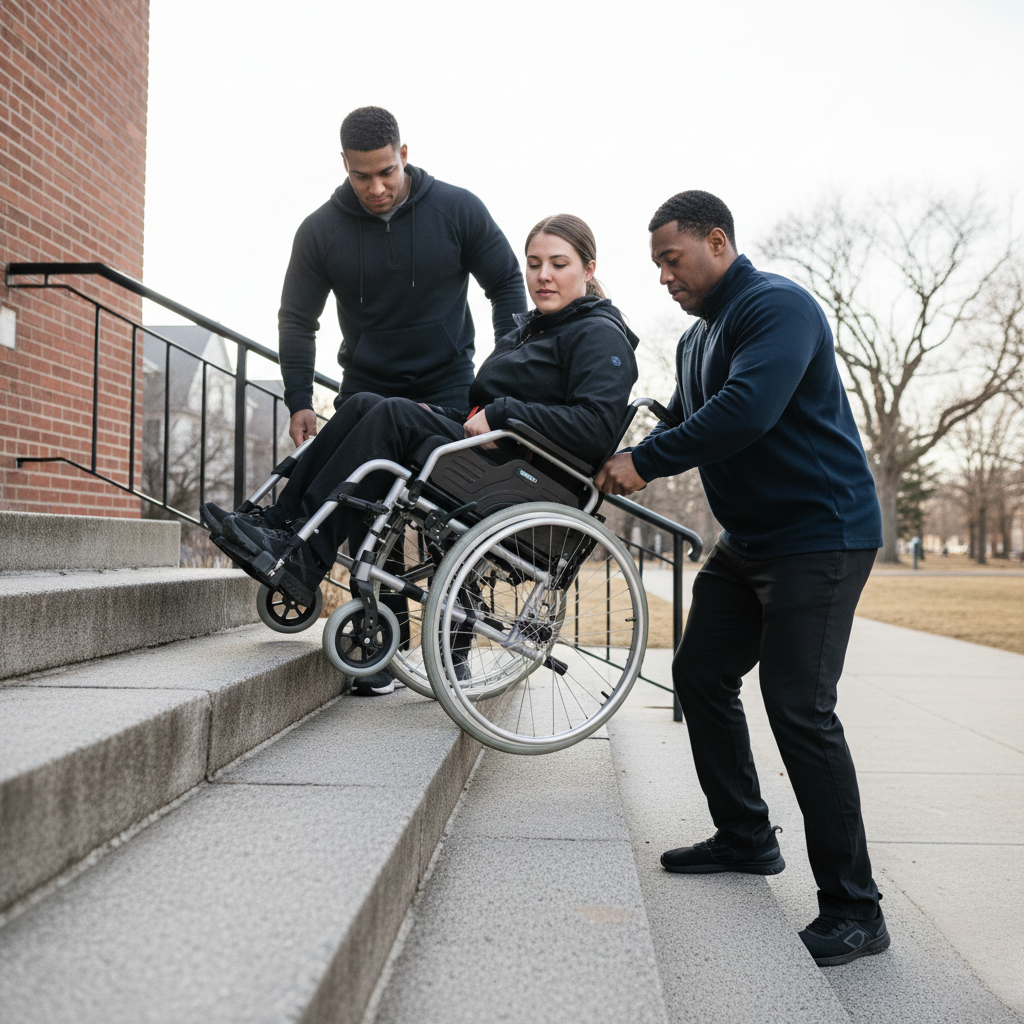
The Tilt: Person B tilts the wheelchair back slightly until the front casters are off the ground, engaging the anti-tippers (if present).
-
Assistant at the Front (Optional but safer): A second assistant (Person A) stands in front of the chair, facing it. Person A can hold the rigid frame of the chair (not the removable armrests) or the front of the main wheel.
3. The Lift
-
Person B (Rear) pulls the chair backward and up onto the first step while maintaining the backward tilt. The large rear wheels should be the first to land on the step.
-
Person A (Front) guides the front casters up onto the step once the main wheels are securely in place.
-
Repeat: The team repeats this sequence, moving backward and up, one step at a time, until the wheelchair is safely at the top.
Going Down Steps: The Backwards Descent
The safest way to descend steps is always backward, as it uses the large wheels to absorb the shock and prevents the user from tipping forward.
1. Position and Roll
-
Turn Around: The assistant turns the wheelchair around so the large wheels are facing the first step.
-
Assistant Stance: The assistant stands on the bottom step, facing up toward the chair. They grip the push handles firmly, keeping their back straight and using their legs to absorb weight.
2. The Controlled Descent
-
Tilt Back: The assistant tilts the wheelchair backward until the front casters are lifted off the ground.
-
Slow Roll: The assistant slowly and carefully rolls the large rear wheels off the edge of the first step.
-
Lower Gently: The chair must be lowered to the ground very slowly and gently to minimize jarring the user. The large wheels should contact the ground simultaneously and smoothly.
-
Repeat: Repeat this process for each step, rolling backward slowly and using the tilt to manage the drop.
Watch a Visual Demonstration
For a practical guide and visual demonstration of these step-climbing techniques, watch this helpful video:
By practicing these steps and ensuring the chair is always stable—especially with essential equipment like reliable