
Getting Behind the Wheel: A Beginner’s Guide to Adaptive Driving and Hand Controls | Living Spinal
Posted by Living Spinal on Apr 27th 2026
Getting Behind the Wheel: A Beginner’s Guide to Adaptive Driving and Hand Controls
For many wheelchair users, getting behind the wheel of a car is the ultimate symbol of independence. Whether you’re commuting to work, taking a road trip, or simply running errands, the ability to drive transforms your daily routine and opens up the world.
But if you’re new to a spinal cord injury or mobility impairment, the idea of driving without the use of your feet can feel overwhelming. Where do you even start?
Welcome to your beginner’s guide to adaptive driving. Here is a step-by-step breakdown of how to reclaim the driver's seat, along with the essential gear from Living Spinal that makes it possible.
Step 1: The Driver’s Evaluation
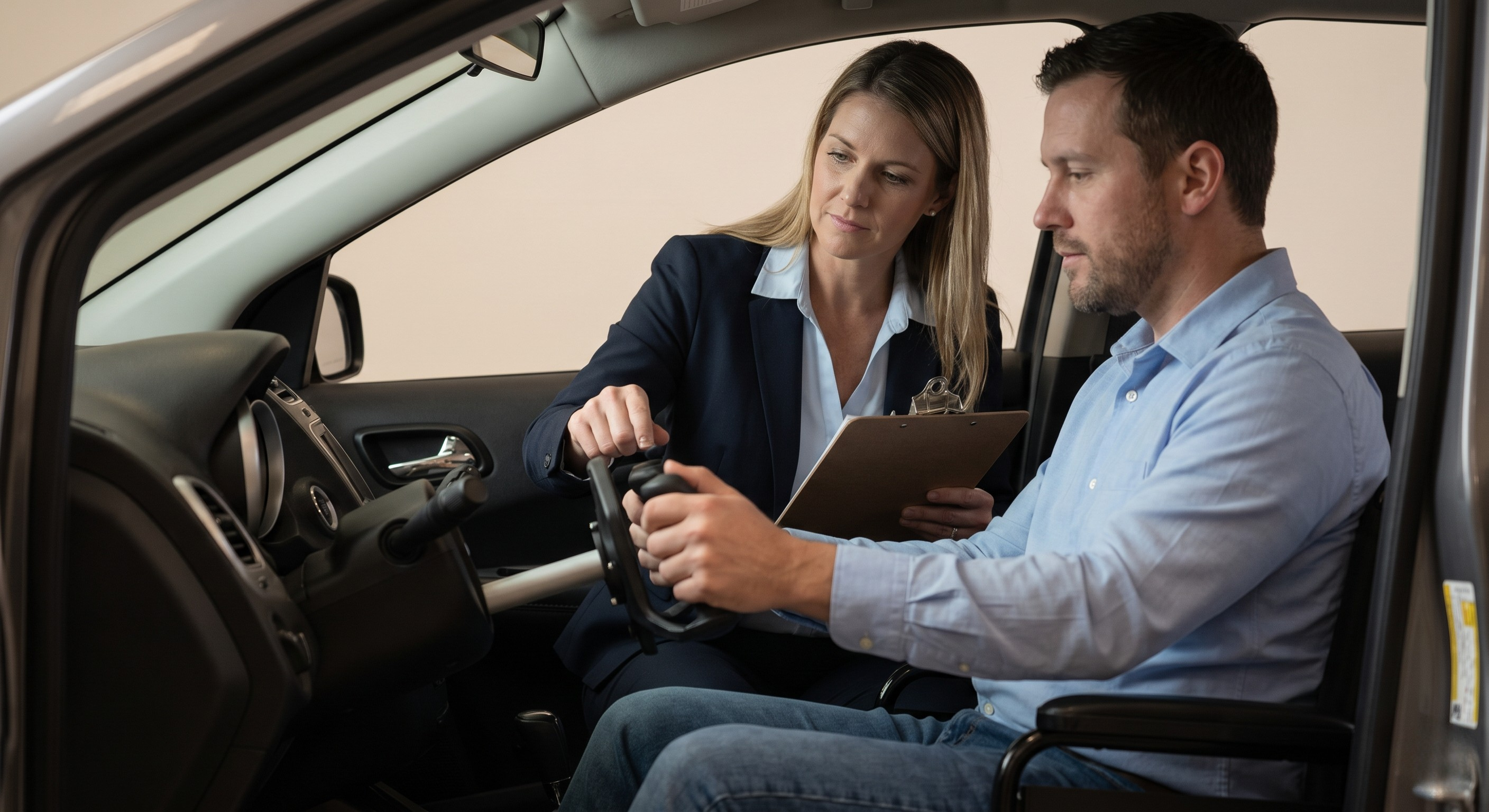
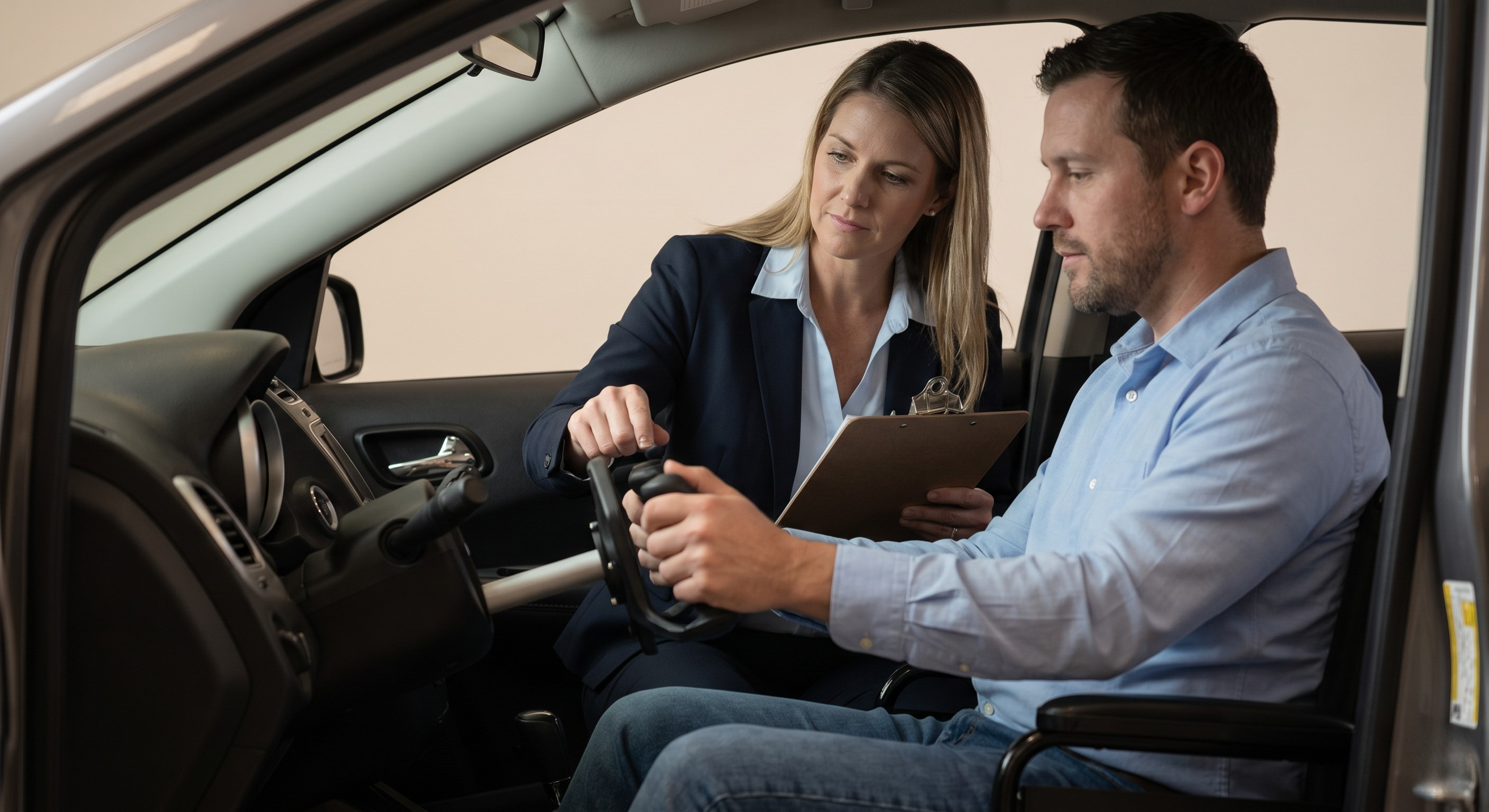
Before you buy any equipment or modify a vehicle, your first step should always be an assessment with a Certified Driver Rehabilitation Specialist (CDRS).
A CDRS will evaluate your muscle strength, reaction time, range of motion, and hand dexterity. They will prescribe exactly what type of hand controls and steering aids you need. Bypassing this step can result in buying the wrong equipment, which is both dangerous and expensive.
Step 2: Understanding Hand Controls
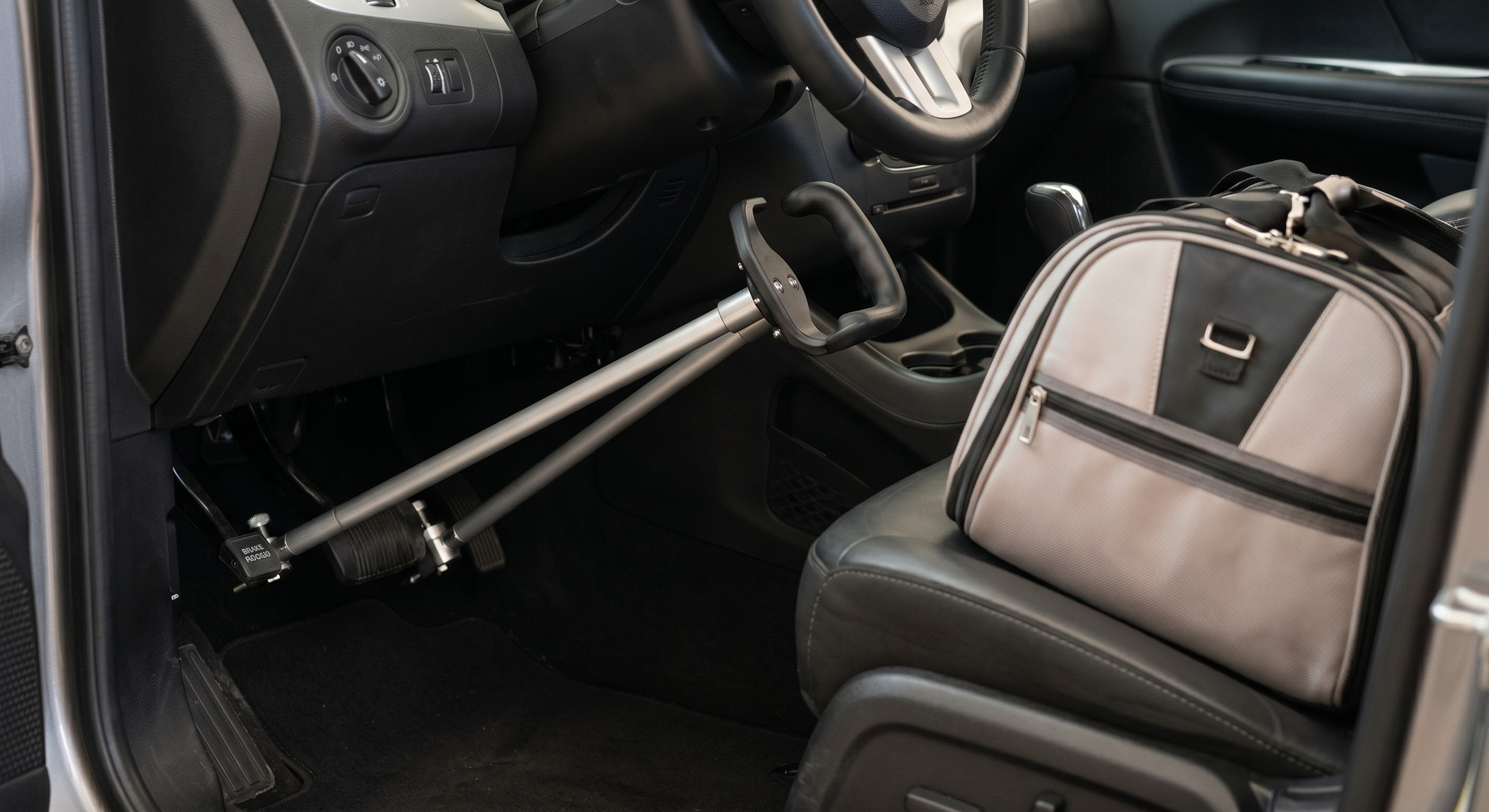
Hand controls mechanically translate the use of your hands into the foot pedals of your car.
-
For Quick, Budget-Friendly Portability: The
QuicStick Vehicle Portable Hand Controls -
For High-End Travel and Adjustability: If you are a frequent traveler, the
Vehicle Portable Hand Controls - Colours AZ-1
Step 3: Mastering the Steering Wheel (Spinner Knobs)
Think about the logistics: If one of your hands is dedicated to operating the gas and brake, your other hand has to do 100% of the steering. This is where a steering wheel spinner knob becomes essential, allowing you to turn the wheel smoothly and continuously without ever letting go.
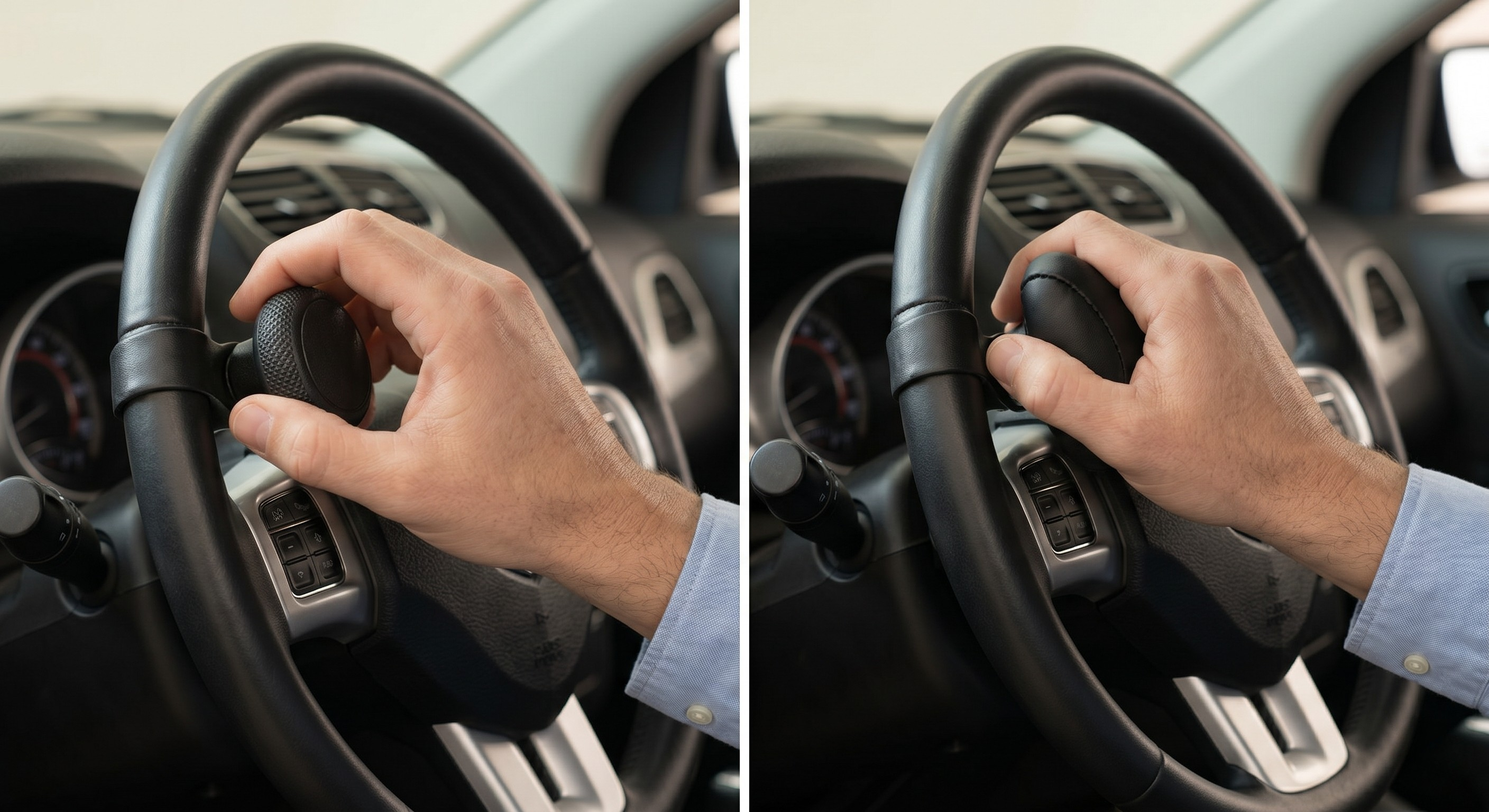
The type of knob you need depends entirely on your grip strength:
-
For Good Grip Strength: The classic
Sure-Grip Single Pin Spinner Steering Knob -
For Limited Grip/Dexterity: If you have quadriplegia or limited finger strength, you need a steering aid that retains your hand so it doesn't slide off during a sharp turn.
The Sure-Grip One-Handed Tri-Pin Spinner Knob
Step 4: Managing Secondary Controls
Driving isn't just about going and stopping; it's about signaling, using your wipers, and adjusting the climate control. If your left hand is busy with the hand controls and your right hand is steering, how do you hit the turn signal?
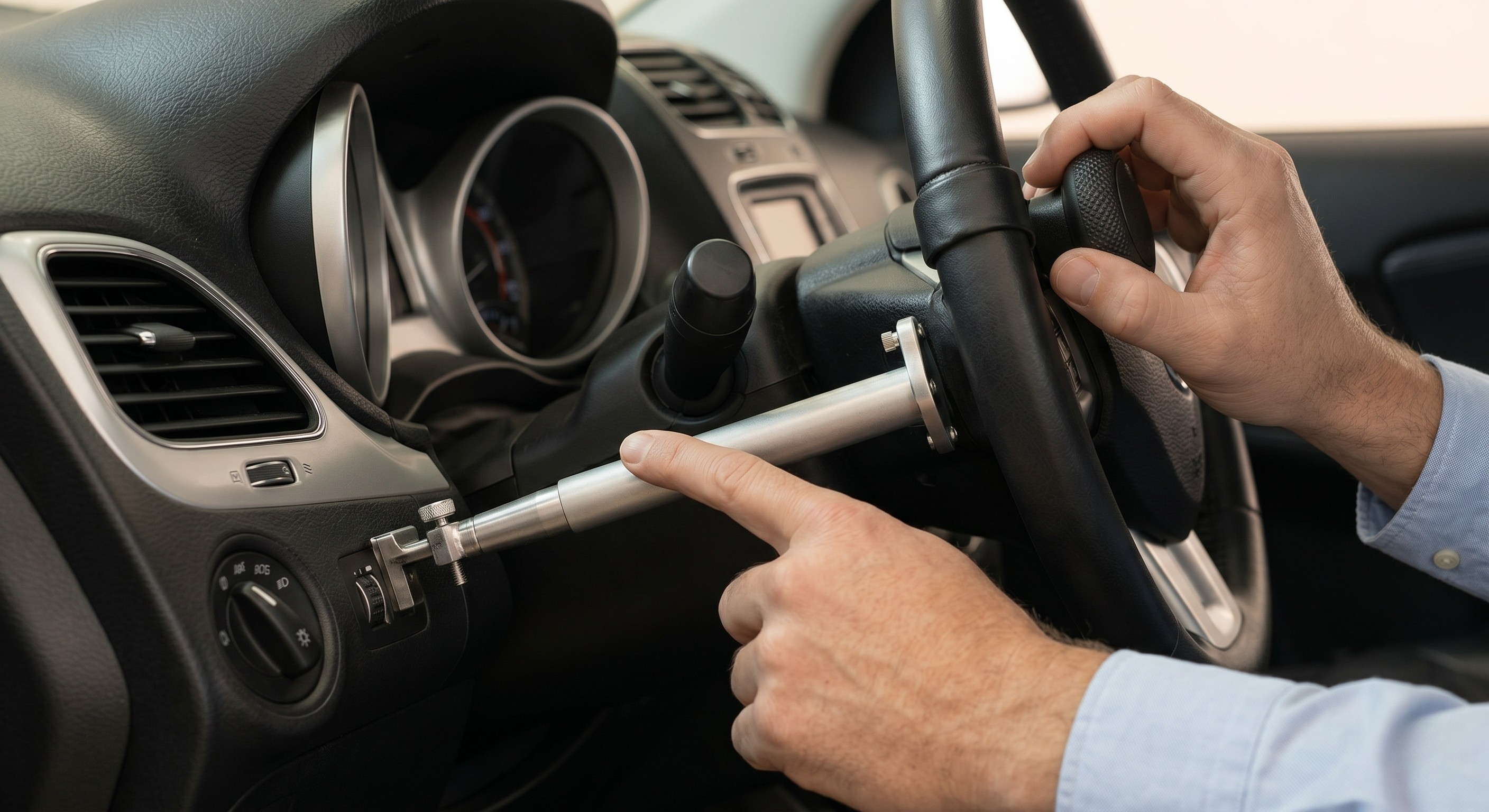
Simple, mechanical adaptations make this easy and safe:
-
Turn Signal Crossover: The
Turn Signal Adaptor by Johnson Hand Controls This allows you to easily tap the signal with a finger while keeping your hand on the steering wheel spinner knob.
Step 5: Practice and Funding
Learning to drive with hand controls is like learning to drive all over again. It requires practice in empty parking lots to build muscle memory. Don't rush the process.
Additionally, vehicle modifications can be expensive. Be sure to look into funding options. Many vehicle manufacturers (like Ford, GM, and Toyota) offer mobility rebates of up to $1,000 to help cover the cost of installing adaptive equipment in new cars. State Vocational Rehabilitation agencies are also a great resource if driving is required for you to maintain employment.

Ready to Hit the Road?
Adaptive driving is the ultimate key to a spontaneous, independent lifestyle. By starting with a professional evaluation and choosing the right combination of hand controls, spinner knobs, and secondary adaptations, you’ll be ready to merge onto the highway with confidence.