

How to Prevent Shoulder Pain in Manual Wheelchair Users: 10 Expert Tips
Posted by Living Spinal on Mar 17th 2026
How to Prevent Shoulder Pain in Manual Wheelchair Users: 10 Expert Tips
For manual wheelchair users, your shoulders are your engine. However, the human shoulder wasn’t designed for the repetitive strain of thousands of pushes a day. Statistics show that up to 70% of manual wheelchair users will experience shoulder pain or a rotator cuff injury at some point.
In 2026, preventing wheelchair shoulder pain is about more than just "pushing less"—it’s about smarter ergonomics and leveraging modern technology. Here are 10 expert-backed tips to protect your joints and keep you rolling pain-free.
1. Optimize Your Wheelchair Configuration
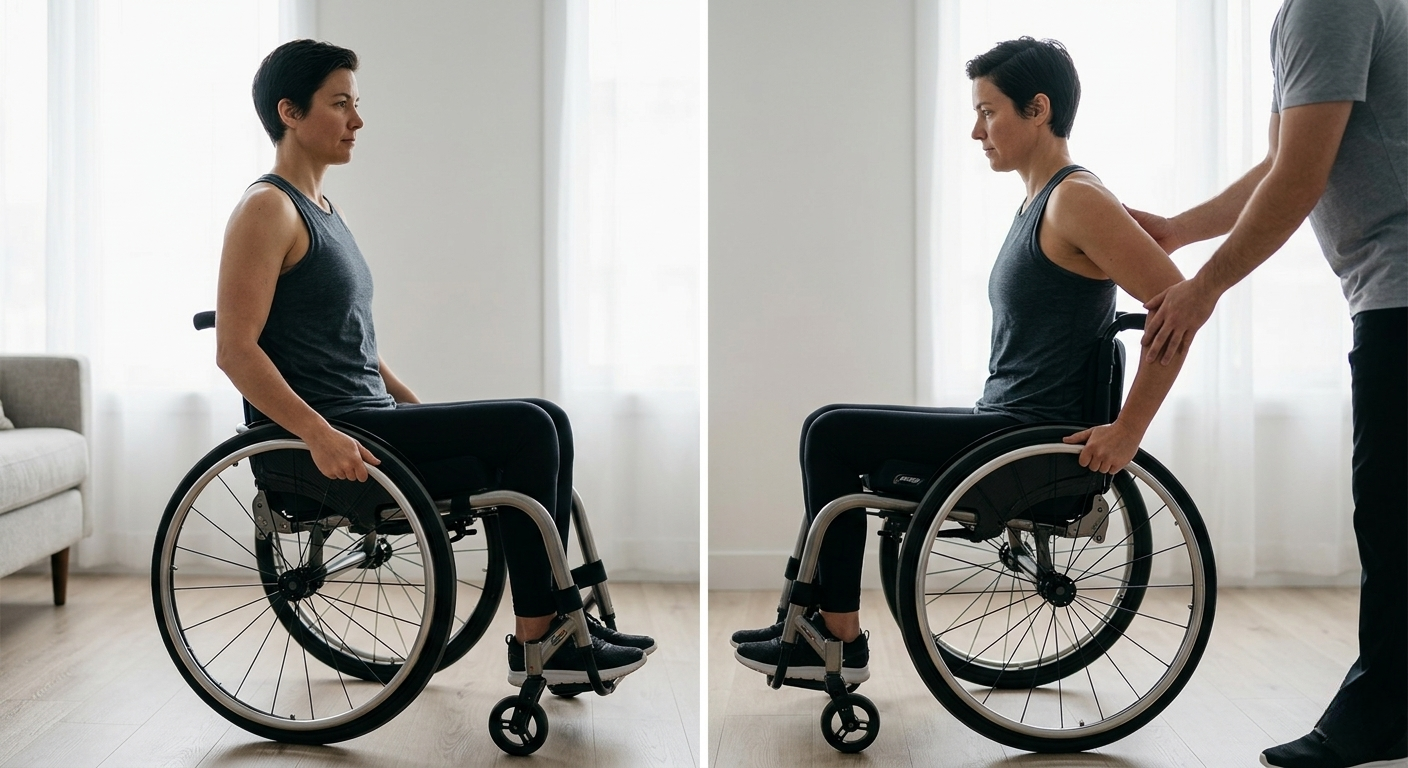
A poorly adjusted chair is a leading cause of shoulder impingement. Ensure your rear axle is positioned correctly: when your hands are at the top of the pushrims, your elbow should have an angle between 100° and 120°. Moving the axle forward can reduce rolling resistance and lower the force required for each push.
2. Master the "Semicircular" Propulsion Stroke
Avoid the "arc" stroke where you push forward and pull back along the same line. Instead, use a semicircular propulsion pattern, where your hands drop below the pushrim during the recovery phase. This reduces the peak impact on the rotator cuff and distributes the load more evenly.

3. Leverage Power Assist Technology
One of the most effective ways to prevent wheelchair injuries is to reduce the "dosage" of manual pushes. Power assist devices take the brunt of the work on hills, thick carpets, or long distances.
-
EZRide+ Wheelchair Power Assist

-
SmartDrive MX2+ Power Assist System

4. Strengthen Scapular Stabilizers
Most wheelchair users have "over-developed" front shoulder muscles and "under-developed" back muscles. Focus on exercises like seated rows or "Y-W-T" movements to strengthen the scapular stabilizers. This helps pull the shoulders back into a neutral, healthy alignment.

5. Stretch Your Chest (Pectoralis) Muscles
Because of the forward-leaning posture often used while pushing, the chest muscles can become tight, pulling the shoulder joint out of its optimal socket. Daily chest stretches can help counteract this "slump" and improve your range of motion.
6. Perfect Your Transfer Technique
Shoulder pain isn't just about pushing; it's about transfers. Whenever possible, perform level transfers rather than lifting your body weight up or down. Use a sliding board if needed, and try to keep your arms close to your body to minimize the "leverage" force on the joint.
7. Maintain Your Equipment
A dirty or poorly maintained chair is harder to push. Check your tire pressure weekly—under-inflated tires can increase the force needed to roll by up to 25%. Also, ensure your power assist units are always ready for action with the correct accessories, like the
8. Manage Weight and Load
Every extra pound on your lap or your chair increases the stress on your shoulders. Use lightweight bags and avoid carrying heavy items on your person for long durations. If you must carry heavy loads, let a power assist device like the
9. Practice Energy Conservation
Not every trip needs to be a workout. Plan your routes to avoid steep inclines or soft terrain. If you know you have a long day ahead, use your
10. Listen to Early Warning Signs
If you feel a dull ache, clicking, or "catching" in your shoulder, don't push through it. Rest is a crucial component of a long-term mobility plan. Icing the joint after a long day and seeking an ergonomic assessment from a physical therapist can prevent a minor strain from becoming a chronic injury.
Ready to Protect Your Shoulders?
Modern mobility in 2026 is about finding the perfect balance between activity and assistance. By combining proper technique with the right gear, you can stay active for decades.