
How to Build a Smart Home for Ultimate Wheelchair Independence | Living Spinal
Posted by Living Spinal on Apr 13th 2026
How to Build a Smart Home for Ultimate Wheelchair Independence
The concept of a "smart home" is often marketed as a luxury or a fun party trick for tech enthusiasts. But for wheelchair users and individuals with limited mobility, smart home technology is nothing short of revolutionary. It is the bridge between relying on others for daily tasks and reclaiming complete independence over your personal environment.
From unlocking the front door to adjusting the thermostat, building a smart home tailored for ultimate wheelchair independence is easier—and more affordable—than ever. Here is your step-by-step guide to transforming your house into an accessible, automated sanctuary.
1. Establish Your Command Center (Voice & Hubs)
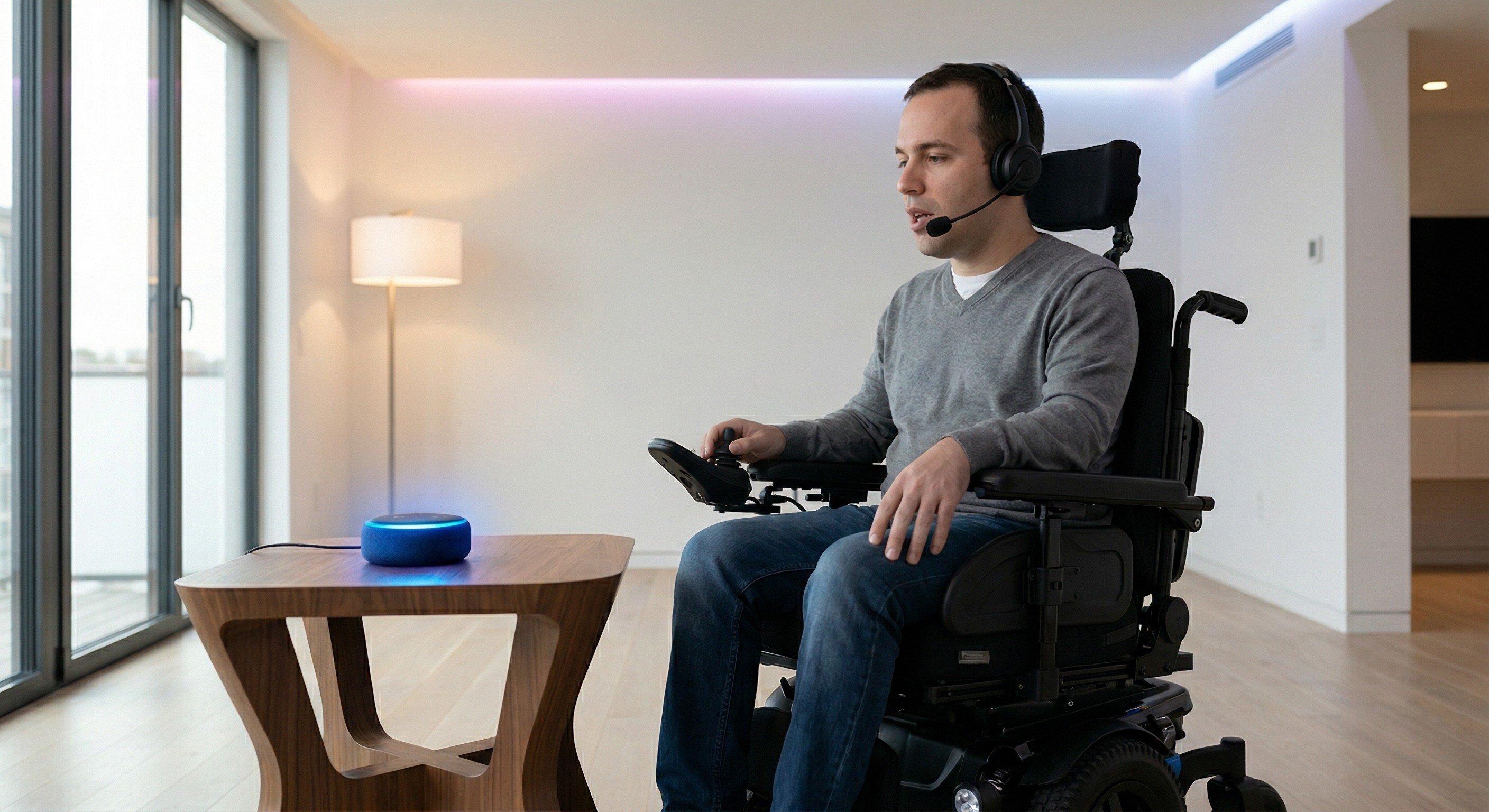
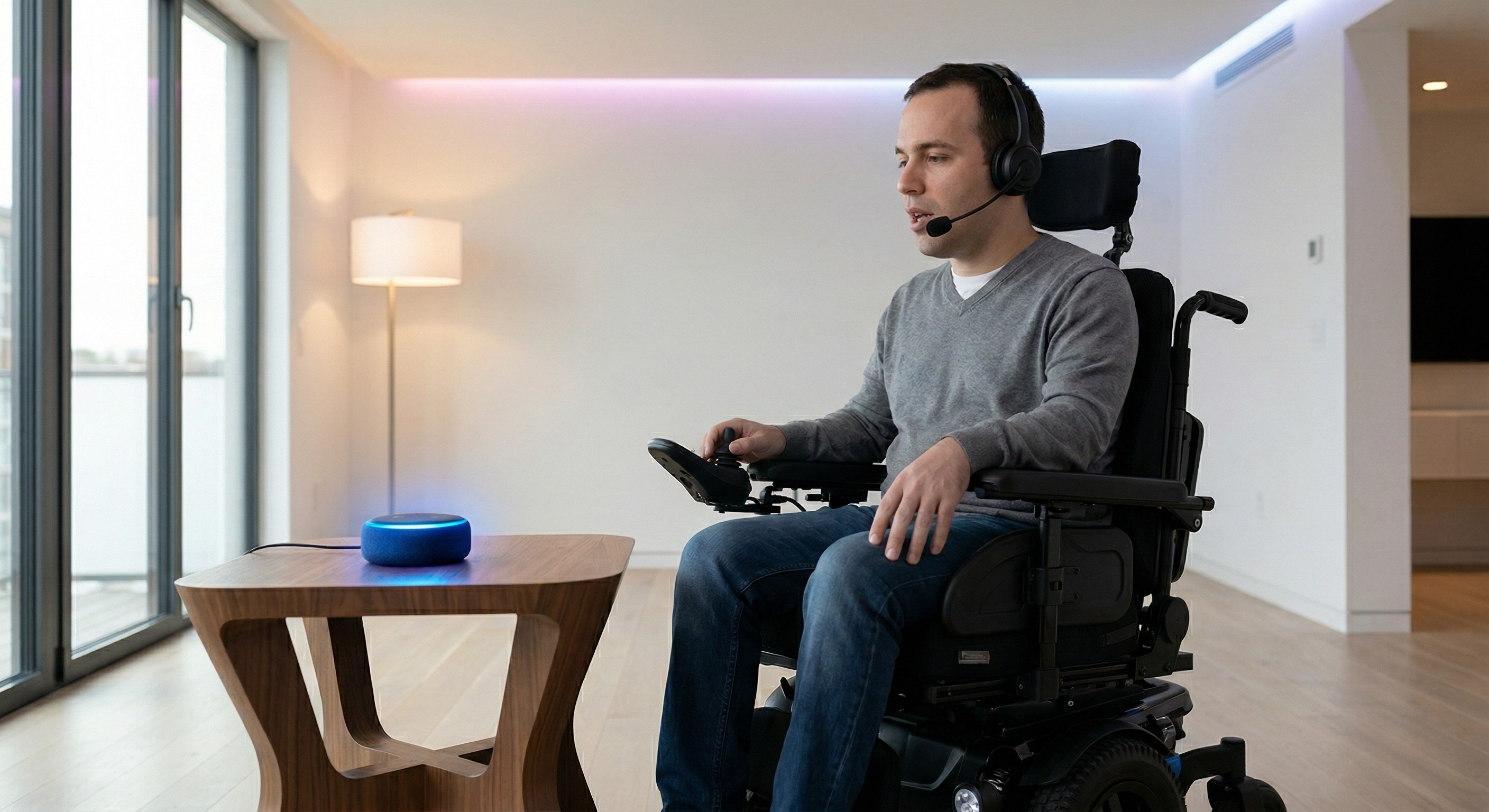
The foundation of any smart home is the central hub. Systems like Amazon Alexa, Google Nest, or Apple HomeKit act as the "brain" of your house.
-
Voice Control: For users with high-level spinal cord injuries or limited hand dexterity, voice commands eliminate the need to reach for high switches or struggle with thermostat dials.
-
Switch Control Integration: If voice control isn't an option, Bluetooth interfaces (like the Tecla-e) allow you to connect your wheelchair’s driving controls or assistive switches directly to your smart home hub, letting you control your house through your chair's joystick.
2. Mount Your Tech for Instant Access
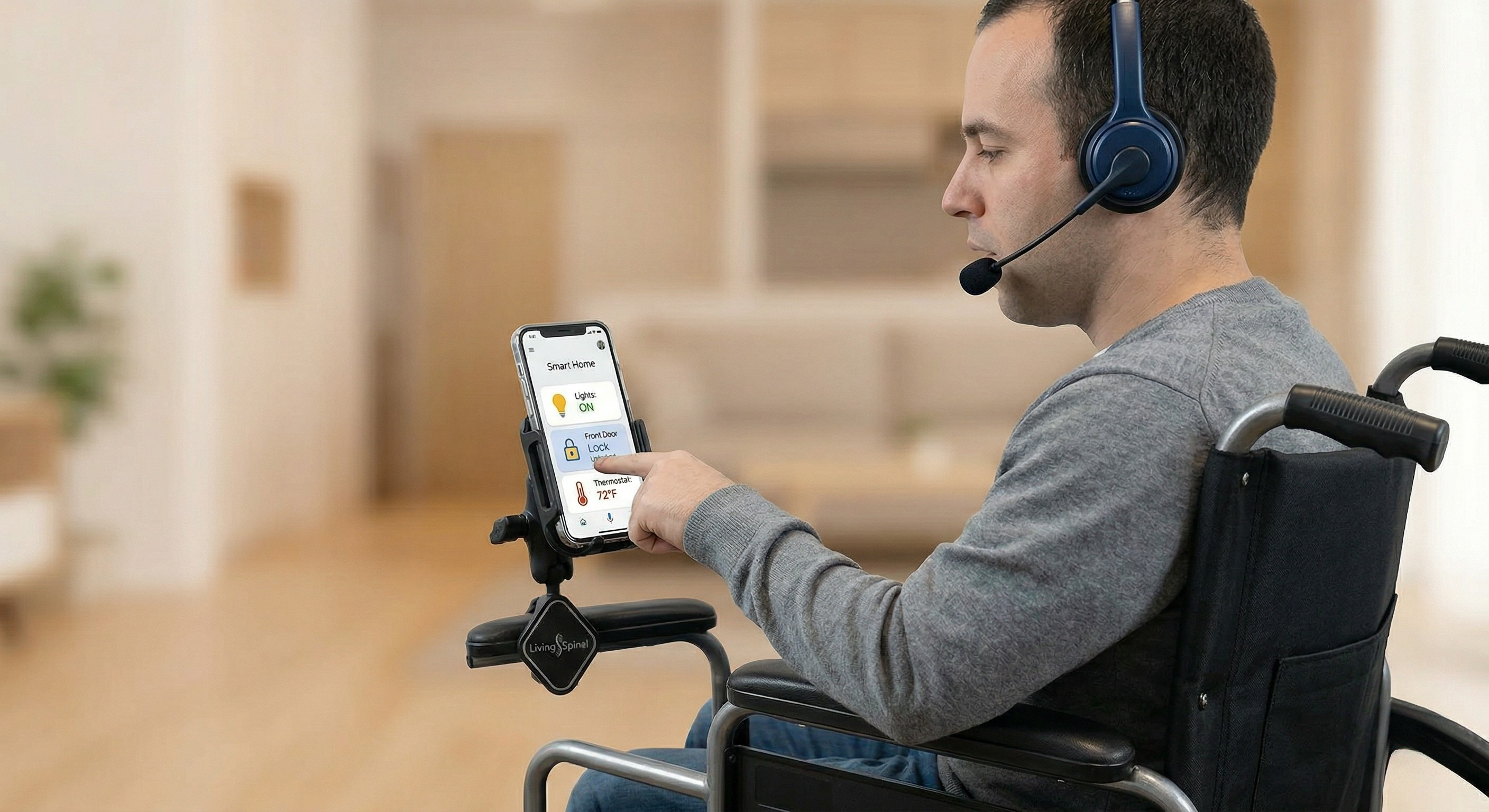
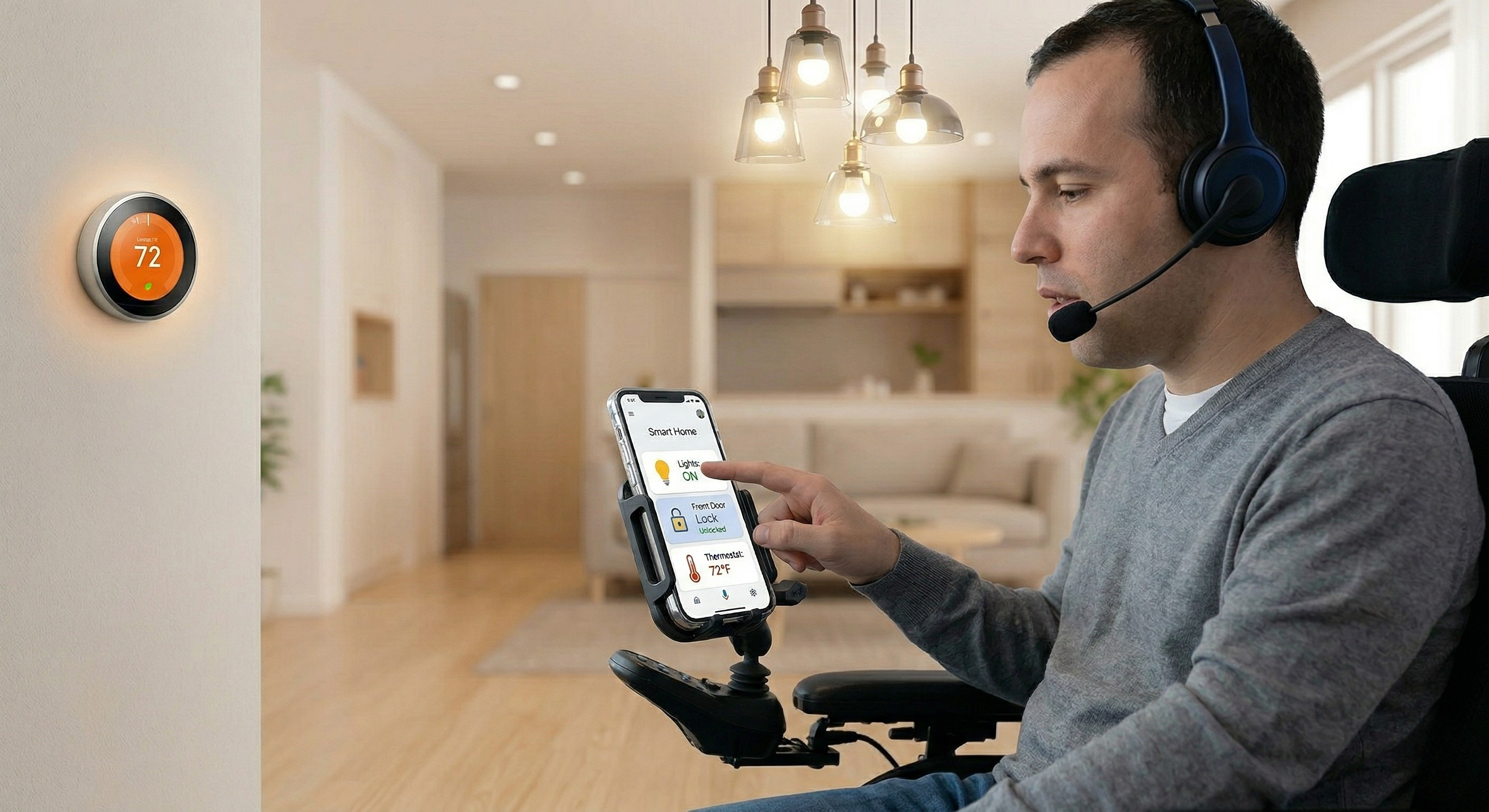
A smart home is only useful if you can access your controls. If you drop your smartphone or leave your tablet across the room, your environmental independence is instantly compromised.
-
The Solution: Secure your device directly to your wheelchair. By utilizing a high-quality
Wheelchair Cell Phone Holder
3. Smart Entryways: Automated Locks and Doors
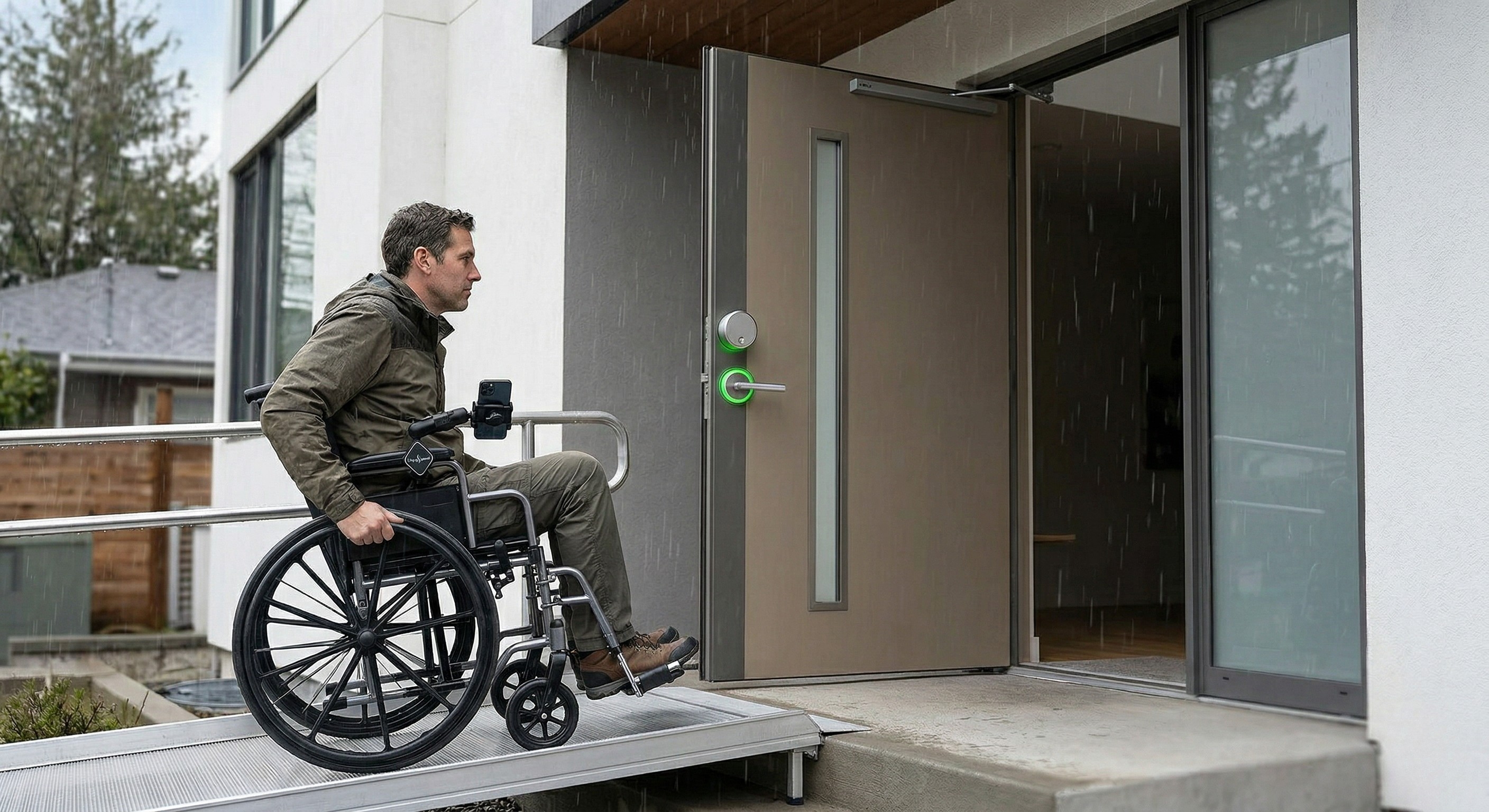
Getting in and out of the house with groceries on your lap or in the pouring rain is notoriously difficult.
-
Smart Locks: Devices like August or Schlage Connect allow you to lock and unlock your door via an app on your mobile phone, a voice command, or geographic proximity (the door unlocks automatically as your wheelchair approaches).
-
Automatic Door Openers: Take it a step further by installing residential automatic door openers. Combined with a smart lock, you can open your heavy front door completely hands-free.
4. Lighting and Climate Control
Standard light switches are frequently installed out of comfortable reach from a seated position, and navigating a dark room to find a lamp switch is a safety hazard.
-
Smart Bulbs & Plugs: Swap out standard bulbs for smart bulbs or plug your existing floor lamps into smart plugs. You can group lights by room, allowing you to say, "Turn on the living room," or program them to turn on automatically at sunset.
-
Smart Thermostats: A Wi-Fi-enabled thermostat allows you to adjust the temperature from your phone. No more trying to stretch over a hallway console table to reach the dial.
5. Automated Window Treatments
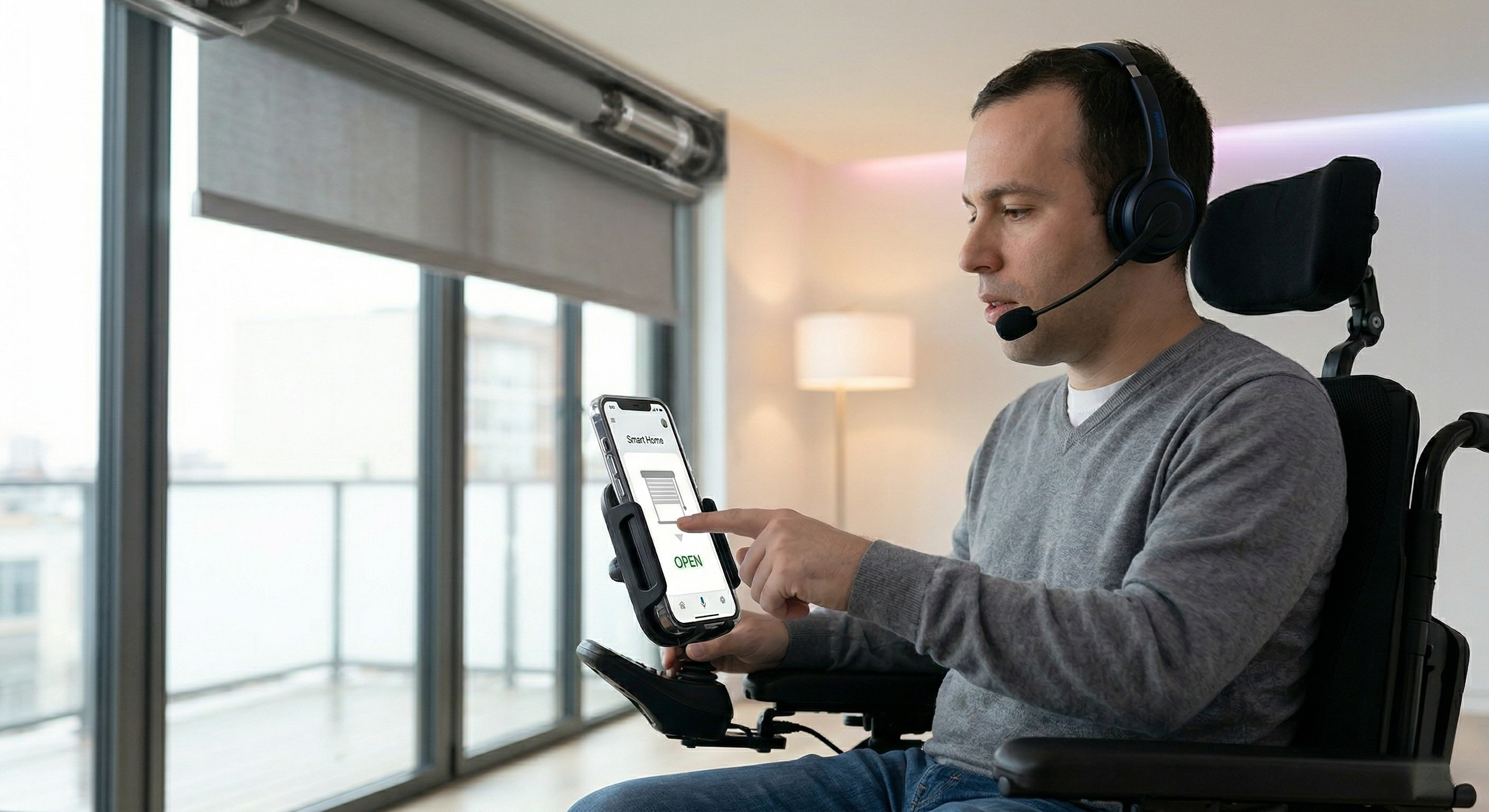
Opening and closing heavy blinds often requires leaning forward and using fine motor skills to manipulate cords—a frustrating task that can throw off your balance. Motorized blinds can be programmed to open with the sunrise or controlled via your smartphone, giving you immediate privacy and natural temperature control without the physical strain.
6. The Accessible Smart Bathroom
Bathrooms are a major hurdle for accessibility, but technology can assist here as well. Pair structural modifications (like zero-threshold showers) with motion-sensor faucets, smart shower controllers that set exact water temperatures, and automated lighting.
-
Pro Tip: While automating your bathroom, ensure your physical equipment is up to par. Browse specialized
Bathing & Toilet Assists
7. Tie It All Together with "Routines."
The true magic of a smart home lies in "Routines" or "Scenes." You can program your hub to perform multiple actions with a single, simple command.
-
Example: Say "Goodnight," and your smart home can simultaneously lock the front door, turn off all the lights, lower the thermostat, and close the blinds.
Reclaim Your Space
Building a smart home doesn't require a massive, expensive remodel all at once. By starting small with a central hub, a solid
For more tools to maximize your independence at home, explore the extensive collection of