
Wheelchair Travel Guide: 14 Essential Tips for Accessible and Stress-Free Trips | Living Spinal
Posted by Living Spinal on Apr 6th 2026
Wheelchair Travel Guide: 14 Essential Tips for Accessible and Stress-Free Trips
Let’s be completely honest: traveling as a wheelchair user can be incredibly stressful. Between airlines mishandling equipment, "accessible" hotel rooms that completely miss the mark, and unpredictable terrain, it's easy to feel overwhelmed. Your anxiety about taking a trip is entirely valid.
However, with the right preparation, a firm understanding of your rights, and some smart adaptive gear, you can absolutely mitigate those risks. Travel is about freedom, and you deserve to experience it without constantly worrying about your equipment.
Here are 14 candid, expert-backed tips and essential gear recommendations from Living Spinal to ensure your next trip is as smooth and accessible as possible.
Mastering the Airport and Flights
1. Call the Airline’s Accessibility Desk Directly. Do not rely solely on checking the "I need wheelchair assistance" box online. Call the airline’s dedicated accessibility line a week before your flight to confirm your exact needs, including the dimensions and weight of your chair, battery type (if applicable), and your need for an aisle chair.
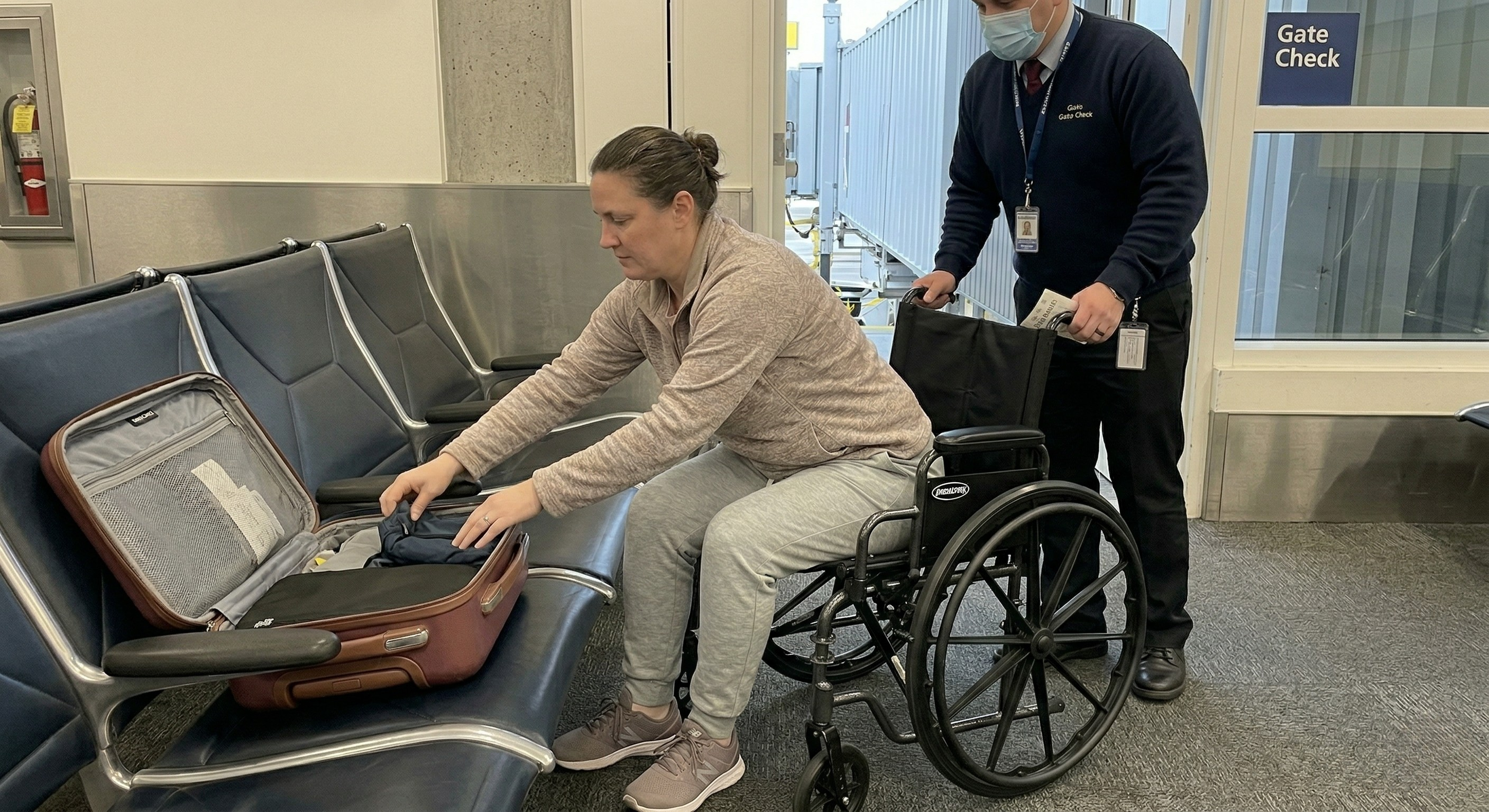
2. Always Gate Check Your Chair - Never, ever check your everyday wheelchair at the front ticket counter. Gate-checking ensures you remain in your own chair until you reach the airplane door, significantly reducing the amount of time baggage handlers interact with it, which drastically lowers the risk of damage.
3. Strip Your Chair Before Boarding - If it can come off, take it with you onto the plane. Remove your joystick, side guards, rigidizer bar, and especially your cushion. Cargo holds are notoriously rough, and these fragile parts are the first to get lost or broken.
4. Protect Your Skin in the Air - Airplane seats are notoriously hard and provide zero pressure relief. Never sit on a standard airplane seat for a long flight. Bring your own high-quality cushion (like a
Smart Gear for the Journey
5. Upgrade Your Luggage Situation - Pushing a manual chair while dragging a rolling suitcase is a recipe for shoulder strain and frustration. Invest in luggage specifically designed for mobility devices.
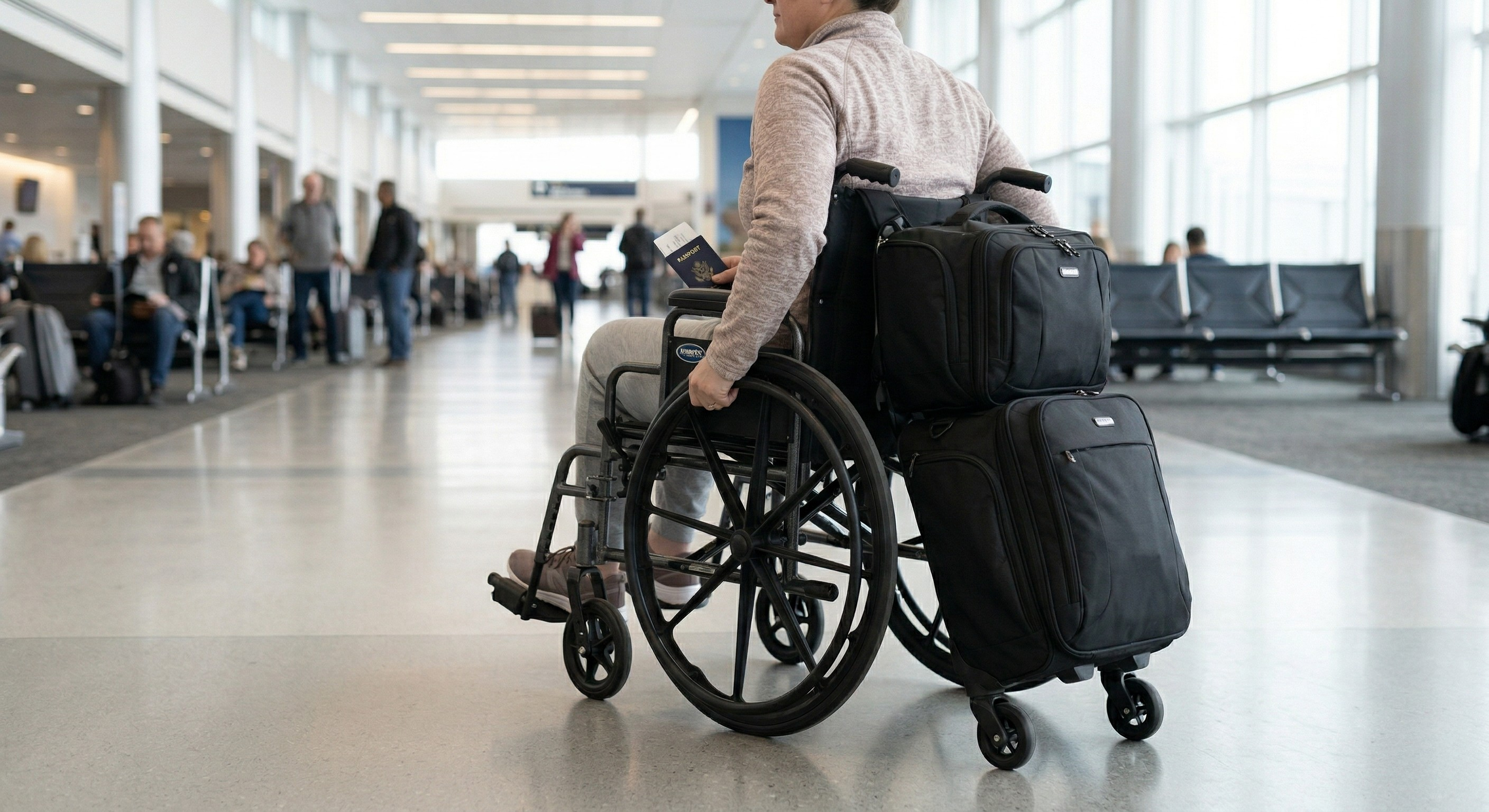
6. Lock Down Your Carry-Ons - If you prefer to carry bags on your lap, prevent them from constantly sliding off into the dirt. The
7. Bring a "Save-A-Ride" Toolkit - Don't rely on finding a bike shop in a foreign city. Pack a small, TSA-approved toolkit including the specific Allen wrenches for your chair, a spare inner tube, tire levers, and a mini pump.
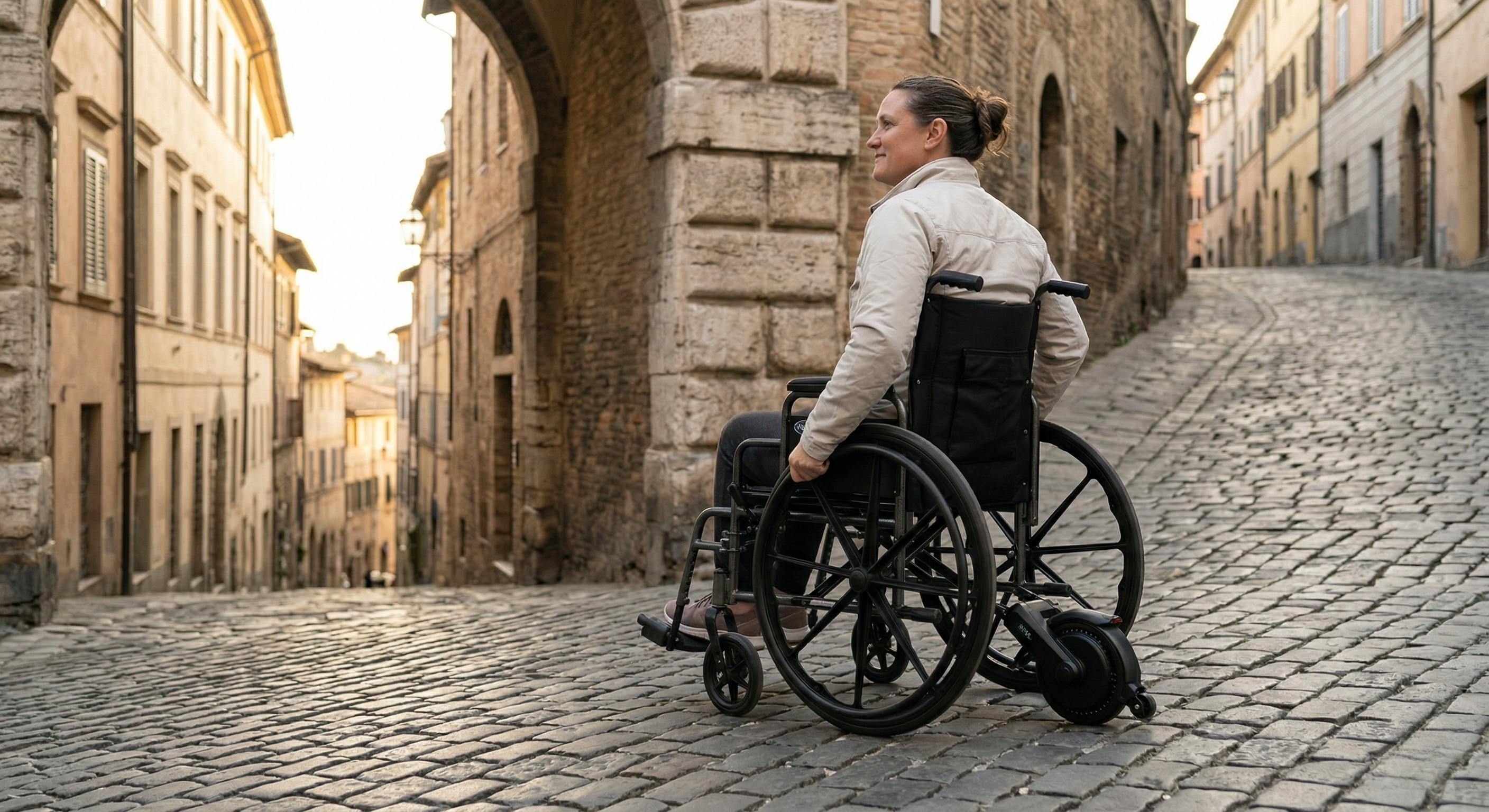
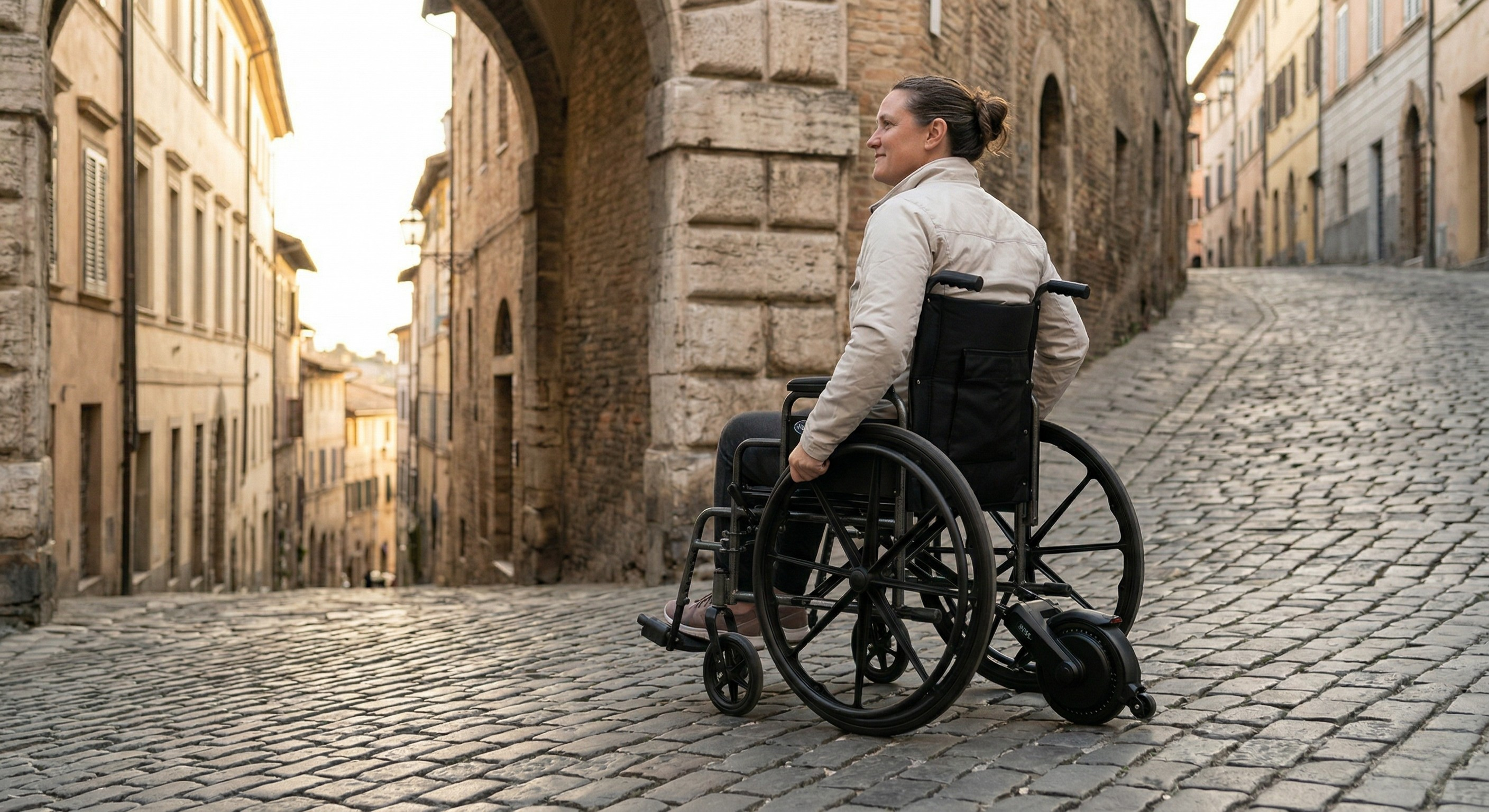
8. Supercharge Your Sightseeing - Huge airports and hilly tourist destinations can drain your energy fast. A power assist device like the
Securing Truly Accessible Accommodation
9. Verify "Accessible" Rooms with Photos - The hospitality industry’s definition of "accessible" is often wildly inaccurate. When booking a hotel, call the front desk (not the central reservation line) and ask them to email you a photo of the bathroom. Ensure there is a true roll-in shower, a fold-down bench, and proper grab bar placement.
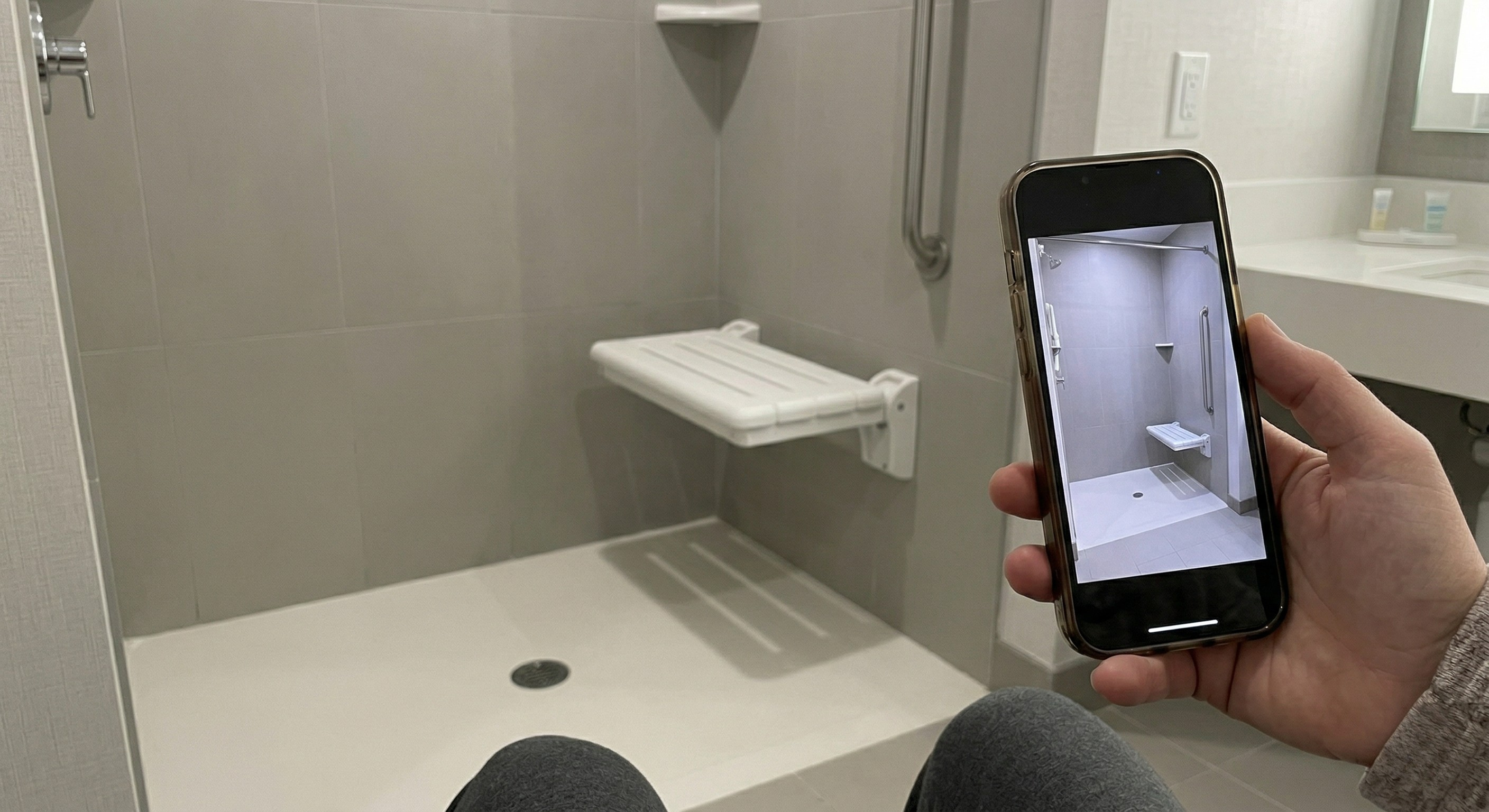
10. Pack Your Own Bathroom Independence - If you want to completely eliminate the anxiety of hotel bathrooms, bring your own hardware. The
On-the-Ground Navigation
11. Prepare for Unpredictable Steps - You will inevitably encounter a shop or restaurant that claims to be accessible but has a "tiny" 3-inch step at the entrance. Keeping a compact
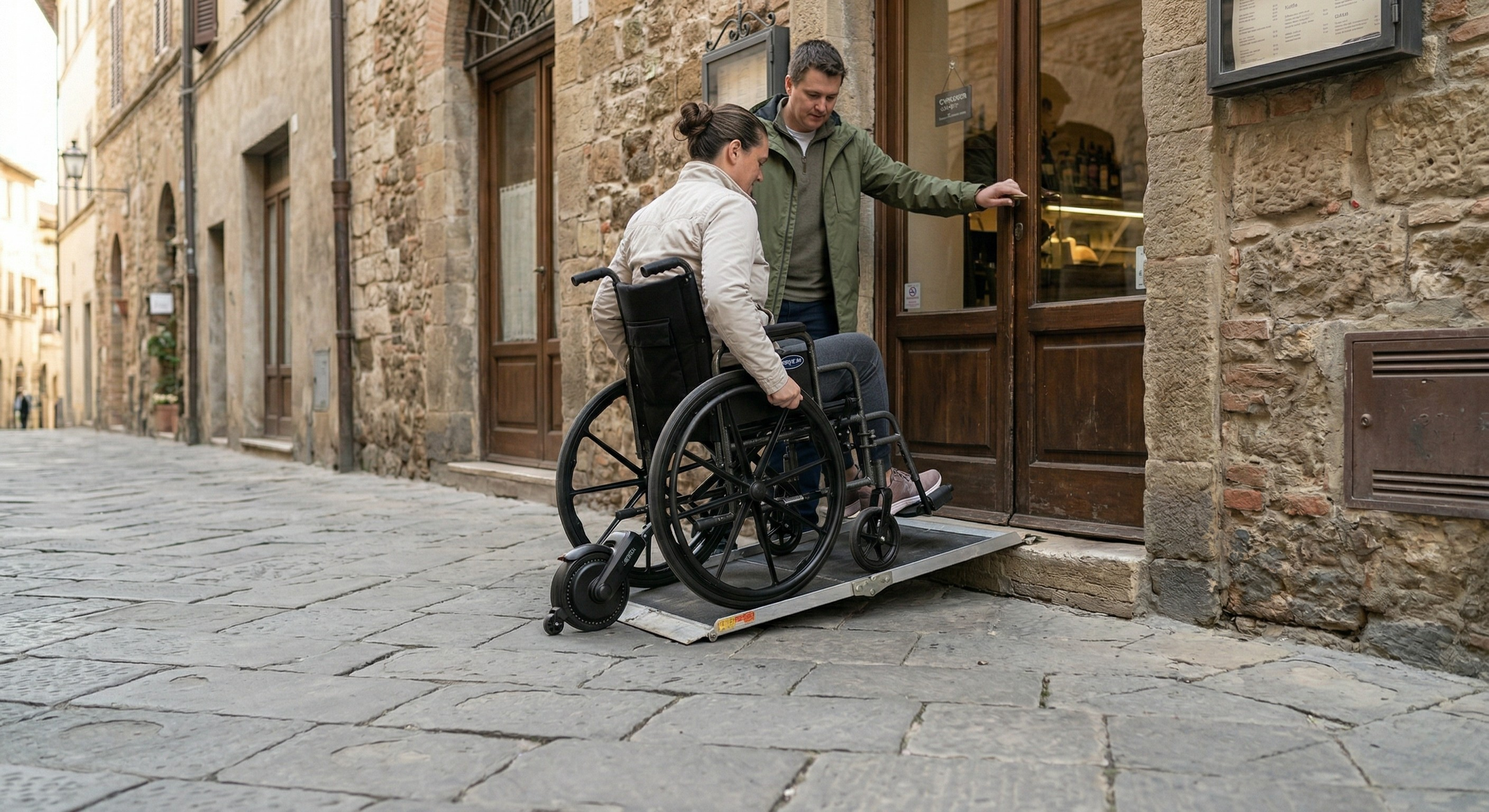
12. Pre-Book Accessible Ground Transport - Do not assume you can step off a plane and hail a wheelchair-accessible taxi. In many cities, accessible vans must be booked days or weeks in advance. Research and secure your airport transfers before you even pack your bags.
13. Use Accessibility Mapping Apps - Apps like Wheelmap or Google Maps (with the "Accessible Places" feature turned on) rely on user-generated data to show you which restaurants, transit stations, and attractions actually have ramped entrances and accessible restrooms.
14. Know Your Rights (And Carry Them) - Familiarize yourself with the Air Carrier Access Act (ACAA) if flying in the US, or the equivalent laws in your destination country. If an airline damages your chair, it is their legal responsibility to repair or replace it immediately. Be polite, but be a firm, relentless advocate for your rights.
Final Thoughts
Travel requires a bit more logistics when you have a spinal cord injury or mobility impairment, but the payoff is worth every ounce of planning. By equipping yourself with the right tools and refusing to settle for subpar accommodations, the world is absolutely open to you. Safe travels!