
Wheelchair Power Assist Devices Explained: Types, Benefits, and How to Choose | Living Spinal
Posted by Living Spinal on Mar 23rd 2026
Wheelchair Power Assist Devices Explained: Types, Benefits, and How to Choose
Manual wheelchairs offer incredible maneuverability, transportability, and the physical benefit of self-propulsion. However, navigating steep hills, thick carpets, or long distances can take a massive toll on your shoulders and energy levels.
Enter the wheelchair power assist device—a revolutionary category of mobility equipment that gives you the best of both worlds. It allows you to maintain the lightweight convenience of your manual chair while providing a motorized boost exactly when you need it.
If you are considering upgrading your ride in 2026, here is everything you need to know about the types, benefits, and how to choose the right power assist device for your lifestyle.
What is a Power Assist Device?
A power assist device is an add-on motor and battery system designed specifically for manual wheelchairs. Instead of transitioning to a heavy, full-size power wheelchair, these devices attach to your current rigid or folding frame, providing propulsion assistance to reduce the physical strain of pushing.
The 3 Main Types of Power Assist Devices
Power assist technology generally falls into three distinct categories, each tailored to different needs and environments:
1. Rear-Mounted Drive Units
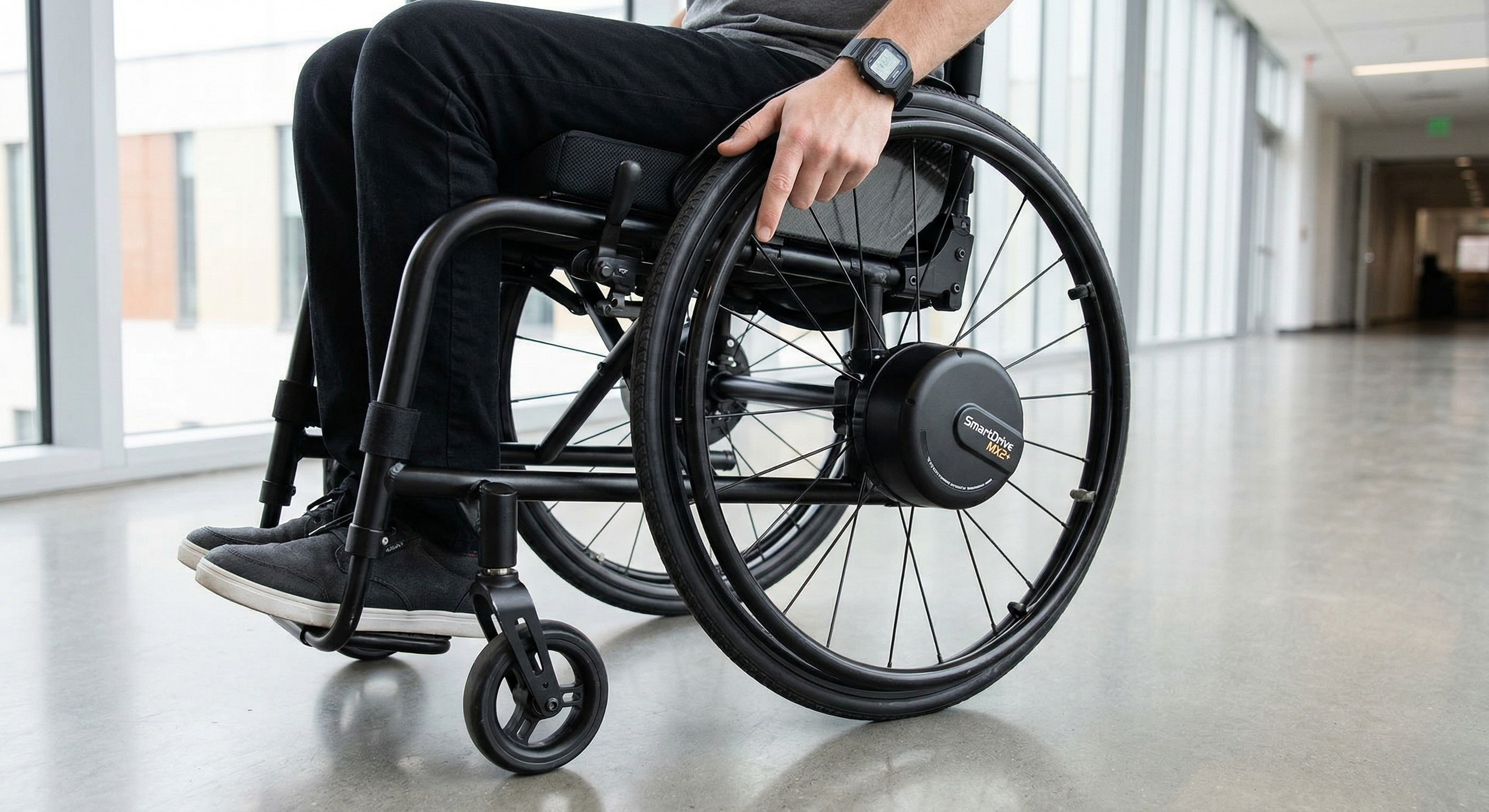
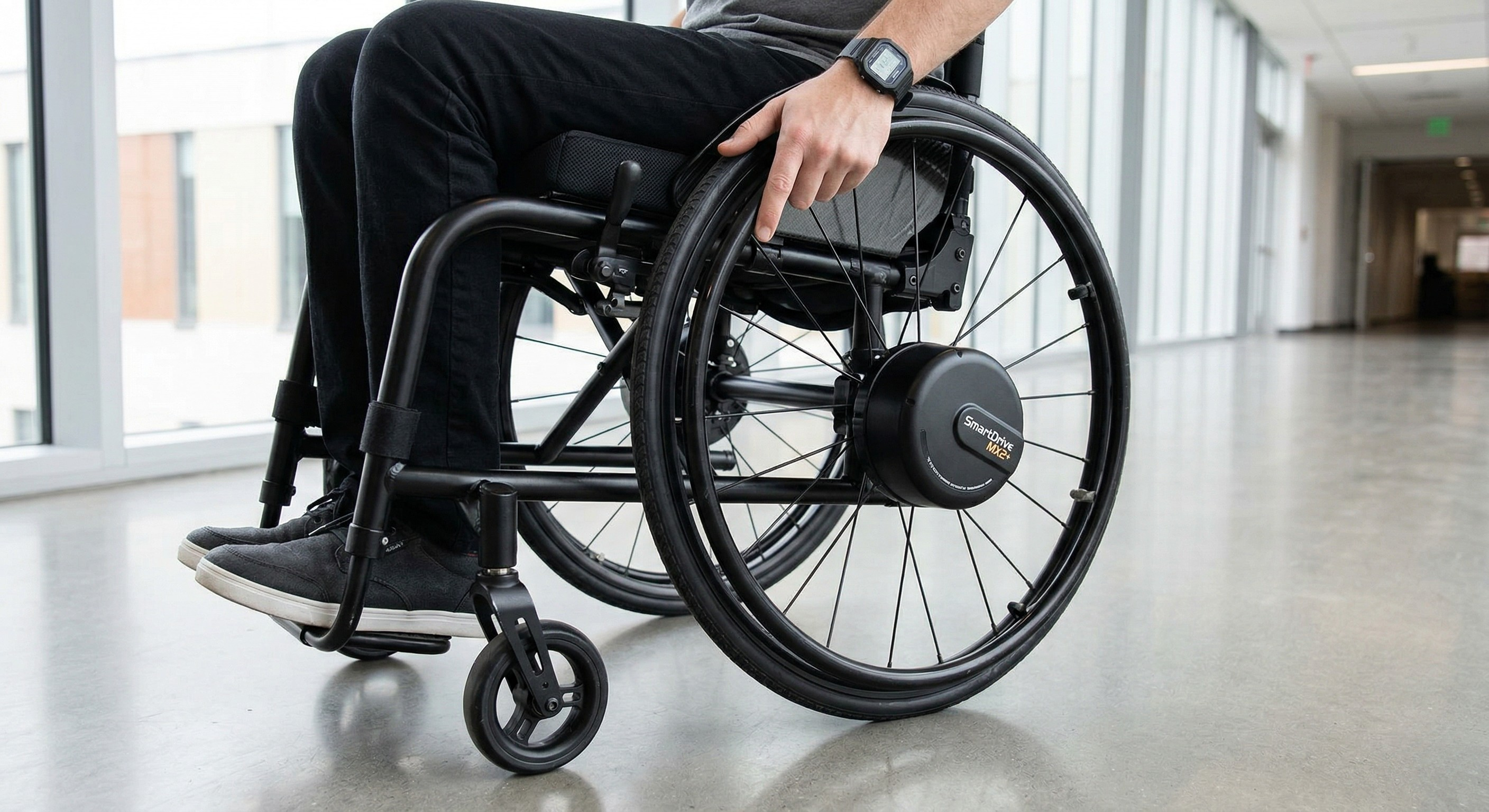
These are compact, motorized wheels that attach to a bracket on the rear axle or camber tube of your wheelchair.
-
How they work: You steer and brake using your regular pushrims, but the rear motor drives you forward. They are typically controlled by a Bluetooth wearable (like a smartwatch or wristband) or a wired button.
-
Pros: Extremely discreet, lightweight, and perfect for indoor and smooth outdoor use. They leave your chair’s footprint largely unchanged.
-
Examples: The ultra-lightweight
SmartDrive MX2+ Power Assist System SMOOV One Power Assist
2. Front-Mounted Attachments (Power Handcycles)
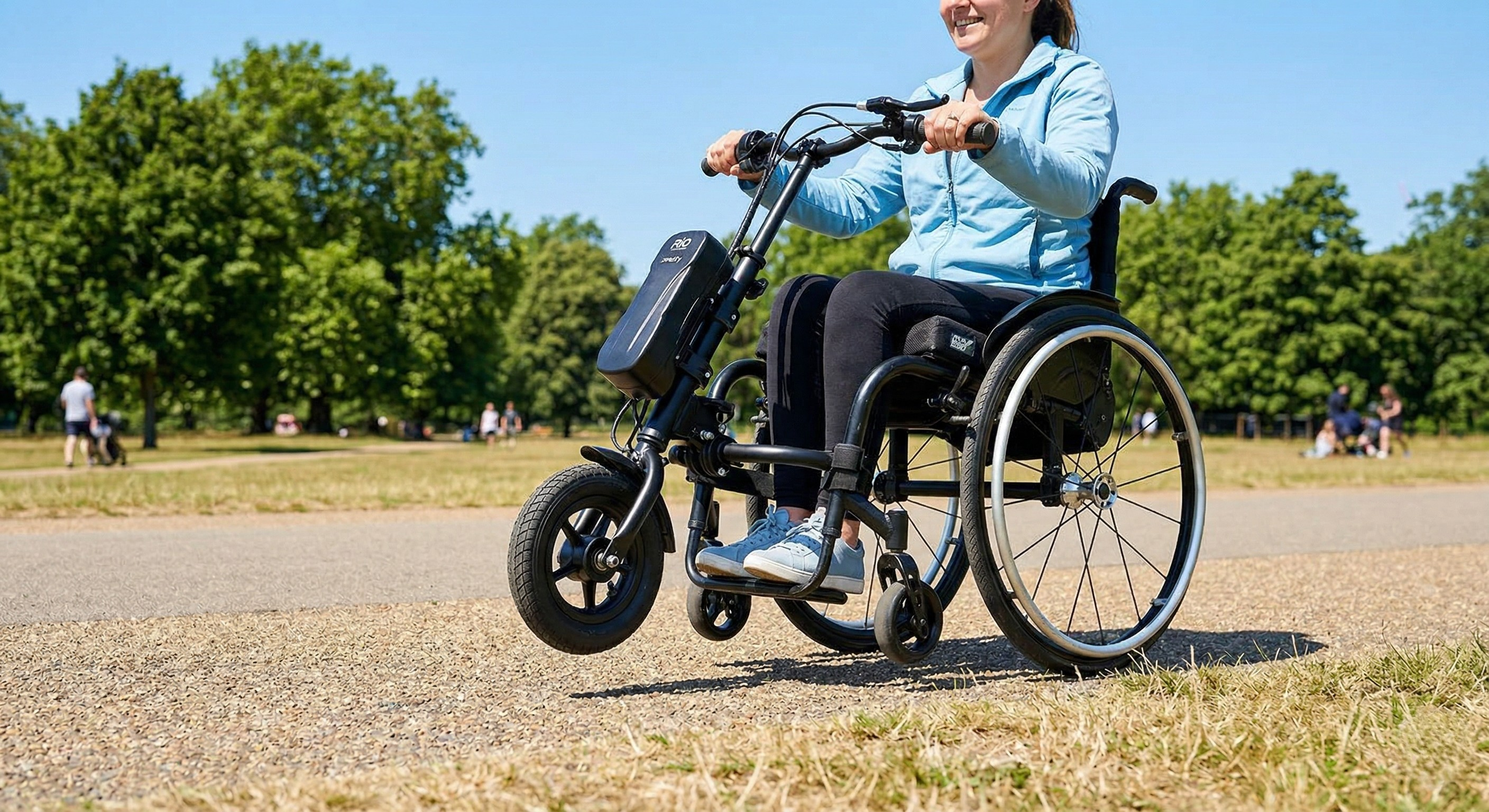
These devices clamp onto the front frame of your wheelchair, lifting your small front casters off the ground and turning your chair into a motorized three-wheel trike.
-
How they work: They feature a motorcycle-style handlebar with a throttle, brakes, and sometimes digital displays.
-
Pros: Unmatched for outdoor adventures. By lifting the front casters, they effortlessly roll over grass, gravel, dirt paths, and high curbs. They are fast and incredibly fun to ride.
-
Example: The powerful and versatile
Firefly 2.5 "BK Edition" by Rio Mobility
3. Power Assist Wheels
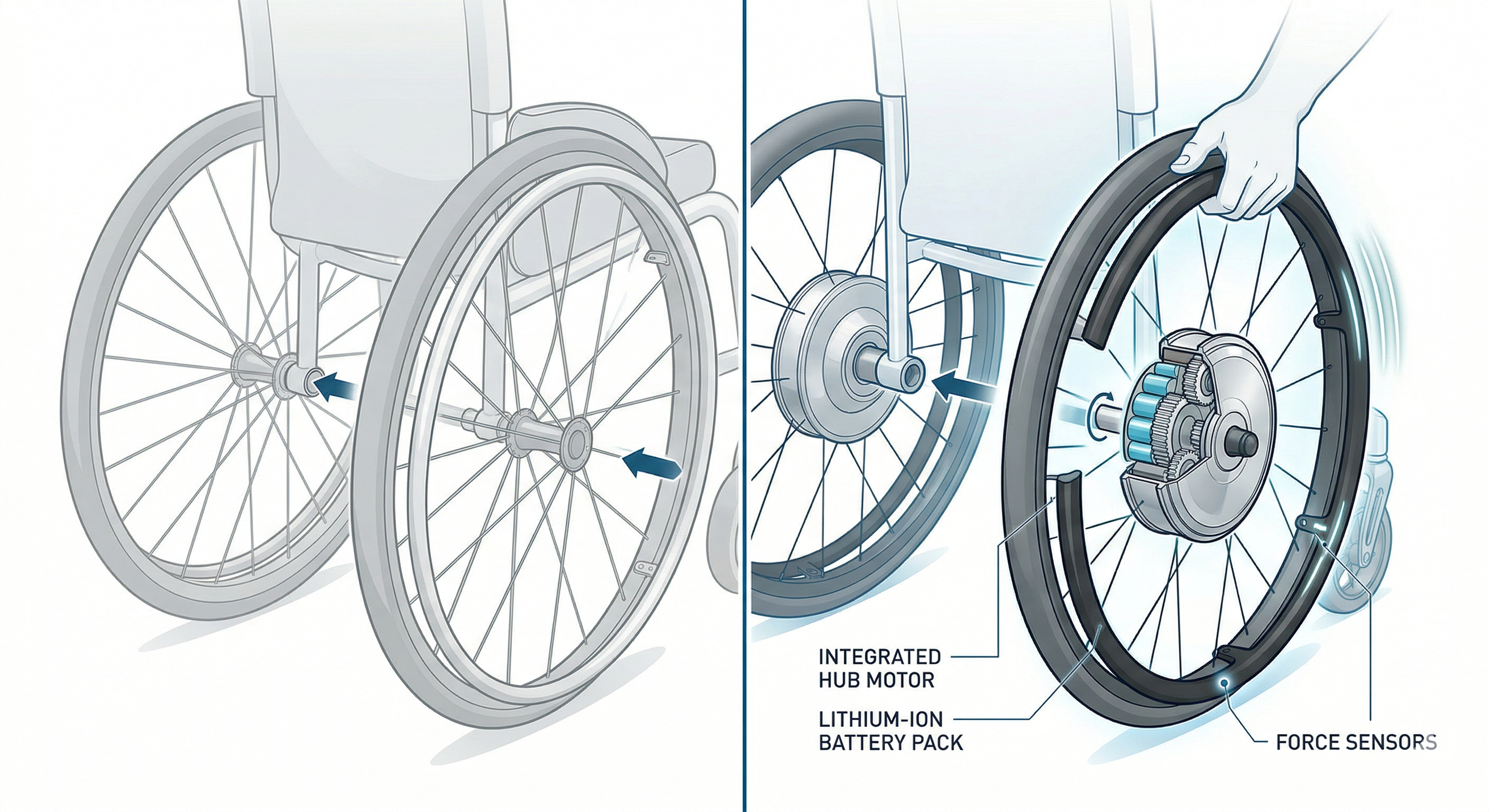
These systems replace your standard rear wheelchair wheels entirely. The motors and batteries are housed directly within the hubs of the new wheels.
-
How they work: They operate on a "push-multiplier" concept. When you push on the handrims, internal sensors detect your effort and multiply the force, meaning a tiny tap propels you forward significantly.
-
Pros: Very intuitive. There is no throttle or separate steering mechanism to learn; you push your chair exactly as you always have, just with superhero-level strength.
-
Example: The highly responsive
E-Motion M25 Power Assist Wheelchair Wheels
The Life-Changing Benefits
Investing in a power assist device offers advantages that go far beyond simply going faster:
-
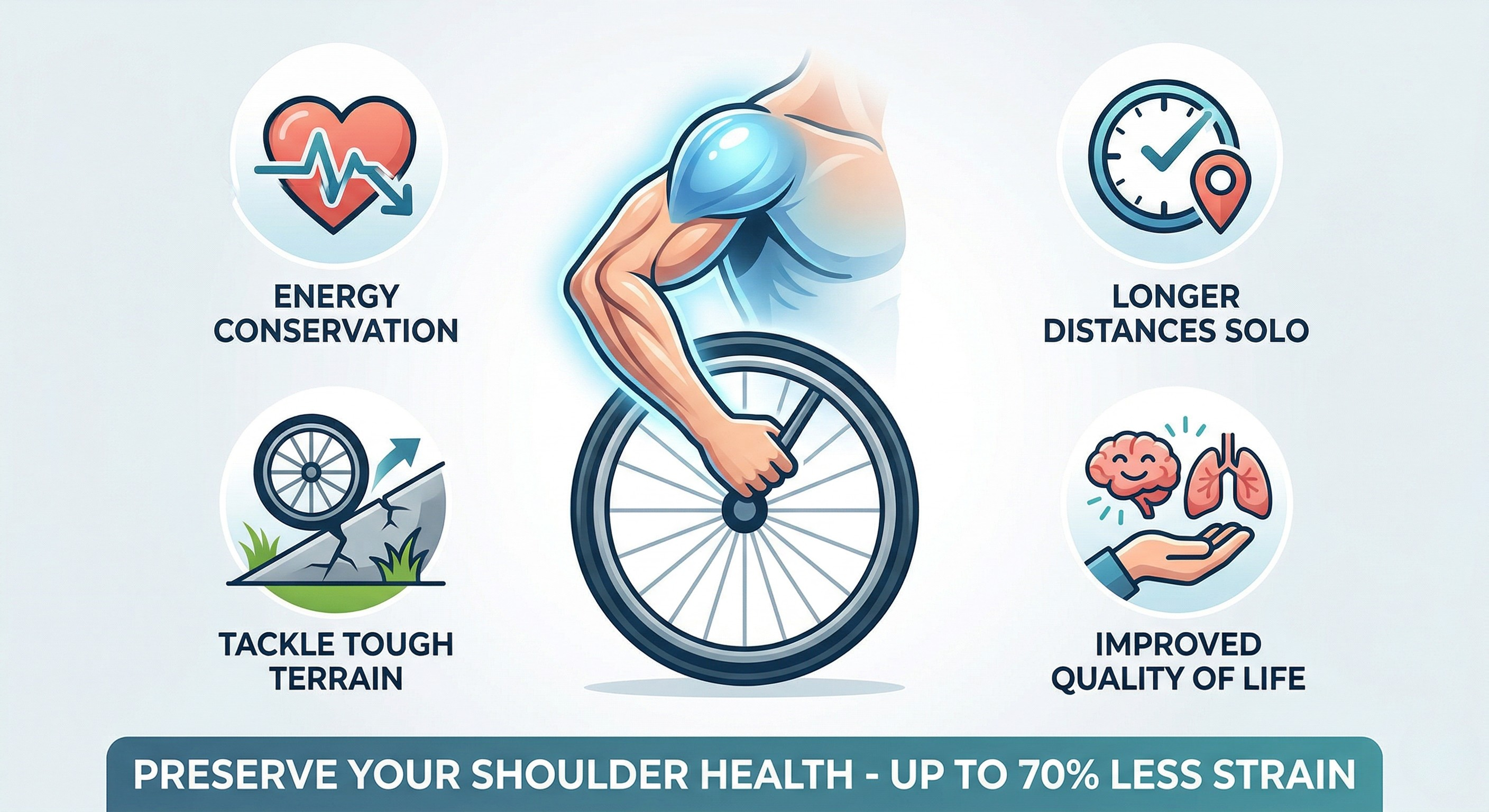
Shoulder Preservation: Up to 70% of manual wheelchair users experience shoulder pain or rotator cuff tears over time. Power assists take the load off your joints, preserving your upper body health for decades to come.
-
Energy Conservation: Save your energy for what you want to do at your destination, rather than exhausting yourself just getting there.
-
Tackling Terrain: Steep ramps, cracked sidewalks, and thick grass are no longer barriers. A power assist levels the playing field.
-
Independence: Travel longer distances solo without needing a push from a friend or caregiver.
How to Choose the Right Device
With so many incredible options, how do you pick the perfect match? Ask yourself these three questions:
-
Where do you spend most of your time? If you need help getting around the office, navigating a university campus, or maneuvering tight indoor spaces, a rear-mounted unit like the SmartDrive or power assist wheels like the e-motion are ideal because they don't increase the length of your chair. If you are an outdoorsy person looking to hit nature trails or cruise the neighborhood, a front-mounted attachment like the Firefly is the clear winner.
-
What is your hand and core strength? Front-mounted attachments require decent grip strength to operate the brakes and throttle, plus core stability to handle higher speeds. If you have limited hand dexterity or quadriplegia, power assist wheels or a rear-mounted unit with a sensitive switch control are often better suited.
-
How do you transport your chair? Consider your vehicle. Rear-mounted units are very small, lightweight, and can easily be tossed onto a passenger seat. Front-mounted handcycles are larger and may require a bit more trunk space or a larger vehicle to transport easily.

Ready to Supercharge Your Mobility?
A power assist device isn't just an accessory; it's an investment in your health, freedom, and daily energy.
Whether you are looking for the discreet push of a SmartDrive or the off-road capability of a front-mounted trike, you can find the perfect fit to upgrade your manual chair.